Susan Sontag
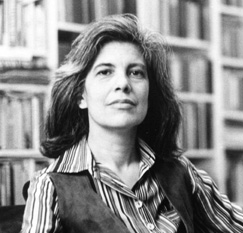
The most consequential American public intellectual of the late twentieth century — a writer who insisted on rigour, beauty, and moral seriousness simultaneously.
Susan Sontag wrote as though ideas had physical weight — as though misreading a photograph or misapplying a metaphor carried genuine consequences for how a culture saw itself and the world. From her first major essay in 1964 to her final book in 2003, she held that criticism was an act of moral attention, not merely aesthetic preference.
Formation
Sontag grew up in Tucson and Los Angeles, the daughter of a fur trader who died young. She was a famously precocious reader and entered the University of Chicago at fifteen. Graduate work took her to Harvard and then to Oxford and Paris, where she absorbed structuralism and European film culture. Returning to New York in the early 1960s, she entered a literary world she would soon partly reshape. Her essay "Notes on 'Camp'" (1964), published in Partisan Review, introduced a generation of readers to a sensibility — ironic, theatrical, devoted to surface — that serious criticism had previously refused to name or value.
The essays
Against Interpretation (1966), her first essay collection, opened with a polemical salvo: the interpretive habit that reduces art to meaning had become suffocating. Sontag wanted criticism to restore the experience of form. The argument was bracing and made her famous. On Photography (1977), drawn from a series of essays in the New York Review of Books, remains her most influential work: a sustained examination of how photographic images alter our relationship to history, suffering, and the real. Illness as Metaphor (1978) grew from her own diagnosis of cancer and argued that the metaphors societies attach to disease — weakness, moral failure — compound the suffering of the ill. A sequel, AIDS and Its Metaphors, followed in 1989.
Her final book, Regarding the Pain of Others (2003), returned to photography to question whether the circulation of atrocity images produces compassion or numbs it.^1 The question has become central to contemporary debates about documentary photography and social media.
Sensibility and method
Sontag distrusted the essay as a vehicle for opinion; she wanted it to be a vehicle for discovery. Her sentences are clean, declarative, and relentless. She moved easily between high and low culture — Godard and B-movies, Kafka and science fiction — refusing the hierarchies that the culture section of a newspaper took for granted. Her fiction, including the novels The Volcano Lover (1992) and In America (1999), applied the same intellectual discipline to historical imagination.
| Work | Category | Year |
|---|---|---|
| Against Interpretation | Essays | 1966 |
| On Photography | Essays | 1977 |
| Illness as Metaphor | Essay | 1978 |
| The Volcano Lover | Novel | 1992 |
| Regarding the Pain of Others | Essays | 2003 |
Legacy
Sontag died of leukaemia in New York in December 2004, aged 71. The seriousness she modelled — engaged, cosmopolitan, unwilling to separate aesthetic and ethical questions — continues to shape literary criticism, cultural studies, and documentary practice worldwide.
In place of a hermeneutics we need an erotics of art.