Sylvia Plath
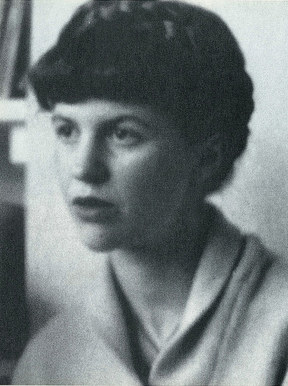
Plath transformed the intimate disasters of a single life into poems of such formal precision and psychological violence that they permanently widened what poetry was permitted to say.
Sylvia Plath published her first collection, The Colossus, in 1960 and her only novel, The Bell Jar, in January 1963 — the last work she saw in print before her death the following month at the age of thirty. Her posthumously published collection Ariel (1965) transformed her reputation from promising to essential; the Pulitzer Prize awarded to The Collected Poems in 1982 confirmed what readers had already understood: that her work had permanently altered the possibilities of the lyric.
Origins
Plath was born on 27 October 1932 in Boston, Massachusetts. Her father, Otto Plath, a professor of biology and an authority on bumblebees, died in 1940 when she was eight years old — from complications of diabetes mellitus that he had refused to have treated. The loss was formative and remained a recurrent subject throughout her poetry. Her mother, Aurelia, supported the family and pushed Plath toward academic achievement; Plath entered Smith College on scholarship and proved an exceptional student, publishing stories and poetry from an early age.
In the summer of 1953 she won a guest editorship at Mademoiselle magazine in New York. The experience, and its aftermath, were difficult. She returned to Massachusetts to learn she had not been accepted to a summer writing course, suffered a serious mental breakdown, and made a suicide attempt. The period of hospitalisation and electroconvulsive therapy that followed became the direct material for The Bell Jar.
Defining work
Plath won a Fulbright scholarship to Newnham College, Cambridge, in 1955. There she met the poet Ted Hughes, whom she married in 1956. The two returned to the United States, where Plath studied and taught, before settling in England. The Colossus and Other Poems was published in London in 1960 — the only collection she prepared for press herself. It was received with respect but without the recognition her work would later command.
The Bell Jar, published in January 1963 under the pseudonym Victoria Lucas, drew so directly from her own breakdown and hospitalisation that Plath declined to publish it under her own name in the United States during her lifetime. It appeared there posthumously in 1971 and has remained continuously in print, read both as autobiographical document and as a sharp and often darkly comic account of the pressures exerted on an exceptionally able young woman in mid-century America.
The poems written in the final months of her life — composed in the early mornings while her children still slept, in the coldest English winter in decades — were gathered by Ted Hughes and published as Ariel in 1965. Poems including "Lady Lazarus," "Daddy," and "Edge" displayed a formal ferocity and emotional extremity that made them immediately recognisable as major work. The sequence became one of the defining texts of confessional poetry, a mode Plath developed alongside Robert Lowell and Anne Sexton that took private suffering — madness, grief, sexuality, self-destruction — as legitimate and urgent subject matter for serious verse.
Method and style
Plath's technical command was considerable. She had absorbed traditional English prosody and used rhyme, assonance, and stanzaic structure with deliberate control even in her most apparently raw work. The violence in her late poems is not rhetorical accident but formal effect: the compression of the short line and the sudden, unannounced metaphoric shift. Her journals and letters, published after her death, reveal a writer of relentless critical intelligence, deeply aware of what she was doing and why.
Legacy
Plath separated from Ted Hughes in 1962 and moved with her two young children to a flat in London. She died there on 11 February 1963. She was thirty. The Collected Poems, edited by Hughes and published in 1981, included a substantial body of previously uncollected and unpublished work. It was awarded the Pulitzer Prize for Poetry in 1982, making Plath the fourth person to receive the prize posthumously. Her influence on subsequent generations of poets — particularly women writing about illness, the body, and the pressures of social expectation — has been continuous and substantial.
"Dying / Is an art, like everything else. / I do it exceptionally well."