Terrence Malick
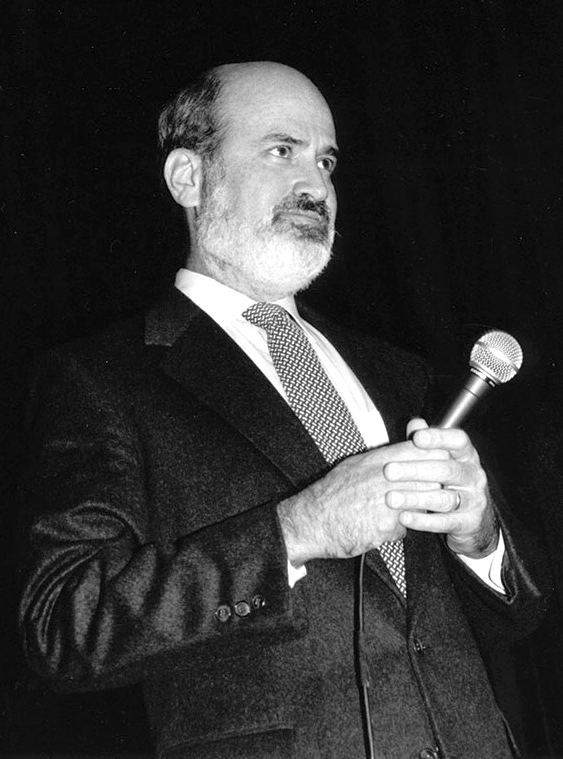
The American director who turned film into philosophy — elliptical, luminous, and radically interior.
Terrence Malick makes films that resist summary. Working at a pace measured in decades rather than years, he built a body of work that subordinates plot and character to light, landscape, and an ongoing argument about the relationship between nature and grace — making him the most philosophically demanding director to emerge from the New Hollywood era.
Formation
Malick studied philosophy at Harvard, graduating in 1965, then attended Magdalen College, Oxford on a Rhodes Scholarship before abandoning his thesis on Heidegger. He taught philosophy briefly at MIT and worked as a journalist before turning to film. The detour through continental philosophy is not incidental: his films are structured less around cause and effect than around states of attention, and his narration — drifting, voiceover-led, rarely expository — reads like thinking aloud.
He enrolled at the AFI Conservatory in Los Angeles and made his feature debut in 1973 with Badlands, a fugitive-road film told with a chilling emotional distance that immediately distinguished him from his peers.
Defining work
Badlands (1973) and Days of Heaven (1978) confirmed his ability to make beauty and violence coexist without either neutralising the other. Days of Heaven — shot by Néstor Almendros during the so-called "magic hour" of dusk — became a reference point for cinematographic ambition, winning Almendros an Academy Award.
After Days of Heaven, Malick disappeared from production for twenty years. He returned with The Thin Red Line (1998), a Second World War film that competed at Cannes alongside Spielberg's Saving Private Ryan and won the Golden Bear at Berlin. It treated combat as an occasion for meditation on mortality rather than spectacle.
The Tree of Life (2011) earned the Palme d'Or at Cannes — his second major festival prize — and remains his most formally radical film: a domestic drama of mid-century Texas that opens onto a sequence depicting the origins of the universe and the emergence of life.
Method and style
Malick shoots with an improvisational freedom unusual in mainstream production. Non-professional performers are mixed with established actors; scenes written for one character are reassigned in the edit; voice-over is written last. He works closely with cinematographers — Almendros, John Toll, Emmanuel Lubezki — to prioritise available light and a fluid, searching camera movement that anticipates attention rather than directing it.
The job of the artist is always to deepen the mystery.
His editing, typically handled with extended post-production periods, dissolves conventional continuity in favour of associative rhythm. The result divides audiences: some experience his films as transcendent; others as deliberately obscure.
Legacy
Malick holds the Palme d'Or and the Golden Bear — the two premier awards in world cinema — and has been nominated three times for the Academy Award. His influence on a generation of cinematographers and directors who prioritise texture over exposition is direct and acknowledged. Directors including Terrence Davies and Xavier Dolan have cited him; the naturalistic, light-sensitive aesthetic he pioneered with Almendros became standard vocabulary for prestige film.