Toni Morrison
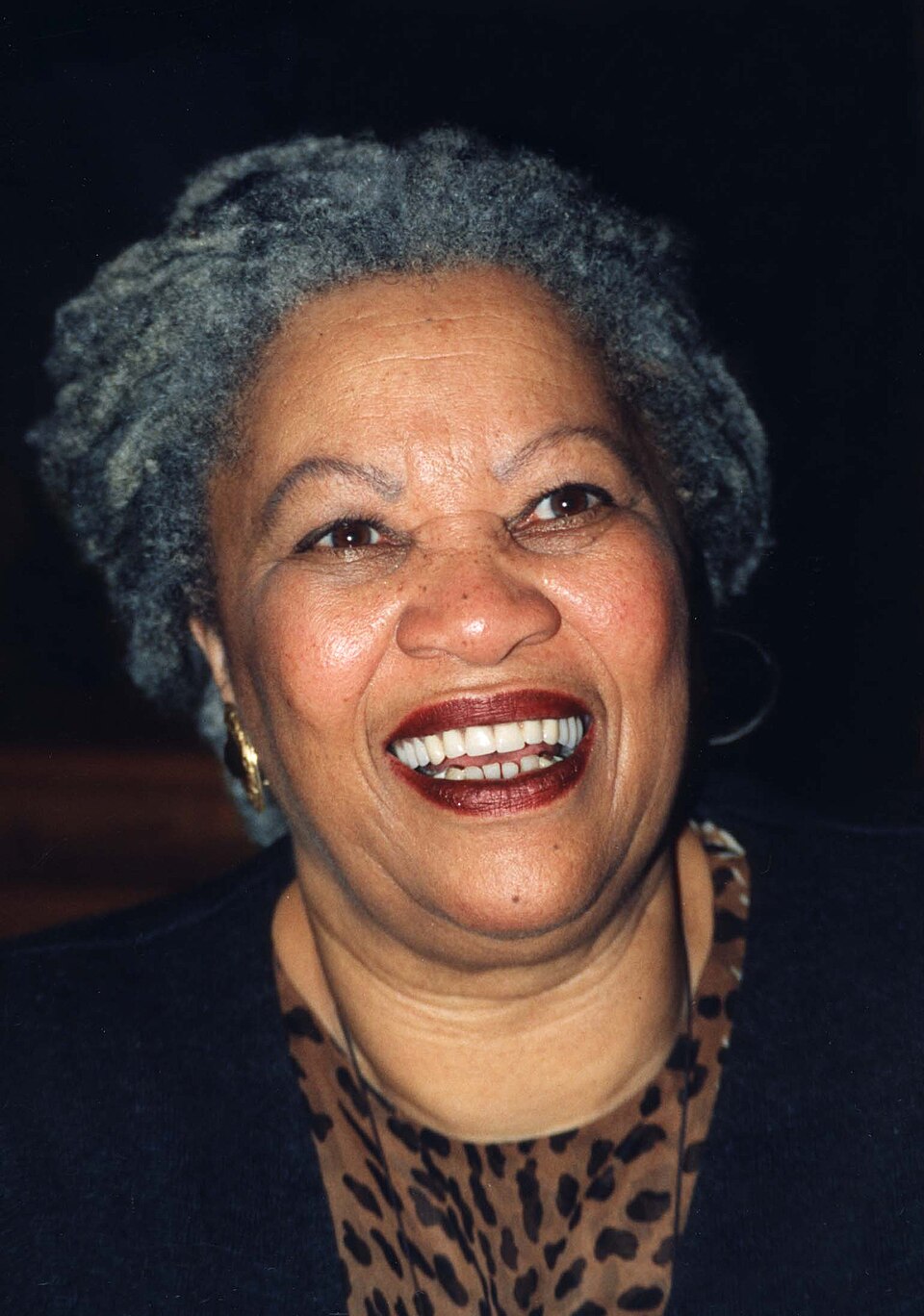
The novelist who made the interior lives of Black Americans the irreducible centre of American literature.
Toni Morrison wrote eleven novels across five decades, each one excavating the psychic and social damage inflicted by slavery, racism, and dispossession on African American life. Her prose — dense, polyphonic, rooted in oral tradition — brought her the Nobel Prize in Literature in 1993, the first Black American woman to receive it.
Lorain to New York
Born Chloe Anthony Wofford in Lorain, Ohio, to a working-class family, Morrison grew up surrounded by Black folklore and storytelling that would saturate her fiction. She studied English at Howard University and took a master's degree at Cornell, writing a thesis on William Faulkner and Virginia Woolf — writers whose experiments with interiority and time she would absorb and transform. After teaching at Texas Southern and Howard, she moved to New York and became a senior editor at Random House, a position she held for nearly two decades. There she championed books by Angela Davis, Toni Cade Bambara, and Gayl Jones, reshaping the catalogue of Black American writing from inside a major publisher.
The Novels
Her debut, The Bluest Eye (1970), traced the self-hatred of a young Black girl who prays for blue eyes — a searing study of internalised racism that Morrison herself later called structurally flawed yet unflinching in its ambition. Sula (1973) explored female friendship as a form of mutual completion and destruction. Song of Solomon (1977) brought her national recognition: a multigenerational family saga driven by the search for origins, it won the National Book Critics Circle Award and announced a writer fully in command of her powers.1
Beloved (1987) is widely regarded as her masterwork. Based on the true story of Margaret Garner, an enslaved woman who killed her infant daughter rather than see her returned to slavery, the novel fuses ghost story, historical fiction, and lyric meditation. It won the Pulitzer Prize for Fiction in 1988. Jazz (1992) and Paradise (1997) completed a loosely connected trilogy centred on African American community and memory.
Method and Language
Morrison described her method as beginning not with plot but with a "speculative" question — what happened, and what did it cost? Her sentences refuse to explain themselves to a white readership; the narrative assumes Black experience as the norm rather than the exception. She drew on the structures of jazz, gospel, and call-and-response, layering multiple voices and time frames without resolving them into a single authoritative account. She also wrote influential cultural criticism, most notably Playing in the Dark: Whiteness and the Literary Imagination (1992), in which she argued that the presence of an enslaved Black population shaped the imagination of canonical white American authors in ways those authors refused to acknowledge.
| Novel | Year | Award |
|---|---|---|
| Song of Solomon | 1977 | National Book Critics Circle Award |
| Beloved | 1987 | Pulitzer Prize for Fiction |
| Jazz | 1992 | — |
| Paradise | 1997 | — |
Legacy
Morrison's influence on subsequent American fiction is difficult to overstate. She opened a space in which Colson Whitehead, Edward P. Jones, and Jesmyn Ward could work with confidence; her critical writing reshaped how American literature courses address race and canon. At Princeton, where she taught from 1989 to 2006, she established the Atelier program, bringing artists from multiple disciplines into conversation with students.
If you have some status, however you acquired it, the responsibility is not to indulge it but to deflect it, to make it possible for others to flourish.
Footnotes
- Song of Solomon was the first novel by a Black American author selected as a Book of the Month Club main selection since Richard Wright's Native Son in 1940. ↩