Virginia Woolf
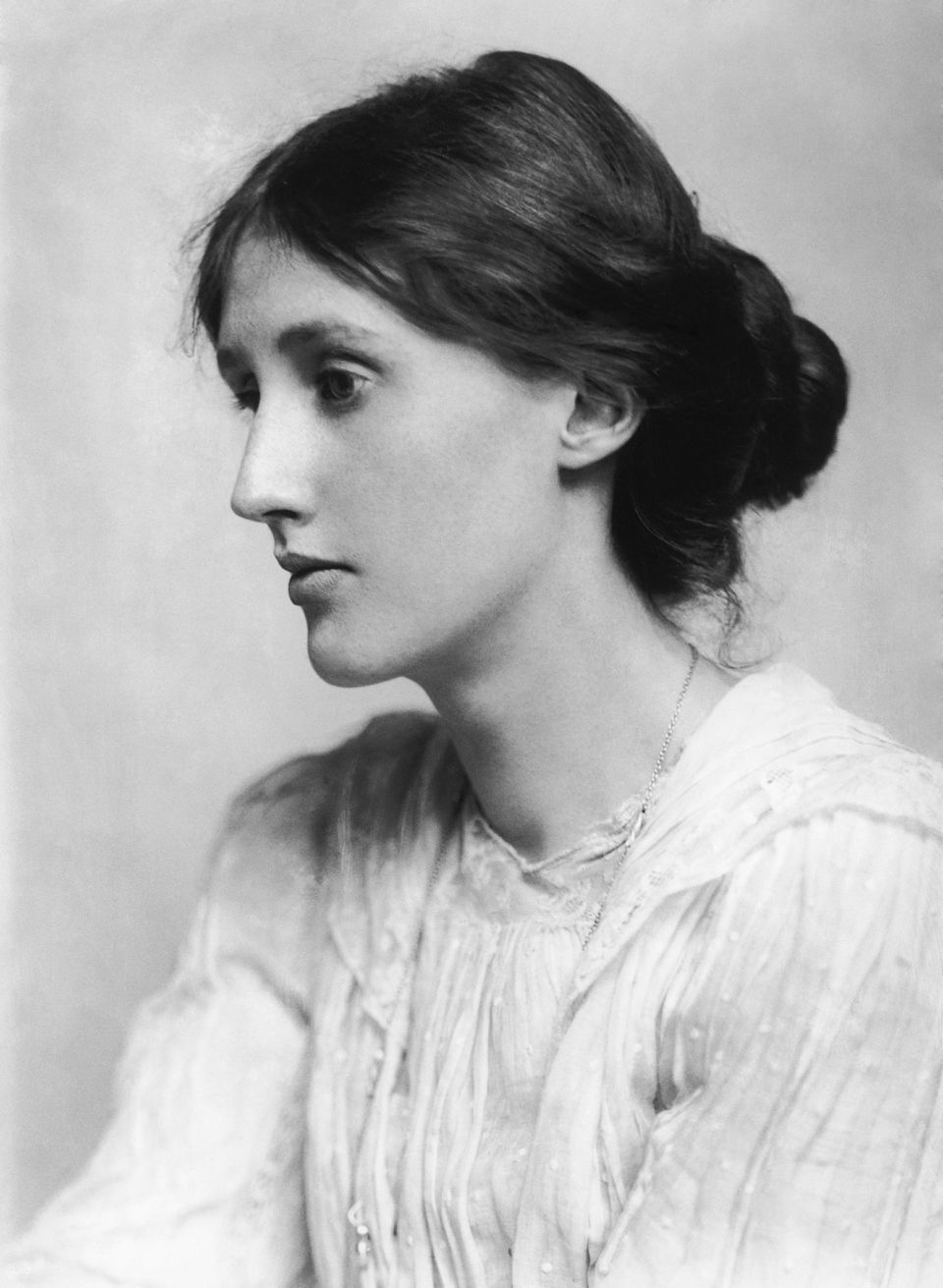
The English novelist who dismantled the Victorian machinery of plot and character to build fiction from the texture of consciousness itself.
Virginia Woolf reinvented the English novel by turning it inward. Where Victorian fiction followed events, she followed the mind — its digressions, intensities, and sudden illuminations. The novels she produced between 1922 and 1941 remain among the most technically radical and emotionally precise in the language.
Origins and the Bloomsbury world
Adeline Virginia Stephen was born in London in 1882, the daughter of the biographer and critic Leslie Stephen. Her childhood home in Hyde Park Gate was a meeting place for Victorian intellectuals; grief arrived early, with her mother's death in 1895 and her half-sister Stella's in 1897. After her father's death in 1904 she moved with her siblings to Bloomsbury, where their Gordon Square house became a gathering point for writers, painters, and philosophers including E.M. Forster, John Maynard Keynes, Roger Fry, and the painter Vanessa Bell, her sister. In 1912 she married the writer and publisher Leonard Woolf. Together they founded the Hogarth Press in 1917, which published her own work as well as early translations of Freud into English.
The novels
Woolf's first two novels worked within conventional form. With Jacob's Room (1922) she broke decisively: the title character is glimpsed only through others' perceptions, never directly known. Mrs Dalloway (1925) unfolds over a single day in London, interweaving Clarissa Dalloway's preparations for a party with the shell-shocked interiority of Septimus Warren Smith — two lives that never quite meet.^1 To the Lighthouse (1927), drawn from her childhood summers in Cornwall, places its central event (a trip to a lighthouse) years apart, with an extraordinary central section — "Time Passes" — that renders domestic space emptied by death and war. The Waves (1931) is her most radical: six voices, no conventional plot, each voice a register of inner life from childhood to old age.
Method and essay writing
Woolf theorised her practice across a body of essays that stand independently as criticism. "Modern Fiction" (1919) attacked the "materialist" fiction of H.G. Wells and Arnold Bennett for mistaking exterior event for life. A Room of One's Own (1929) — originally two lectures delivered at Cambridge — argued with wit and precision that women's exclusion from literary culture was an economic and spatial problem as much as a cultural one. Three Guineas (1938) extended the argument into pacifism.
| Novel | Year | Central technique |
|---|---|---|
| Mrs Dalloway | 1925 | Dual stream of consciousness; single day |
| To the Lighthouse | 1927 | Temporal ellipsis; lyric prose |
| Orlando | 1928 | Biographical fantasy; gender fluidity |
| The Waves | 1931 | Six interior monologues; no narration |
Legacy
Woolf took her own life in March 1941, weighting her coat with stones and walking into the River Ouse. She was fifty-nine. Her influence on twentieth-century fiction has been pervasive — felt in writers as different as Toni Morrison, Michael Cunningham, and José Saramago. Her essays on women and writing retain their argumentative force.
A woman must have money and a room of her own if she is to write fiction.