Vivian Maier
A nanny who spent four decades photographing the streets of Chicago and New York without ever seeking an audience, leaving behind one of the largest and most remarkable bodies of work in the history of street photography.
Vivian Maier made over 150,000 photographs across five decades and showed them to almost no one. Discovered only after her death, her work overturned assumptions about who gets to be a photographer and who decides what counts as art.
Origins and a double life
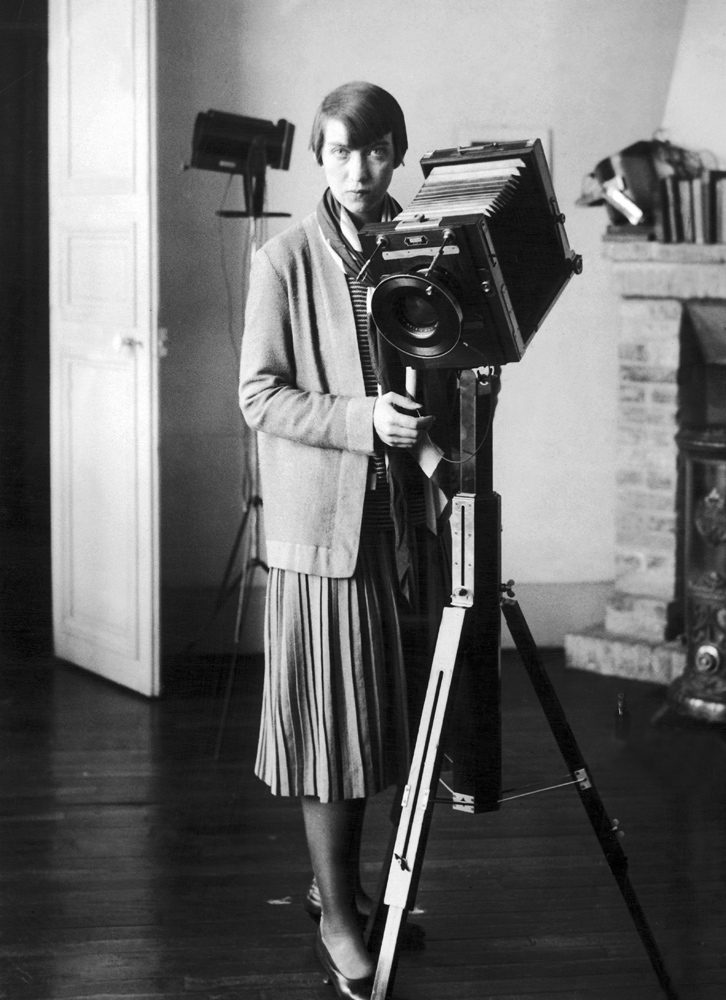
Maier was born in New York City in 1926 to a French mother and an Austrian father, and spent portions of her childhood in France. She had no formal photographic training. By the early 1950s she had settled in Chicago and taken work as a nanny and caregiver — a job she would hold for most of her adult life, working for various families on the North Shore. On her days off and during errands, she photographed. Her camera of choice was a Rolleiflex twin-lens reflex, held at waist height and looked down into: a posture that allowed her to photograph people on the street without the conspicuousness of a camera raised to the eye. The resulting images had a distinctive geometry, often framing subjects from below with the square format that medium roll film produced.
The work itself
Maier photographed Chicago's streets, its elevated trains, its markets and back alleys, its working-class neighbourhoods, and the domestic interiors of the families she worked for. She also photographed extensively in New York City and Los Angeles, and during a 1959 trip — financed by money she had saved — she shot across Southeast Asia, Egypt, and Europe. Her subjects were consistently the people others overlooked: children at play, labourers at rest, old women on park benches.1
Her formal instincts were precise. Compositions were tightly controlled; the Rolleiflex's square frame was rarely wasted. She developed her own film for many years, though by the end of her life vast quantities of rolls remained undeveloped — tens of thousands of images that she had shot but never seen.
| Format | Period |
|---|---|
| Rolleiflex, medium format (6×6) | Primary tool, 1950s–1970s |
| 35mm colour slides | 1960s–1970s |
| Super 8 film | Occasional, 1960s onward |
Discovery and posthumous recognition
In 2007, John Maloof purchased a box of negatives at a Chicago auction house for approximately $380. When he began scanning and posting images online, the response was immediate. Maier had died in April 2009 — in poverty, after a fall on an icy street — before she could know what the photographs would become. Maloof and others eventually acquired most of her archive: an estimated 150,000 negatives, 3,000 prints, and hundreds of rolls of undeveloped film. Exhibitions followed in Chicago, New York, London, and Paris, and she became one of the most discussed photographers of the twenty-first century despite having lived entirely outside its institutions.
You have to remain anonymous. You have to remain nobody.
Footnotes
- She also made numerous self-portraits, typically in shop windows, mirrors, and reflective surfaces — a recurring motif that has attracted considerable critical attention. ↩