Walker Evans
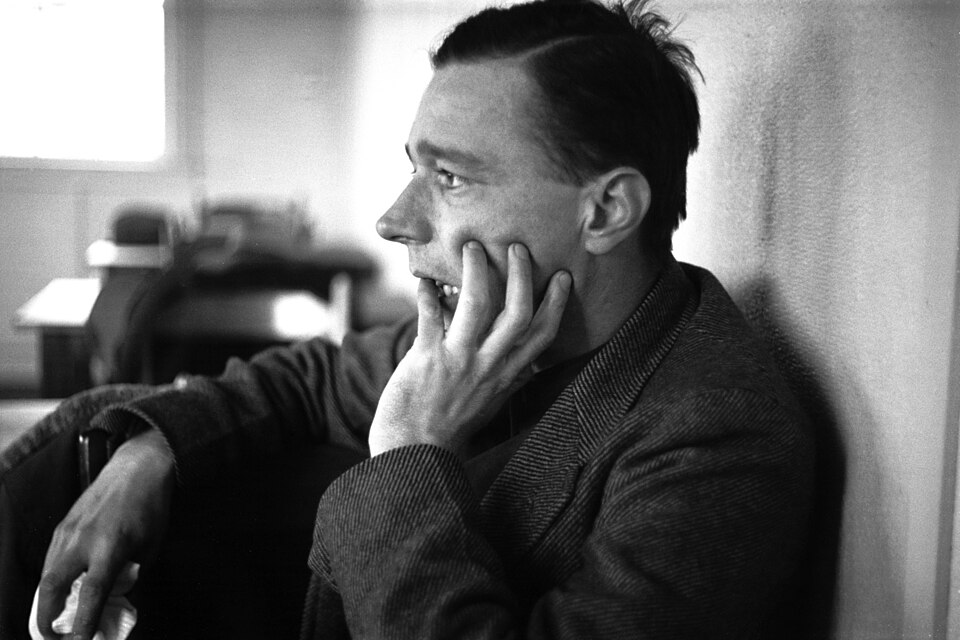
The American photographer who made documentary plain-speaking into an art form, producing images of Depression-era poverty that remain the benchmark of clear-eyed witnessing.
Walker Evans wanted photographs that were literate, authoritative, and transcendent — three adjectives that set a nearly impossible standard and that he nonetheless met, repeatedly, with an 8×10 view camera pointed at sharecroppers' cabins, roadside signs, and the faces of Americans who were not performing for the lens but simply enduring it.
Early life and literary formation
Evans was born in St. Louis, Missouri, in 1903. He studied at Williams College and the Sorbonne, where his ambition was literary rather than photographic — he wanted to be a writer in the tradition of Flaubert. Returning to New York in 1927, he fell into photography as a means of making income and discovered it suited his temperament: observation without insertion, record without rhetoric.
His early work was influenced by the vernacular directness of Eugène Atget, whose photographs of old Paris Evans encountered and admired. The aspiration to let a subject be itself — storefronts, streets, interiors — without symbolic inflection became his abiding principle.
FSA and the Depression documents
From 1935 to 1938, Evans worked for the Farm Security Administration's photography section, documenting rural poverty across the American South and Midwest. Unlike colleagues such as Dorothea Lange, whose work sought to elicit sympathy, Evans maintained a forensic distance: his photographs of Alabama tenant farmers record poverty with the same systematic attention he applied to vernacular architecture or roadside typography.
The collaboration with writer James Agee — who had been assigned to report on Alabama sharecropping families alongside Evans — produced Let Us Now Praise Famous Men (1941), a book that combined Agee's torrential prose with Evans's photographs. It was a commercial failure on publication but came to be recognised as one of the defining documents of the era.
Method
Evans used the large-format 8×10 view camera for most of his New Deal work. The format demands stillness and deliberation: subjects must hold position while the photographer composes on a ground glass and operates a slow shutter. The resulting images have a spatial exactness — every surface resolved — that distinguishes them from the mobile documentary photography of the same period.
He also worked covertly: for a 1938 project on New York subway riders, he hid a camera under his coat and photographed passengers without their awareness, producing a body of candid portraiture that prefigures later street photography.
Stare. It is the way to educate your eye, and more. Stare, pry, listen, eavesdrop.
Legacy
Evans's influence on American photography — and on the broader idea of what documentary can do — has been enormous. Robert Frank's The Americans is in direct dialogue with Evans's South; the vernacular Americana of the FSA archive became a shared reference for painters, designers, and filmmakers across the second half of the twentieth century. He joined the Fortune magazine staff in 1945 and taught at Yale from 1965 until his death.