Walter Benjamin
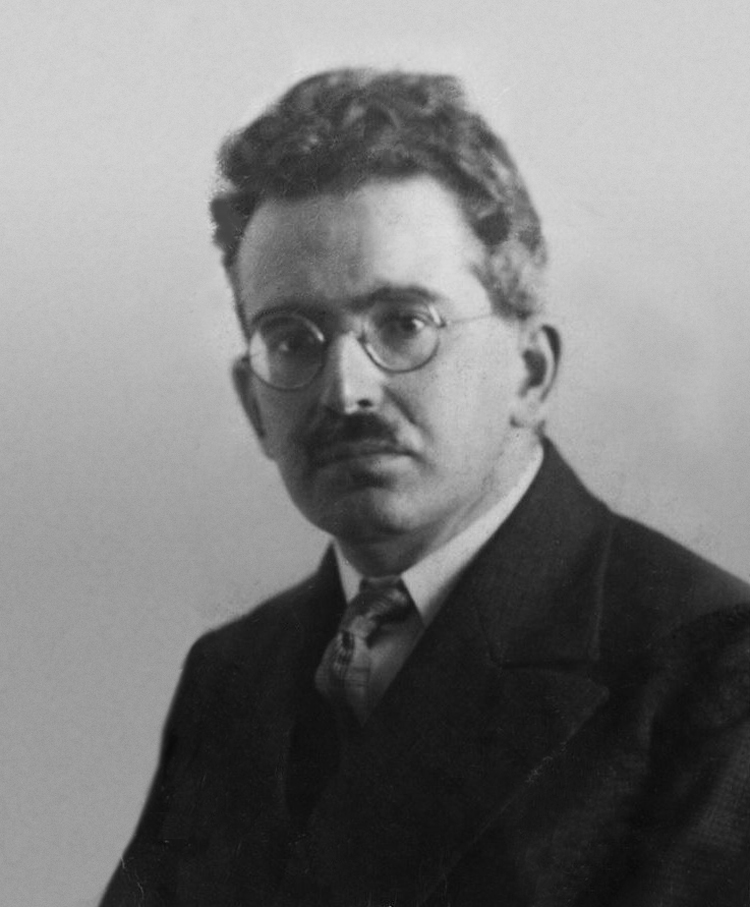
A thinker who dissolved the boundaries between philosophy, literary criticism, and cultural history, Benjamin left behind fragments that proved more generative than most finished systems.
Walter Benjamin spent his adult life writing outside every institution that might have sustained him. His habilitation thesis was rejected, his planned emigration to Palestine never happened, his Marxism made him suspect in some quarters and his mysticism in others. When he died at the Spanish border in September 1940, his work was largely unpublished and nearly lost. What survived became, across the following decades, some of the most influential writing on modernity, media, and historical experience produced in the twentieth century.
Origins and formation
Benjamin was born on 15 July 1892 in Berlin to a prosperous Jewish family. He studied philosophy at the universities of Berlin, Freiburg, Munich, and Bern, completing his doctorate at Bern in 1919 with a thesis on the concept of art criticism in early German Romanticism. The intellectual atmosphere of his formation was dense with competing claims: German idealism, Jewish theology, emerging Marxist theory, and the European avant-garde all left marks on his thinking. He translated Proust and Baudelaire into German — Baudelaire would become a lifelong obsession — and worked as a literary critic and essayist in Weimar-era Germany, publishing in journals and newspapers without ever securing a university position.
The habilitation and its aftermath
In 1925, Benjamin submitted his habilitation thesis — the qualification required for a German academic career — to the University of Frankfurt. The thesis, The Origin of German Tragic Drama (Ursprung des deutschen Trauerspiels), argued for the Baroque Trauerspiel as a form distinct from classical tragedy, deploying a dense, idiosyncratic methodology that the faculty found impenetrable. It was rejected, and Benjamin withdrew it rather than face formal failure. He would never hold an academic post. The book was published in 1928; it is now considered one of the key texts of twentieth-century literary theory.
Paris and the Arcades Project
After the Nazi rise to power in 1933, Benjamin fled Germany and settled in Paris, surviving on modest stipends from the Institute for Social Research (the Frankfurt School in exile) and from journalism. In Paris he began what would become his most ambitious project: the Passagenwerk, or Arcades Project, a vast, unfinished montage of quotations, observations, and analysis organised around the glass-roofed shopping arcades of nineteenth-century Paris. Benjamin conceived the arcades as the fossil remains of an early consumer capitalism, and the project as a materialist prehistory of modernity — examining commodities, fashion, advertising, boredom, and the dream-life of a society. He worked on it, intermittently, for the rest of his life. It was never completed.
Key essays
Benjamin's published essays constitute his most finished work. "The Work of Art in the Age of Mechanical Reproduction" (1935–36) introduced the concept of the aura — the singular presence of an original artwork, its embeddedness in a particular time and place — and argued that mechanical reproduction (photography, film) dissolves aura, with contradictory political consequences: mass access on one hand, the aestheticisation of politics on the other. "On Some Motifs in Baudelaire" (1939) developed the concept of Chock (shock experience) as the characteristic perceptual mode of urban-industrial life. His "Theses on the Philosophy of History" (1940), written in the last months of his life, argued against the progressive historicism of both liberal and orthodox Marxist thought, calling for a history that seized the past in moments of danger rather than narrating it as steady advance.
Flight and death
When Germany invaded France in 1940 and the Gestapo seized his papers in Paris, Benjamin fled south. In September 1940 he crossed the Pyrenees on foot with a small group of refugees, reaching the Spanish border town of Portbou. The Spanish border police informed the group that they lacked the correct documentation and would be returned to France the following morning. Benjamin died during the night of 26 September 1940. He had taken morphine. He was forty-eight years old.
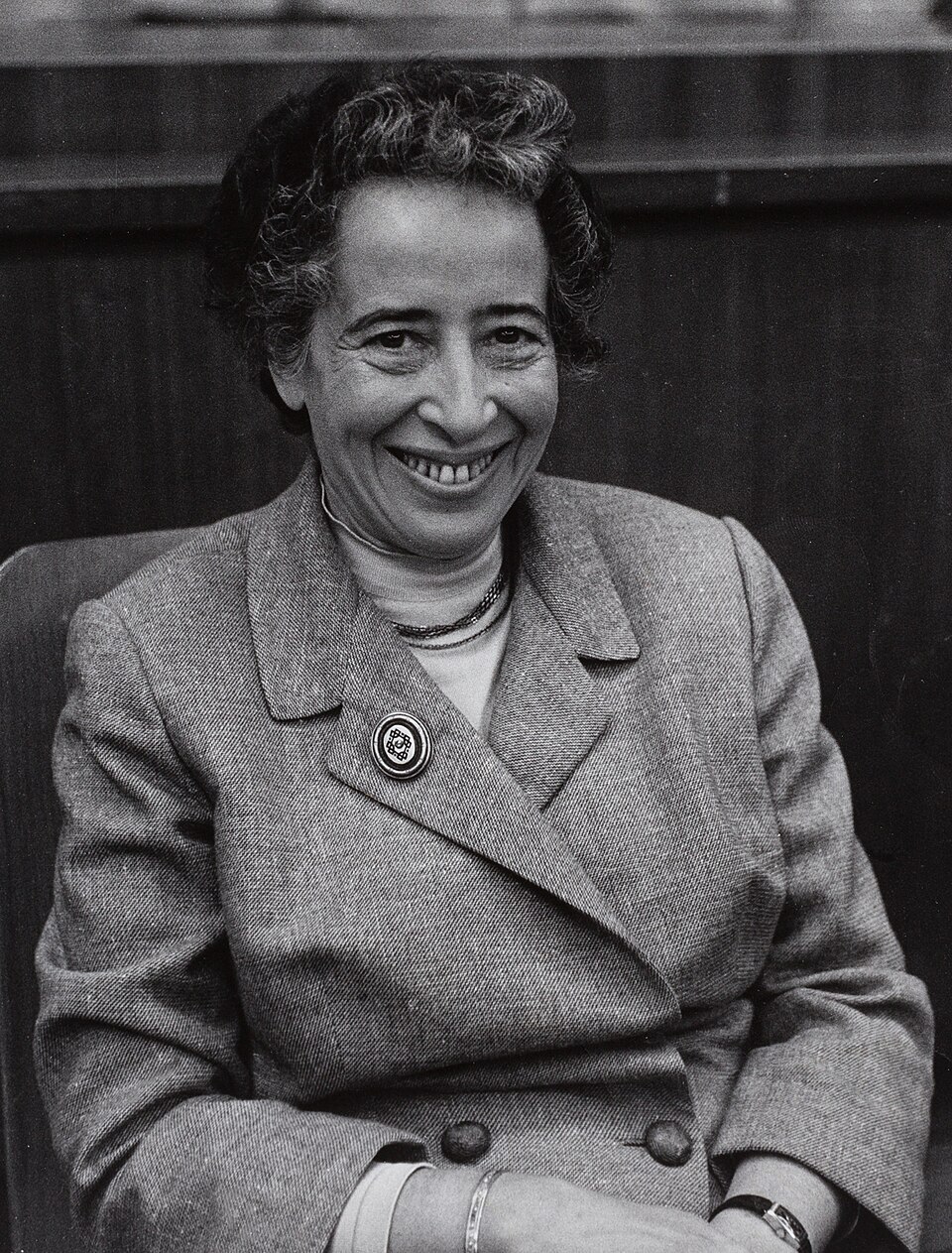
His manuscripts were preserved in part through the efforts of Hannah Arendt, who carried the "Theses on the Philosophy of History" to Theodor Adorno in New York. Adorno and Max Horkheimer worked to publish and circulate his work. Arendt edited and introduced Illuminations, the English-language selection published in 1968, through which Benjamin became widely known to Anglophone readers. His correspondence with Gershom Scholem — a dialogue sustained across three decades, covering theology, Marxism, and Zionism — was published separately and forms an essential context for his thought.
"There is no document of civilisation which is not at the same time a document of barbarism."