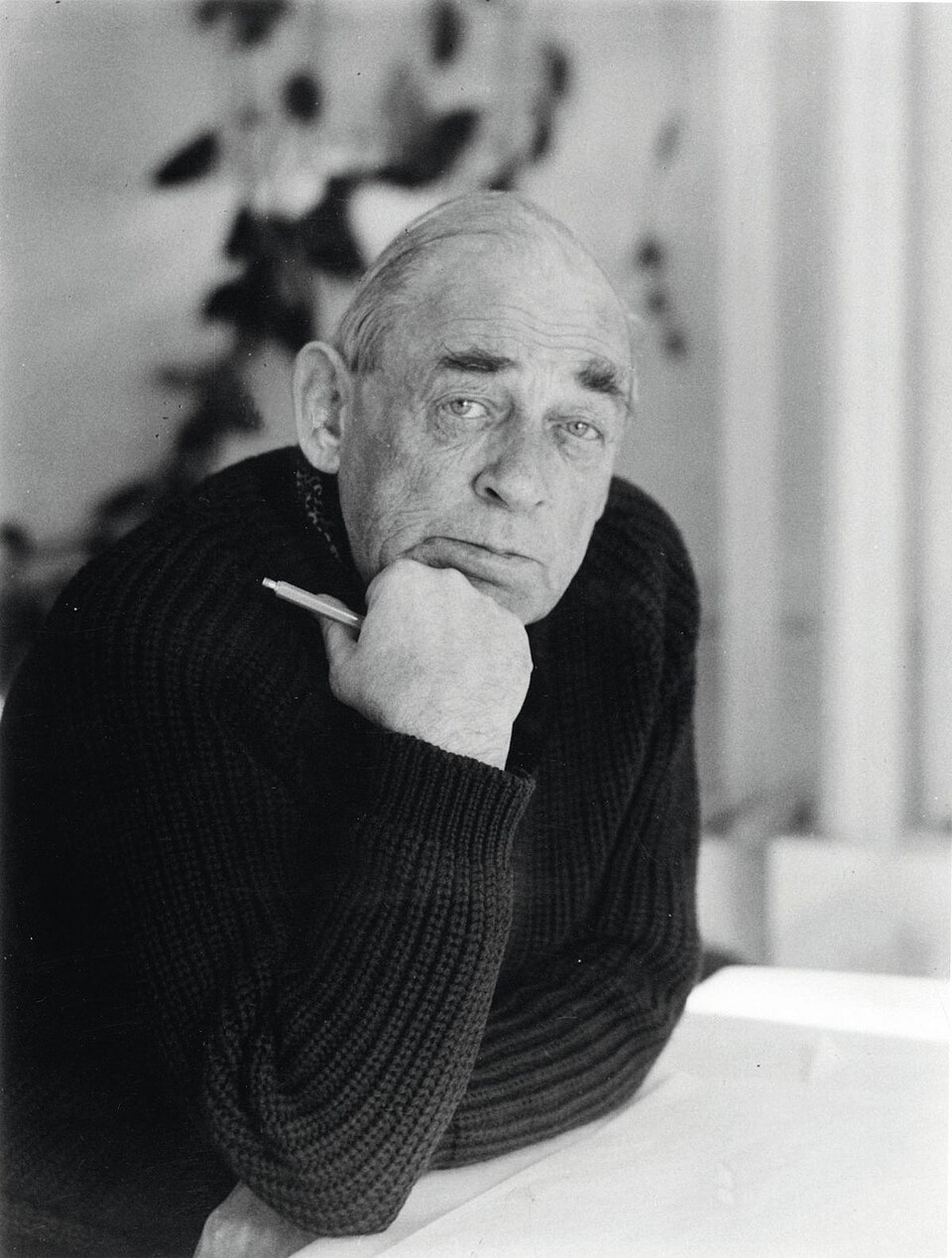
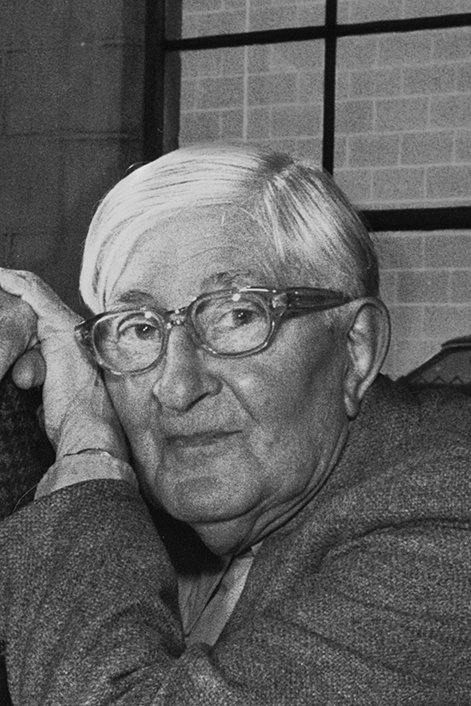
Walter Gropius
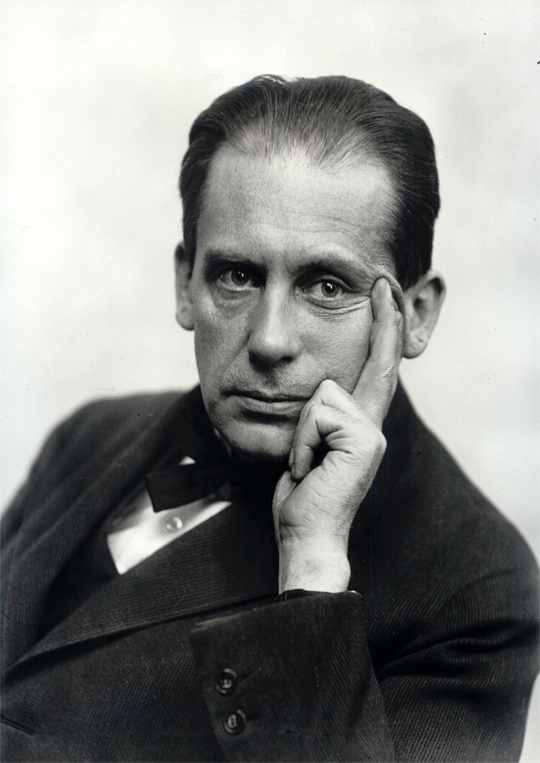
The founder of the Bauhaus who united craft, fine art, and industrial design under one roof and gave the twentieth century its most influential art school.
Walter Gropius founded the Bauhaus in Weimar in 1919 with the conviction that the separation of craft from fine art was an artificial impoverishment, and that the designer who understood materials at every scale — from a teapot to a building — would produce better work than one trained in only one discipline. That conviction, institutionalised in a school that lasted fourteen years and produced a generation of designers, architects, and educators, became among the most consequential ideas in the history of modern design.
Formation and early practice
Gropius was born in Berlin in 1883 into a family with architectural connections — his great-uncle was the architect Martin Gropius. He studied architecture in Munich and Berlin and worked in the office of Peter Behrens from 1907 to 1910, alongside Mies van der Rohe and Le Corbusier — a concentration of subsequent architectural influence unusual even by the standards of the period.
His early independent work established him quickly. The Fagus Factory in Alfeld (1913, with Adolf Meyer) used a glass-and-steel curtain wall with corner columns that appeared not to support the structure — an innovative demonstration of modern construction's potential to dematerialise the wall.
The Bauhaus
In 1919 Gropius was appointed director of the combined Weimar art schools and reconstituted them as the Staatliches Bauhaus — the State Bauhaus. The school's curriculum paired every student with two masters: a craft master (a skilled artisan) and a form master (a fine artist). The studios covered weaving, pottery, metalwork, stage design, typography, and architecture. The goal was to dissolve the hierarchy between applied arts and fine arts, and to produce a designer who could work at any scale.
The Bauhaus moved to Dessau in 1925, where Gropius designed the new school building — a complex of interlocking glass, steel, and concrete volumes that became one of the canonical buildings of modernist architecture. He left the Bauhaus directorship in 1928, succeeded by Hannes Meyer and later Mies van der Rohe, who closed the school under Nazi pressure in 1933.
The ultimate aim of all creative activity is building.
Harvard and the American period
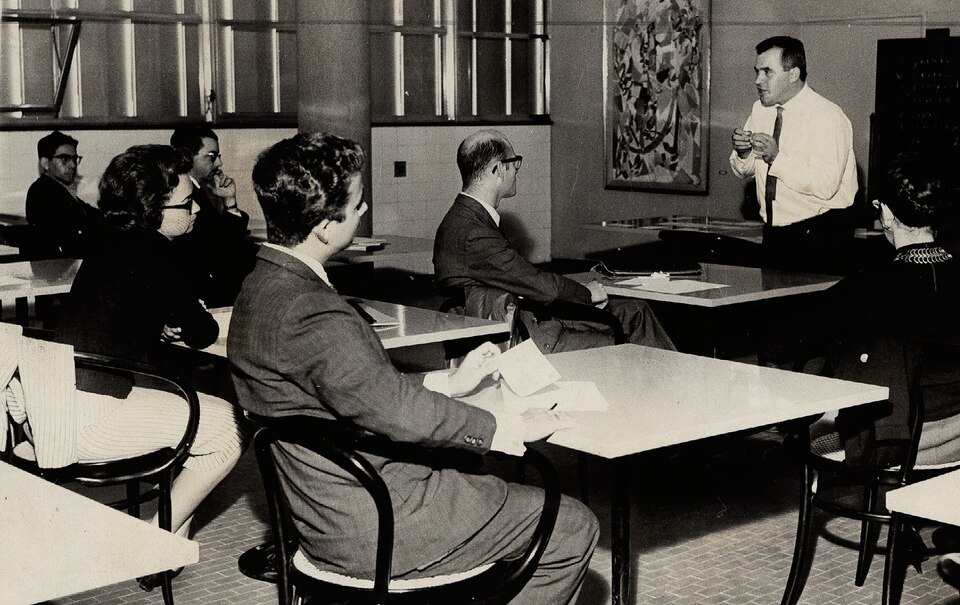
Gropius emigrated to England in 1934, then to the United States in 1937, where he joined the faculty of the Harvard Graduate School of Design. His presence at Harvard brought Bauhaus methods and pedagogical principles into American architectural education during its most formative postwar period. He collaborated with Marcel Breuer on residential commissions, and with The Architects Collaborative — a firm he co-founded in 1945 — on larger projects.
He received the AIA Gold Medal in 1959. He died in Boston on 5 July 1969.