Werner Heisenberg
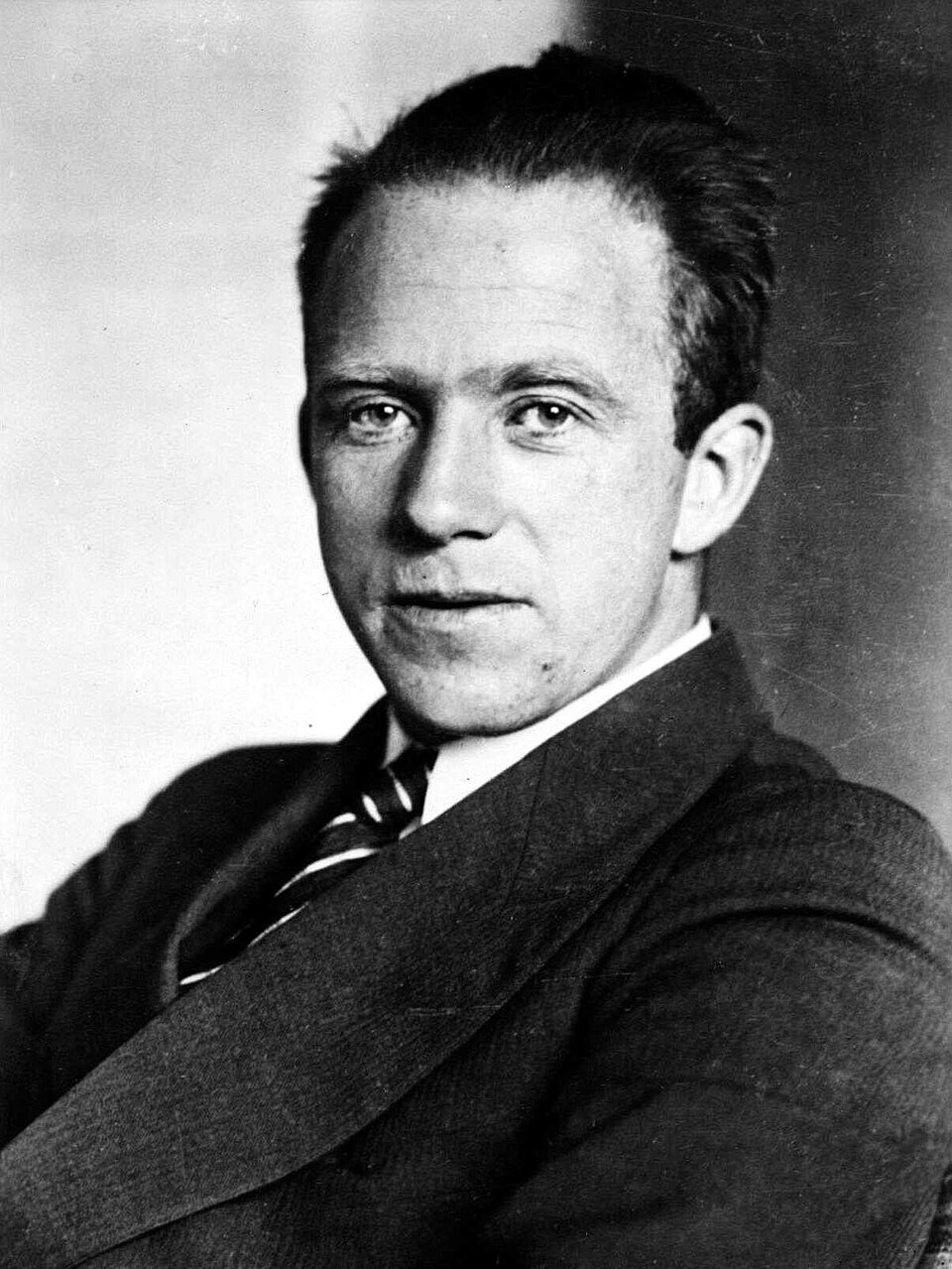
The physicist who established that uncertainty is not a deficiency of measurement but a structural feature of the quantum world — a finding that permanently altered what science could claim to know.
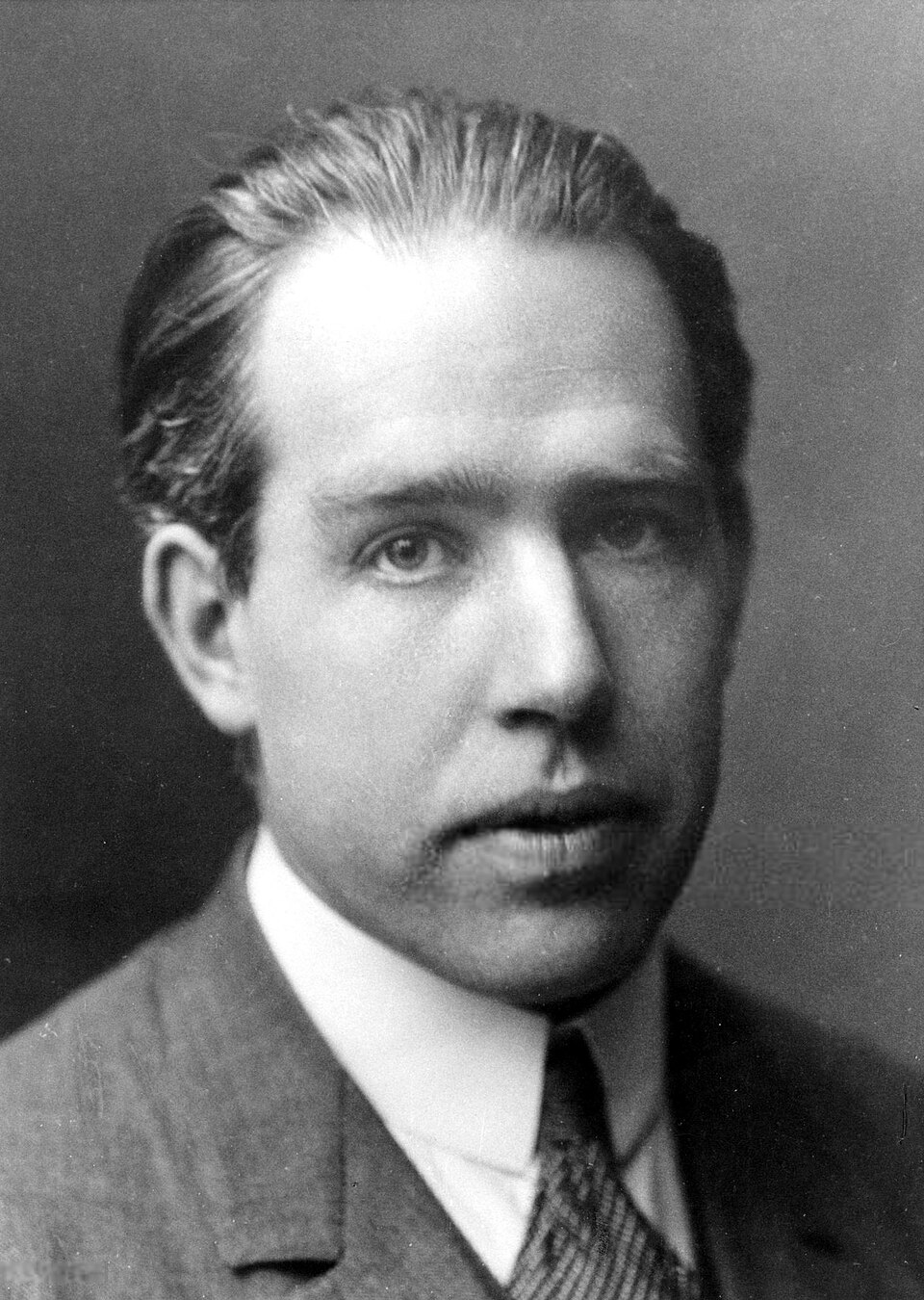
Werner Heisenberg was one of the founding architects of quantum mechanics and the author of the uncertainty principle, which holds that the position and momentum of a particle cannot both be known precisely at the same time — not because of inadequate instruments but as a matter of physical law. The principle reshaped not only physics but the philosophy of science, and the Nobel Committee awarded him the prize for physics in 1932 for the creation of quantum mechanics.
Formation
Heisenberg was born on 5 December 1901 in Würzburg and grew up in Munich, where his father August was a professor of Greek philology. He was a strong student and an enthusiastic mountaineer and chess player. He enrolled at the University of Munich to study physics under Arnold Sommerfeld, one of the foremost teachers in theoretical physics in Europe. Sommerfeld sent him to Göttingen to work with Max Born, and Heisenberg also spent time in Copenhagen with Niels Bohr, whose complementarity ideas and appetite for foundational questions would shape the younger physicist's outlook for life. He completed his doctorate in Munich in 1923.
Matrix mechanics and the birth of quantum mechanics
By 1925 Heisenberg was working on an approach to atomic physics that broke radically with the classical picture. Recovering from a severe attack of hay fever on the island of Helgoland in the North Sea, he developed a formulation of quantum mechanics that described atomic transitions in terms of arrays of numbers — what he called, and Born and Pascual Jordan then recognised as, matrices. The paper Heisenberg published in 1925, followed almost immediately by the full Dreimännerarbeit (three-man work) co-authored with Born and Jordan, established matrix mechanics as the first complete and consistent formulation of quantum mechanics. It was an entirely new kind of physical theory: the observable quantities it treated could not be thought of as ordinary numbers, because the order in which you multiplied them mattered.
The uncertainty principle
In 1927 Heisenberg published his paper on what he called the Unbestimmtheitsrelation — the indeterminacy or uncertainty relation. The core statement is precise: the more accurately the position of a particle is determined, the less accurately its momentum can be known, and vice versa. The product of the uncertainties in the two quantities cannot be less than a quantity of the order of Planck's constant. This was not a claim about measurement disturbing the system — Heisenberg's later thought made that formulation more careful — but about the limits built into nature itself.
Together with Bohr, Heisenberg developed what became known as the Copenhagen interpretation of quantum mechanics: the view that quantum states describe probabilities, not definite properties, and that asking what a particle is doing when it is not being observed is not a well-formed question. The interpretation remained the working consensus of physics for decades and continues to be the most widely taught framework, though alternatives have been developed and debated since.
The war years
Heisenberg stayed in Germany through the National Socialist period and the Second World War. In 1939 he was put in charge of Germany's nuclear weapons research programme, the Uranverein (uranium club). The programme did not produce a weapon. Whether this outcome reflected technical difficulties, resource constraints, the disruptions of war, or any degree of deliberate restraint by Heisenberg himself has been debated by historians for decades without resolution. The question was dramatised in Michael Frayn's 1998 play Copenhagen, which imagines a meeting between Heisenberg and Bohr in occupied Copenhagen in 1941 — a meeting that took place but whose content was never clarified.
Later career
After the war Heisenberg was interned briefly by Allied forces at Farm Hall in England as part of Operation Epsilon. He returned to Germany and became the founding director of the Max Planck Institute for Physics, which was established in Göttingen and later moved to Munich. He spent his final decades pursuing a unified field theory of elementary particles — work that did not reach the conclusions he hoped for. He died in Munich on 1 February 1976.
The violent reaction on the recent development of modern physics can only be understood when one realises that here the foundations of physics have started moving.