William Shakespeare
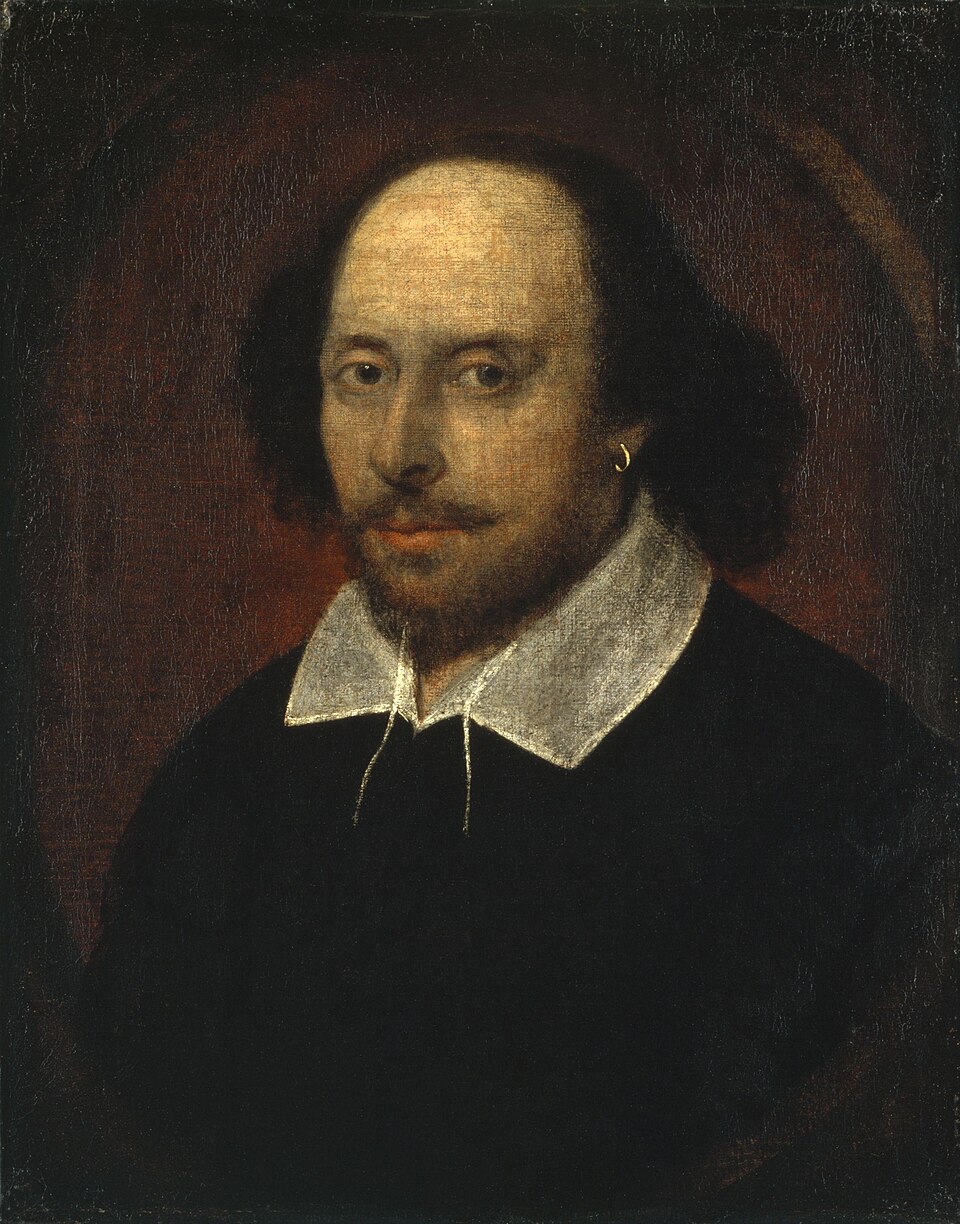
The English playwright and poet whose thirty-nine plays and one hundred and fifty-four sonnets established the boundaries of what the English language could hold.
William Shakespeare wrote for a commercial theatre in a city with no shortage of entertainment, no permanent performing space for most of his career, and no expectation that plays would survive as texts. That his work has been performed continuously for four centuries, translated into every major language, and subjected to more critical analysis than any other body of literature in English is not something his world could have anticipated — and says as much about the range of what he made as about the appetite of those who have read and staged it.
Life and career
Shakespeare was baptised on 26 April 1564 in Stratford-upon-Avon, Warwickshire; his birth date is traditionally observed on 23 April. His father, John Shakespeare, was a glove-maker and local official; his mother, Mary Arden, came from a minor landed family. He attended the King's New School in Stratford, where the curriculum was based on classical Latin authors.
At eighteen he married Anne Hathaway, six years his senior; they had three children — Susanna and the twins Hamnet and Judith. His life between the early 1580s and 1592 is largely undocumented, a gap sometimes called the "lost years." By 1592 he was in London, established enough as a playwright and actor to attract envious comment from the established writer Robert Greene.
The theatres and the company
Shakespeare was a shareholder in the Lord Chamberlain's Men, formed in 1594, which became the leading theatrical company of the era. The company built the Globe Theatre on Bankside in 1599, where most of his major plays received their first performances. When the Globe was destroyed by fire in 1613, its replacement was built within a year; Shakespeare had by then retired to Stratford.
His plays were written for performance, not publication. The First Folio — the collected edition of his plays edited by fellow actors John Heminges and Henry Condell — appeared in 1623, seven years after his death, and preserved thirty-six plays; several others are attributed to him in whole or in part.
The work
Shakespeare's output covers tragedy, comedy, history, and romance. The tragedies — Hamlet, Othello, King Lear, Macbeth — explore power, jealousy, moral failing, and contingency with a psychological complexity that later ages read as diagnostic of conditions they themselves inhabited. The histories — the two Henry IV plays, Henry V, Richard III — dramatise English political history with a vividness that shaped how subsequent generations understood it.
The sonnets, published in 1609, are 154 poems addressed to a "Fair Youth" and a "Dark Lady" whose identities remain unestablished and a matter of scholarly debate.
What a piece of work is a man, how noble in reason, how infinite in faculties.
Language and influence
Shakespeare's language — coinages, compounds, inversions, rhetorical complexity — expanded the expressive range of English. Hundreds of phrases that now function as idiom originated in his plays. His influence on subsequent literature in English is so pervasive as to be structural: writers from Milton to Joyce have worked in relation to his example.