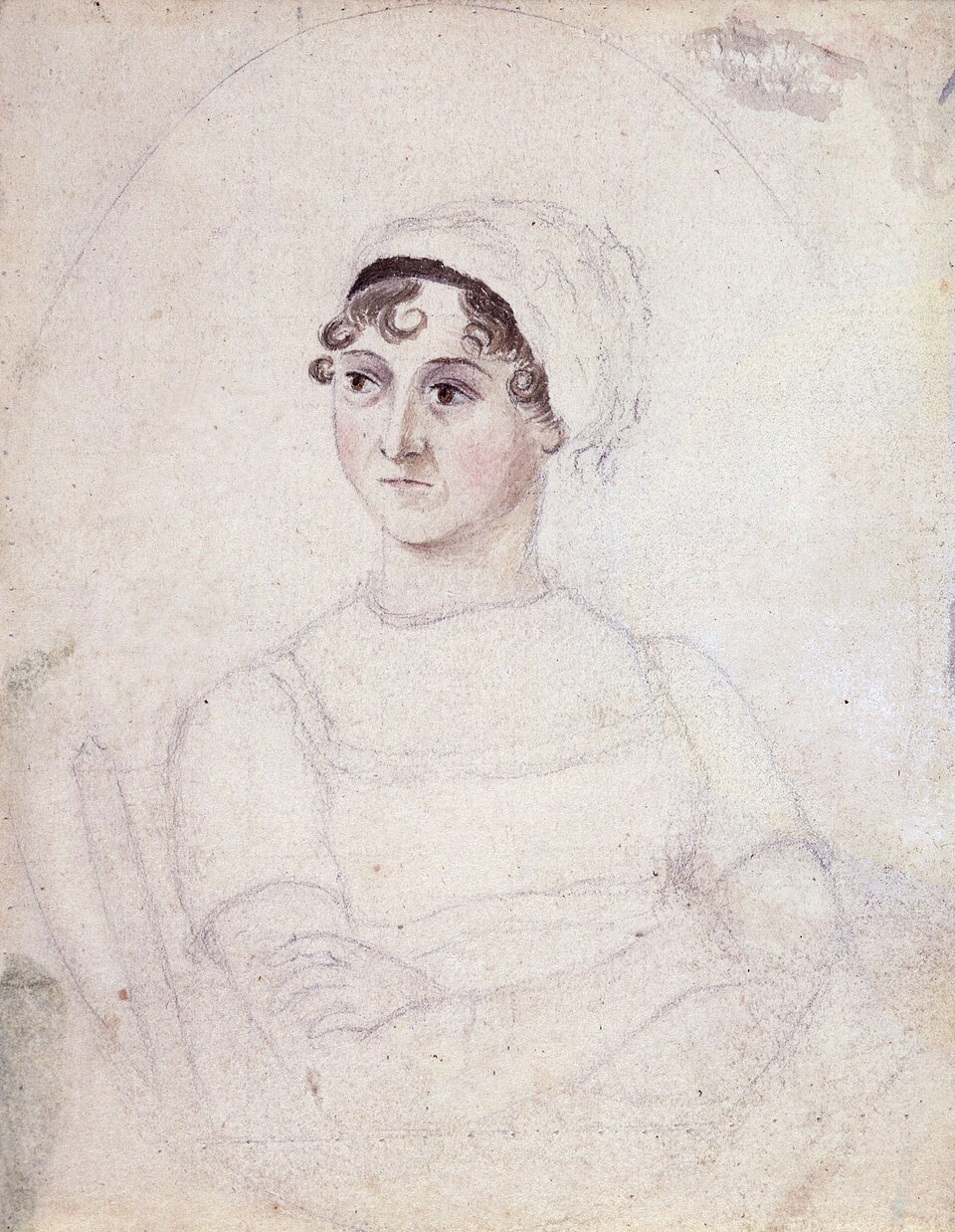
William Wordsworth
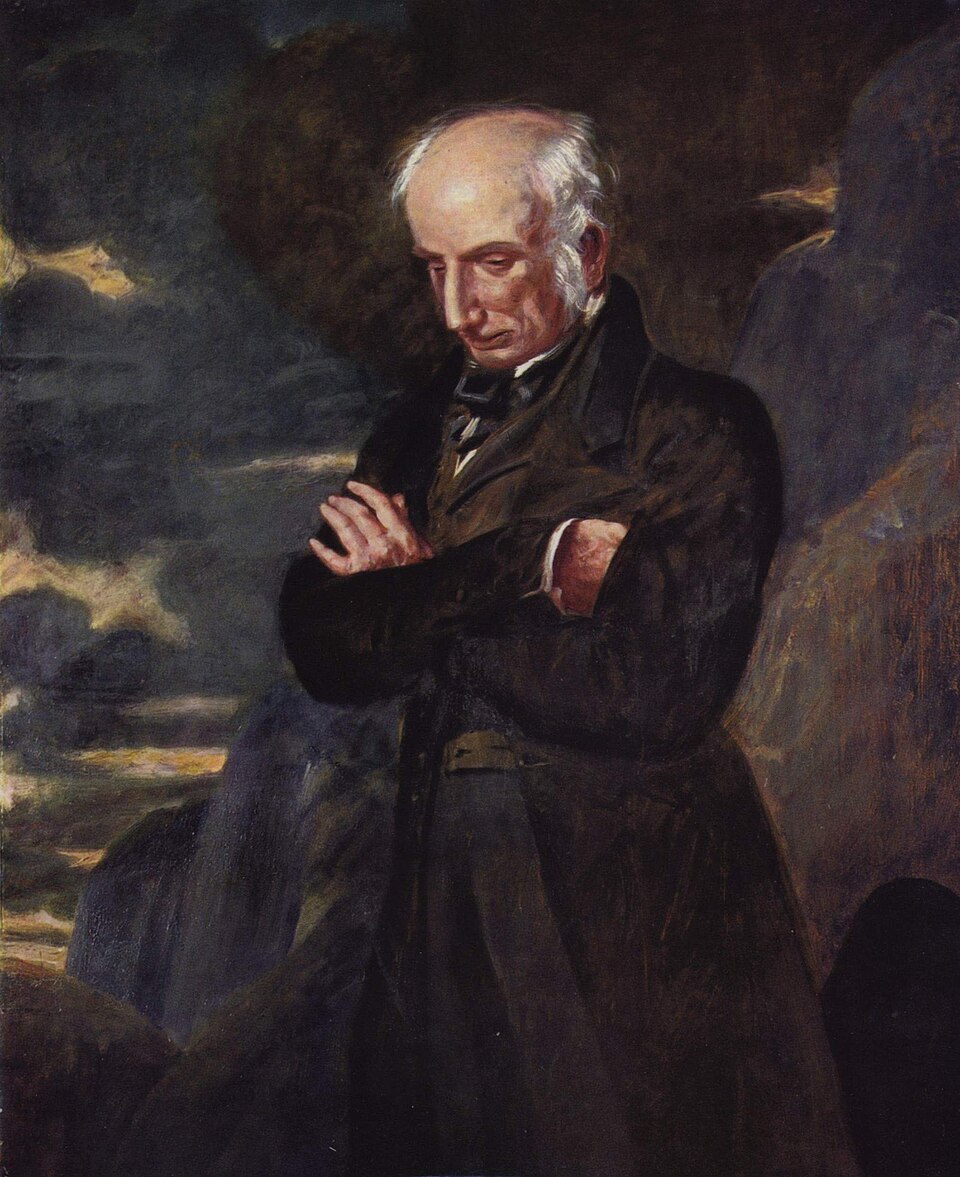
The poet who found in the Lake District's mountains and rivers the material for a new theory of what poetry should be and do.
William Wordsworth helped launch English Romantic poetry with a simple and radical proposition — that the language of ordinary men and the experience of nature were fit subjects for serious verse — and then spent fifty years living out that argument in the Lake District.
Origins in Cumberland
Born in Cockermouth, Cumberland, in 1770, Wordsworth lost his mother at eight and his father at thirteen. He was educated at Hawkshead Grammar School, where his schoolboy wanderings in the hills and on the ice gave him the material he would return to for the rest of his life. He studied at St John's College, Cambridge, and spent time in France (1791–1792) during the early Revolutionary period — an experience that initially electrified him and subsequently disillusioned him.
He settled with his sister Dorothy at Racedown in Dorset in 1795, then moved to Alfoxden in Somerset to be near Samuel Taylor Coleridge. The proximity was decisive.
Lyrical Ballads and the Romantic manifesto
In 1798, Wordsworth and Coleridge published Lyrical Ballads jointly. The collection was designed as an experiment: Coleridge would treat supernatural subjects with psychological realism; Wordsworth would find the extraordinary in ordinary rural life. The book established the terms of English Romantic poetry. Its 1800 preface — written by Wordsworth — became the movement's manifesto: poetry as "the spontaneous overflow of powerful feelings," recollected in tranquillity; poetic language drawn from the speech of real men rather than eighteenth-century convention.
After the Lyrical Ballads years, Wordsworth settled permanently in the Lake District — first at Dove Cottage, Grasmere, from 1799, then at Rydal Mount from 1813. He married Mary Hutchinson in 1802 and remained rooted in the landscape he had made his subject.
The Prelude
The great achievement of Wordsworth's maturity is The Prelude, an autobiographical poem in fourteen books tracing the "growth of a poet's mind" from Cumbrian childhood through Cambridge, the Alps, and Revolutionary France. He worked on it throughout his career, read it to Coleridge in 1805, but did not publish it; the poem appeared posthumously in 1850, the year of his death, in a revised form. It is among the longest and most sustained self-examinations in English poetry.
Poetry is the spontaneous overflow of powerful feelings: it takes its origin from emotion recollected in tranquillity.
Laureateship and legacy
Wordsworth was appointed Poet Laureate in 1843 — by which point his radicalism had long since given way to political conservatism, a shift that alienated some younger admirers. He died at Rydal Mount in 1850. His influence on subsequent English and American poetry is immeasurable: the Romantics who followed him, the Victorian poets, and through them the modernists all negotiated with his insistence on subjective experience and natural particularity as the ground of poetry.