Yasujirō Ozu
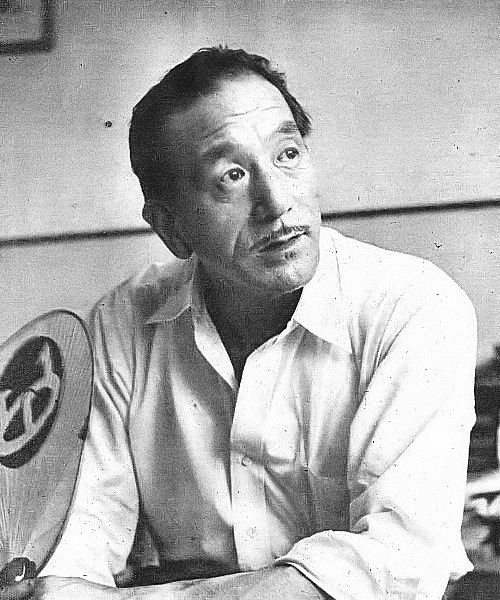
A Japanese director whose disciplined, floor-level camera and patient attention to ordinary family life turned domestic routine into one of cinema's most enduring bodies of work.
Yasujirō Ozu spent his entire career at a single studio, refined a single set of formal habits, and returned again and again to a single subject — the ordinary Japanese family as it drifts through marriage, parting, and generational change. From that narrow ground he built a filmography that is now routinely placed among the summits of world cinema.
Shochiku and the silent years
Ozu joined the Shochiku film studio in the 1920s and remained there for his whole working life, an unusually complete loyalty even by the standards of Japan's studio system. He began in the late 1920s directing silent comedies, working his way through the popular genres of the day before narrowing his focus toward the domestic drama that would define him. His silent film I Was Born, But... (1932) — a comedy about two young brothers who lose faith in their salaryman father after seeing him grovel before his boss — already shows the mature Ozu: humour and disappointment held in the same frame, and a sympathy for children set against the compromises of adult life.
A grammar of his own
Ozu built one of the most recognisable formal styles in cinema, and he built it out of restraint. His camera sits low, at roughly the height of a person kneeling on a tatami mat — the so-called "tatami shot" — looking out at the world from near floor level. Between scenes he inserts brief cutaways to landscapes, rooftops, corridors, or objects, held a beat longer than the story strictly requires; critics named these "pillow shots". He largely set aside the conventional grammar of the film industry in favour of static compositions and direct cuts, producing a cinema of stillness in which small human events register with unusual weight.
He worked repeatedly with the screenwriter Kōgo Noda, his frequent collaborator on the scripts of his major films, and drew on a recurring company of actors. Setsuko Hara and Chishū Ryū appear across his work so often that they came to feel like members of a single extended screen family, playing daughters, fathers, and widows through variation after variation.
Family, marriage, and mono no aware
Ozu's subject was the family under quiet pressure: parents ageing, children leaving, marriages arranged and resisted, households dissolving as one generation gives way to the next. Late Spring (1949) turns on a widowed father gently manoeuvring his devoted daughter toward marriage. Tokyo Story (1953) — frequently cited among the greatest films ever made — follows an elderly couple who travel to visit their grown children in Tokyo, only to find themselves an inconvenience to the busy lives they helped create. Floating Weeds (1959) revisited an earlier work, and An Autumn Afternoon (1962), his final film, returned once more to a father giving his daughter away in marriage.
Running through this work is the sensibility the Japanese call mono no aware — the pathos of transience, an awareness that things pass and that their passing is itself a kind of beauty. Ozu never married and lived with his mother; he died of cancer on his sixtieth birthday, having made the impermanence of family the great and patient subject of his life's work.
Ozu made the same film again and again, and in doing so made each one new — a study of how a family comes apart, filmed always from the floor, at the height of a person kneeling to say goodbye.