Yousuf Karsh
The Armenian-Canadian photographer who survived genocide, emigrated to Ottawa, and made portraits of the powerful so authoritative they became how the twentieth century remembered its own faces.
Yousuf Karsh was born into the Armenian Genocide and died as one of the most celebrated portrait photographers in history. In the sixty years between, he built an Ottawa studio into the destination for heads of state, artists, scientists, and writers who understood that a Karsh portrait carried a particular authority — an image that would stand for the subject in posterity as surely as any official likeness.
Survival and arrival
Karsh was born on 23 December 1908 in Mardin, in what is now southeastern Turkey, to an Armenian family. The genocide that the Ottoman government conducted against Armenians beginning in 1915 devastated his community; Karsh witnessed violence and displacement as a child. In 1924, at the age of fifteen, he emigrated to Canada to live with his uncle George Nakash, a photographer in Sherbrooke, Quebec.
The uncle's profession was not accidental to what followed. Nakash introduced Karsh to studio photography and to the technical and social protocols of portrait-making. In 1928 Karsh went to Boston to apprentice under John Garo, a prominent portrait photographer of Armenian origin, whose approach to lighting — dramatic, sculpted, drawing on the traditions of Rembrandt and the old masters — shaped Karsh's entire subsequent practice.
Ottawa and the Churchill portrait
Karsh returned to Canada in 1931 and opened a studio in Ottawa in 1932, in the Château Laurier hotel, where it would remain for the rest of his working life. Ottawa was a political city; the proximity of Parliament and the wartime presence of allied leaders gave Karsh access to subjects that a studio in any other Canadian city would not have provided.
On 30 December 1941, Winston Churchill visited Ottawa and was brought to Karsh's studio. The sitting lasted only minutes. Churchill arrived smoking a cigar; Karsh, dissatisfied with the composition, stepped forward and removed it from his mouth without permission. Churchill's expression — defiant, affronted, resolute — was captured in the next moment. The resulting photograph became what has been described as the most reproduced portrait in the history of photography, appearing on the cover of Life magazine and circulating worldwide as the definitive image of wartime British resolve.
Within every man and woman a secret is hidden, and as a photographer it is my task to reveal it if I can.
A century of subjects
The Churchill portrait opened every door. Over the following four decades Karsh photographed a roster that amounts to a portrait of the twentieth century's intellectual, cultural, and political life: Albert Einstein, Ernest Hemingway, Pope John XXIII, Audrey Hepburn, Georgia O'Keeffe, Queen Elizabeth II, Pablo Casals, Martin Luther King Jr., John F. Kennedy, and hundreds of others.
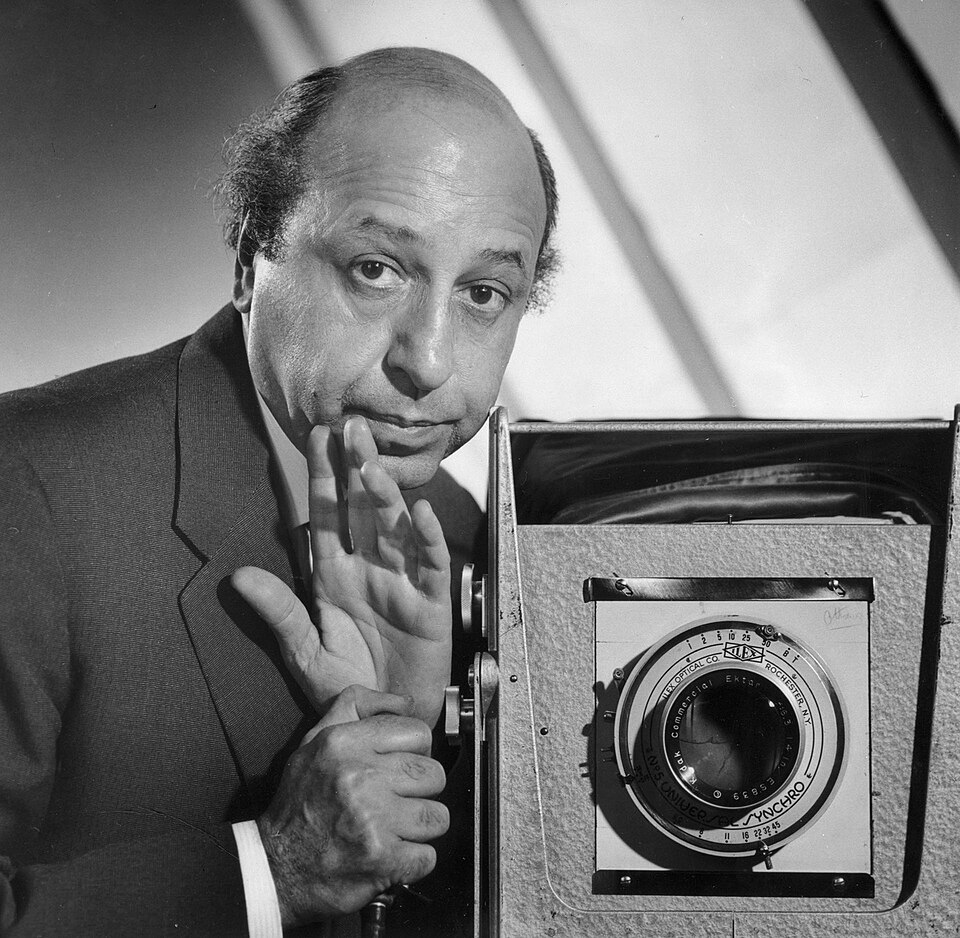
His technique was consistent: large-format camera, carefully controlled studio lighting, long exposures that required subjects to hold still and — Karsh believed — to reveal themselves. He was a patient and attentive portraitist who prepared extensively, reading about his subjects before meeting them, looking for the detail or angle that would unlock a more revealing expression than the public face habitually on offer.
Recognition
Karsh received the Order of Canada in 1968 and was elevated to Companion of the Order in 1990. A major retrospective, Karsh: A Fifty-Year Retrospective, travelled internationally in the 1980s. He closed his Ottawa studio in 1992 and died in Boston on 13 July 2002. His archive is held by Library and Archives Canada.