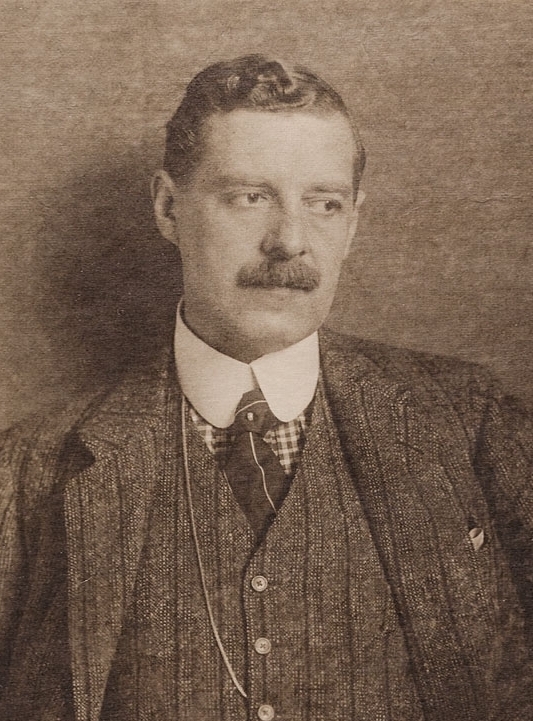
Aldo Rossi
The Italian architect and theorist who argued that cities are shaped by collective memory, and that building types outlast any individual designer's intentions.
Aldo Rossi held that architecture cannot be understood apart from the city it inhabits, and that the city itself is a kind of collective artefact — layered with memory, defined by recurring types, and resistant to the tabula-rasa ambitions of mid-century modernism. His theoretical writing established a framework that proved more durable than any single building; his built work gave that framework a formal language of cones, cylinders, and stripped classical arcades that became instantly recognisable across the postmodern decade.
Origins and formation
Rossi was born in Milan in 1931 and trained at the Politecnico di Milano, graduating in 1959. He came of intellectual age during a period of intense debate within Italian architecture and culture — a moment when the legacy of rationalism, fascist urbanism, and neorealist film were all pressing on questions of form and meaning. He began writing for the architecture journal Casabella-Continuità under Ernesto Nathan Rogers, whose idea of continuity with tradition became a foundation for Rossi's own thinking.
His early career was shaped as much by teaching and writing as by building. At the Politecnico and later at ETH Zurich, he was a demanding intellectual presence who pushed students to think historically before they thought formally.
The Architecture of the City
In 1966, Rossi published L'architettura della città — The Architecture of the City — a text that reframed the discipline's relationship to urban form. Against the functionalist logic of CIAM and the idea that cities should be planned as efficient machines, Rossi argued that cities accumulate meaning through time, that their primary elements — monuments, residential districts, public spaces — persist and transform across centuries, and that architecture must work with these inherited structures rather than against them.
The concept of typology was central: building types, for Rossi, were not neutral technical categories but repositories of collective experience. A courthouse, a school, a market — each carried within its form the memory of how a society had organised itself. Architecture that ignored this was, in his view, amnesiac.
Built work
Rossi's theoretical precision translated into a formal language of deliberate simplicity and symbolic density. His Cemetery of San Cataldo in Modena (begun 1971, with Gianni Braghieri) is his most celebrated building: an unfinished cube at its centre, a long colonnaded wing housing the ossuary, and a series of geometric volumes arranged with the silence of a De Chirico painting. The forms are elementary — the associations mortuary, dreamlike, and exact.
In 1979, for the Venice Biennale, Rossi built the Teatro del Mondo — a temporary floating theatre moored in the lagoon, its timber structure topped with an octagonal tower. It lasted a season and was towed away, but its image persisted as an emblem of architecture as both inhabitable object and urban event.
Later projects, including the Hotel Il Palazzo in Fukuoka (1989) and the Bonnefantenmuseum in Maastricht (1995), extended his formal vocabulary to larger programmes and new geographies.
Legacy
Rossi received the Pritzker Architecture Prize in 1990, the first Italian architect to do so. He died in September 1997 in a car accident in Milan, aged 66. His influence on subsequent urbanism and architectural theory has been significant and contested: the typological method he championed proved adaptable to many contexts, while his formal language was at times reduced by followers to surface style. The underlying argument — that architecture is a form of memory — remains a standing challenge to any purely technical account of the discipline.
The city is the collective memory of its people, and like memory it is associated with objects and places.