Aretha Franklin
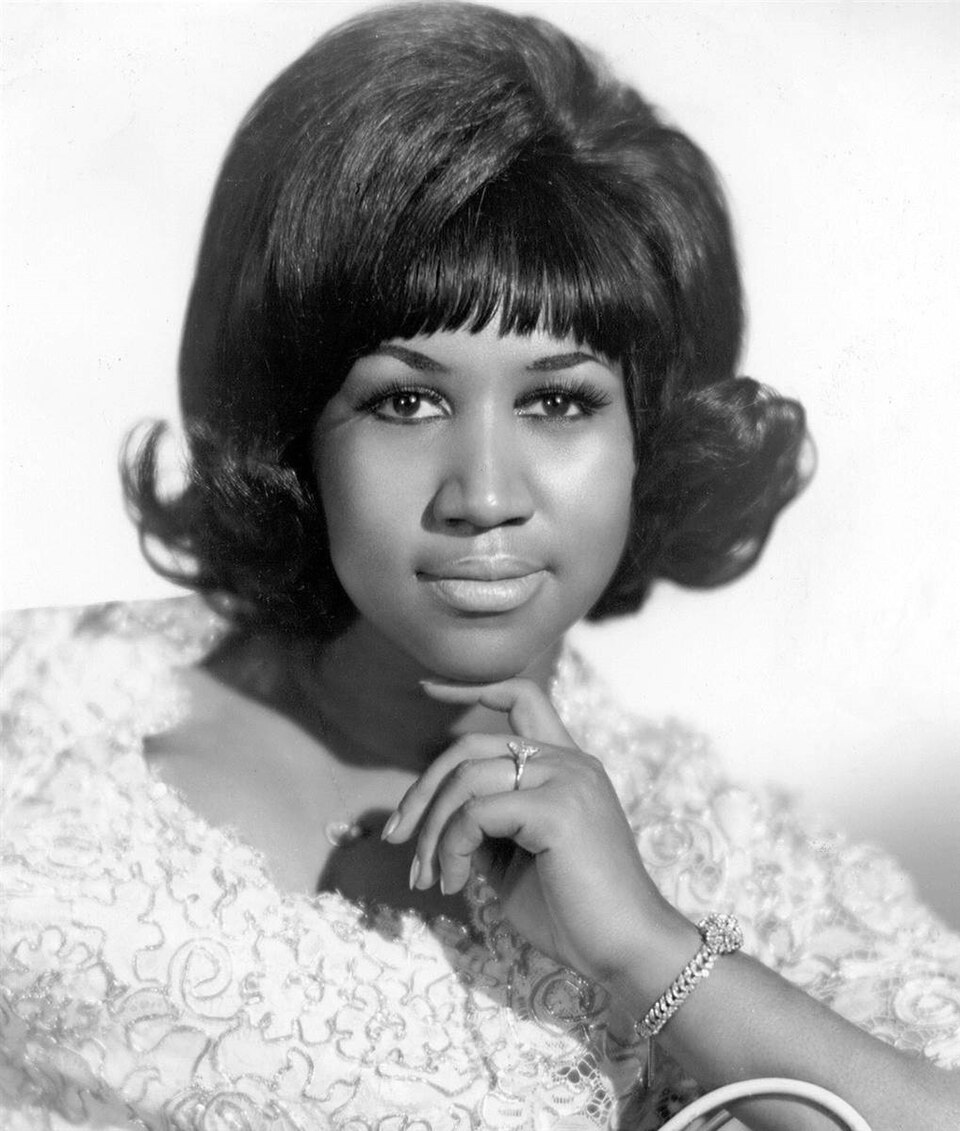
The voice that defined soul music and remade the relationship between gospel conviction and secular popular song.
Aretha Franklin sang with a force and precision that made her, across six decades, the standard against which all other soul singers were measured. Born into the Black church and schooled in gospel from childhood, she brought that tradition's emotional directness into rhythm and blues and pop, permanently altering the emotional register of American popular music.
Detroit and the Church
Franklin was born in Memphis but raised in Detroit, the daughter of the Baptist preacher and civil rights figure C.L. Franklin, whose sermons attracted crowds of thousands and whose social circle included Mahalia Jackson, Clara Ward, and Martin Luther King Jr. She learned piano and sang in her father's church, New Bethel Baptist, and at fourteen recorded her first gospel album. By eighteen she had moved to New York to pursue secular music under a Columbia Records contract, recording jazz standards and show tunes with modest commercial success. The deeper match came in 1967, when she signed with Jerry Wexler at Atlantic Records and recorded in Muscle Shoals, Alabama.
Atlantic and the Sound
The Atlantic years transformed her into an international phenomenon. "I Never Loved a Man (The Way I Love You)" (1967) established a template — raw, piano-driven, her voice capable of moving from whisper to thunderclap within a single phrase. "Respect" (1967), her reworking of an Otis Redding song, became an anthem of the civil rights and women's liberation movements simultaneously, its four-letter spelling-out of the title a moment of declarative authority that exceeded anything the original had attempted.1 "Chain of Fools", "(You Make Me Feel Like) A Natural Woman", and "Think" followed in rapid succession, each confirming her command of an idiom she was simultaneously defining.
Method and Range
Franklin played piano on most of her recordings and conducted sessions with a directness that intimidated producers less confident than Wexler. Her vocal technique drew on melisma rooted in gospel — ornamental runs that extended and bent syllables — but she deployed it with structural intelligence, knowing when restraint carried more weight than embellishment. She could perform a tender ballad and a furious, hard-driving shout piece with equal authority. Her 1972 live recording Amazing Grace, made in a Los Angeles church with the Southern California Community Choir, is widely regarded as one of the greatest gospel albums ever recorded and stands apart from the soul catalogue as a work of pure religious music.
| Album | Year | Notes |
|---|---|---|
| I Never Loved a Man | 1967 | Atlantic debut |
| Lady Soul | 1968 | Grammy: Best R&B Vocal |
| Amazing Grace | 1972 | Live gospel recording |
| Who's Zoomin' Who? | 1985 | Commercial comeback |
Legacy
Franklin received eighteen competitive Grammy Awards and a Grammy Lifetime Achievement Award. She was the first woman inducted into the Rock and Roll Hall of Fame, in 1987. Rolling Stone magazine twice named her the greatest singer of all time. At the 2009 inauguration of President Barack Obama she performed "My Country, 'Tis of Thee," wearing a hat that became an immediate cultural icon.
I sing to the realist; people who accept it like it is. I express problems; there are tears when it's sad and smiles when it's happy.
Footnotes
- "Respect" reached number one on both the pop and R&B charts in 1967 and became associated with the phrase "R-E-S-P-E-C-T," which Franklin added to the original lyric. ↩