Ludwig van Beethoven
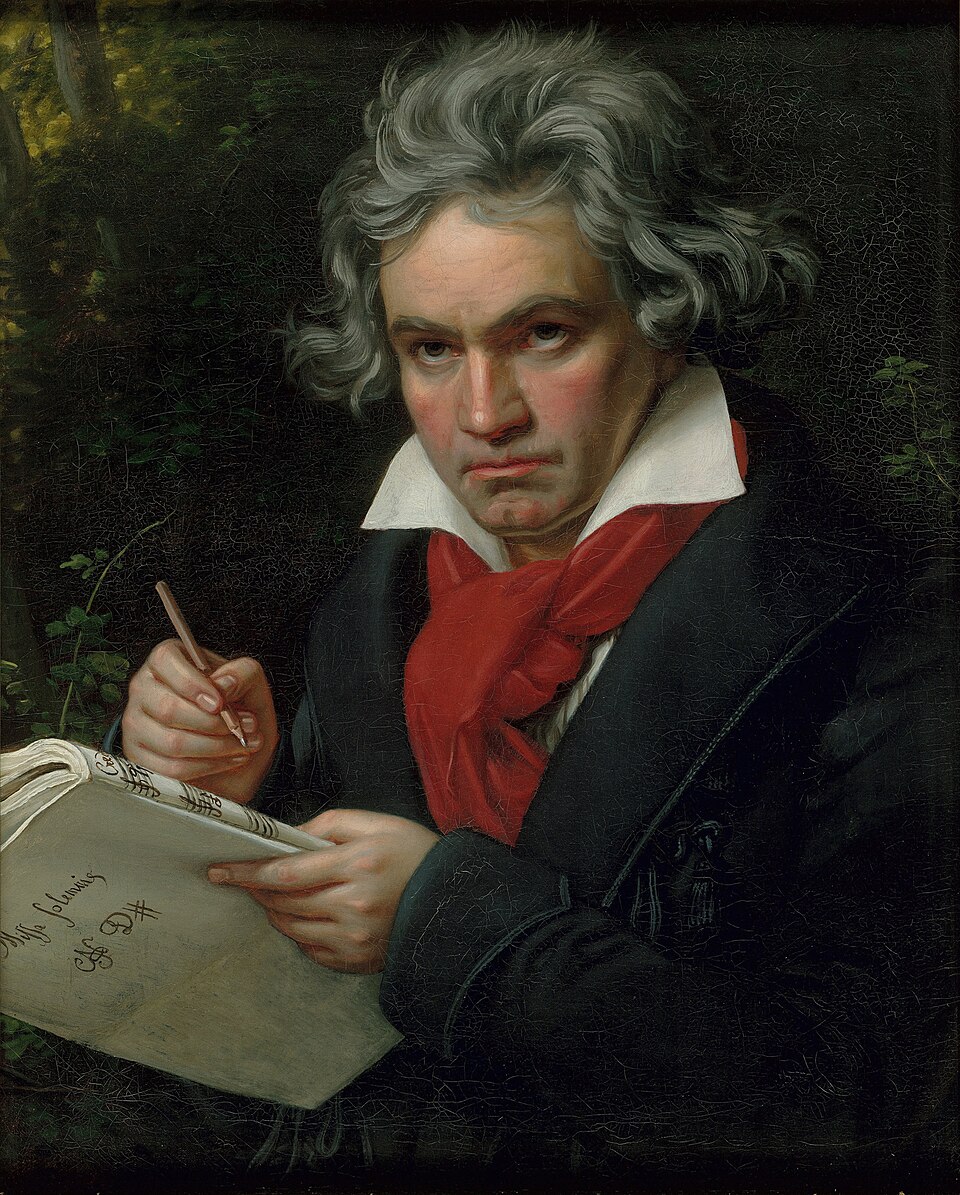
A composer who bridged the Classical and Romantic eras while losing his hearing entirely — and still produced some of the most performed music in history.
Ludwig van Beethoven is the hinge figure of Western art music — the composer who absorbed the formal discipline of Haydn and Mozart, then bent it outward into something rawer and more personal. He did so while progressively losing his hearing, composing some of his most ambitious works in near-total deafness.
Origins and early formation
Beethoven was born in Bonn in 1770 into a family of court musicians. His father Johann, a tenor in the Electoral court, recognised his talent and drove him hard. By his early teens Beethoven was already deputising as court organist. In 1787 he made a brief first visit to Vienna, reportedly meeting Mozart; he returned permanently in 1792, studying counterpoint under Joseph Haydn. Vienna was then the centre of musical Europe, and Beethoven planted himself at its heart, winning patrons among the aristocracy who would fund his work for decades.
His early Vienna style closely follows Haydn and Mozart — the first piano sonatas and the first two symphonies are polished, confident Classical works. But even in this period the harmonic surprises and emotional directness that would define his mature voice are audible.
The defining middle period
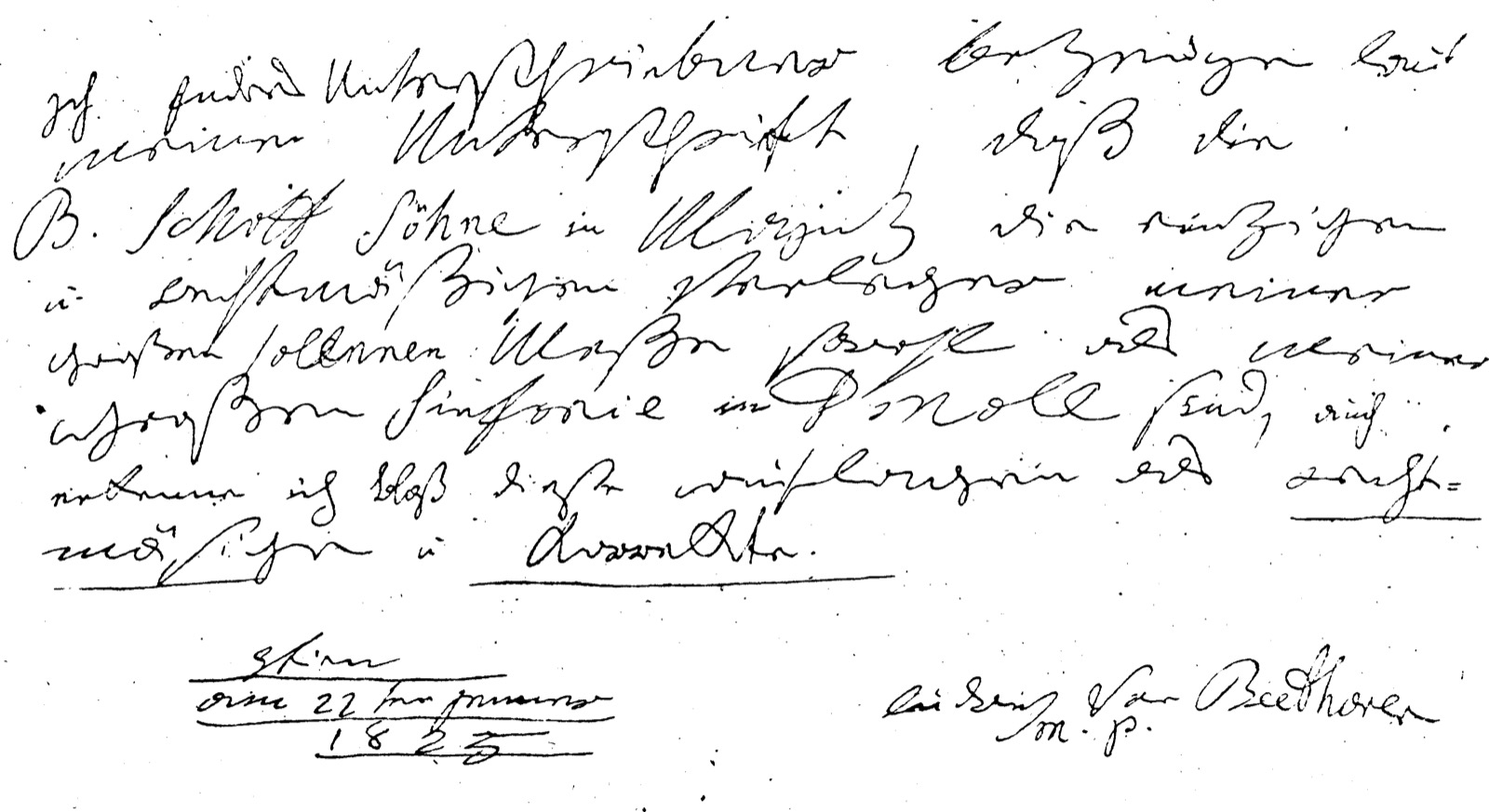
Around 1800, Beethoven began to notice increasing hearing loss — a crisis he documented in the anguished Heiligenstadt Testament of 1802, a letter to his brothers that was found unpublished at his death. Rather than retire, he resolved to continue. What followed was an explosion of compositional ambition: the Third Symphony (Eroica), originally inscribed to Napoleon and then furiously un-dedicated; the Fifth Symphony with its famous four-note motif; the Sixth (Pastoral); the Piano Concertos Nos. 4 and 5; and the opera Fidelio. These works did not just extend Classical form — they dramatised it, charging structure with psychological weight.
| Period | Approximate years | Key characteristics |
|---|---|---|
| Early | 1795–1802 | Haydn–Mozart inheritance, polished form |
| Middle | 1803–1812 | Heroic scale, dramatic development |
| Late | 1816–1827 | Inward intensity, experimental structure |
Method and the late style
By around 1816 Beethoven was effectively deaf, communicating with visitors through conversation books. Yet this period yielded his most searching music. The late string quartets — particularly Opp. 130, 131, 132, and 135 — are structurally unusual, almost wilfully private. The Ninth Symphony (1824) introduced a choral finale setting Schiller's "Ode to Joy," a gesture without precedent in the symphonic tradition.1 The Missa Solemnis occupies similarly remote territory.
Legacy
Beethoven's influence on subsequent composers is nearly total. Brahms delayed his first symphony for decades, citing the weight of Beethoven's example. Berlioz, Liszt, Wagner, and Mahler all traced lines directly back to him. His willingness to use structure as an expressive rather than merely organising device — to let form mean something — set the terms for Romantic music and much that followed.
Tonal clarity and formal logic, forced into the service of private emotion — that is Beethoven's enduring formula.
Footnotes
- The premiere of the Ninth is said to have prompted sustained applause that Beethoven, unable to hear it, was turned around by a soloist to see the audience response. ↩