Benjamin Britten
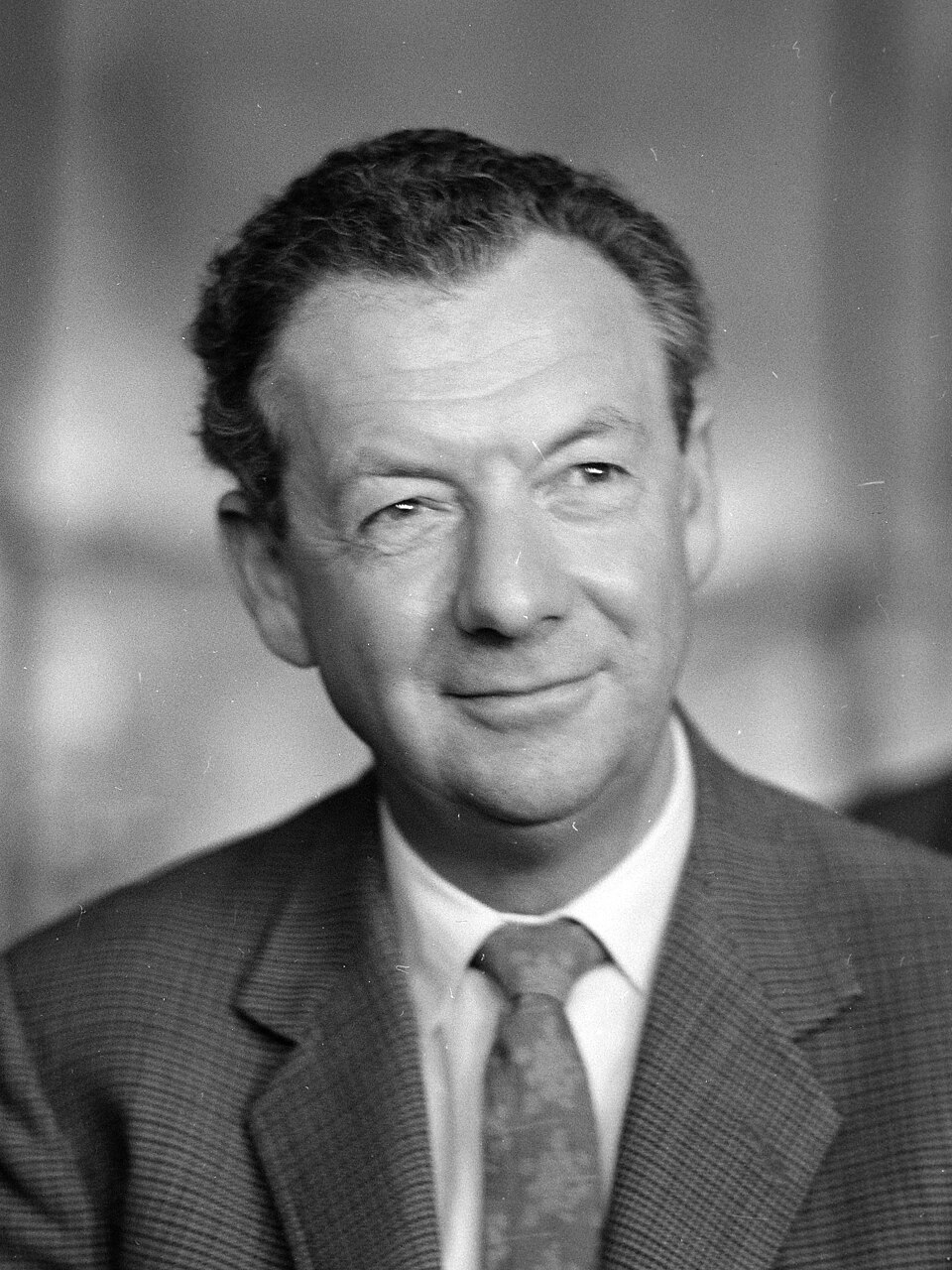
The central figure of twentieth-century British music — an opera composer of psychological acuity and a champion of the human voice who built an institution, a festival, and a permanent repertoire.
Benjamin Britten is the composer who made British opera viable again — after more than two centuries in which the form had barely existed in England, his Peter Grimes (1945) announced that an English composer could write for the lyric stage with the same dramatic intelligence as any continental master. Over the following thirty years he produced a body of operatic, orchestral, and choral work that remains central to the performing repertoire.
Precocious formation
Britten was born in Lowestoft on the Suffolk coast in 1913, the son of a dentist. He began composing as a child and at ten was introduced to Frank Bridge, the composer and conductor who became his primary teacher and the decisive early influence on his harmonic development. Bridge gave him an intellectual seriousness and an openness to continental modernism that the Royal College of Music, where Britten studied from 1930, proved less able to provide. At the RCM he studied composition with John Ireland, but found the conservatism of English musical culture frustrating.
A period working for the GPO Film Unit in the 1930s, collaborating with W. H. Auden on documentary film scores and song cycles including Our Hunting Fathers (1936) and On This Island (1937), sharpened his dramatic and verbal instincts. When Auden left for the United States in 1939, Britten followed with his partner, the tenor Peter Pears, and spent three years in North America before returning to England in 1942.
Peter Grimes and the operas
Peter Grimes (1945), premiered at the reopening of the Sadler's Wells Theatre after the war, was an immediate event. The opera tells the story of a visionary and possibly violent fisherman at odds with his coastal community — a subject that carried personal resonance for Britten as a homosexual man in a society that criminalised his relationships. The Sea Interludes, extracted for concert performance, became his most-played orchestral work.
The operas that followed were as diverse as they were distinguished: The Rape of Lucretia (1946) for chamber forces; Albert Herring (1947), a comedy; Billy Budd (1951) for an all-male cast, after Melville; The Turn of the Screw (1954), after Henry James; A Midsummer Night's Dream (1960); and Death in Venice (1973), his last completed opera, adapted from Thomas Mann and expressing, with extraordinary directness, themes of desire, beauty, and mortality.
It is cruel, you know, that music should be so beautiful. It has the beauty of loneliness and of pain: of strength and freedom. The beauty of disappointment and never-satisfied love. The cruel beauty of nature, and everlasting beauty of monotony.
The War Requiem and choral works
The War Requiem (1962), composed for the consecration of the new Coventry Cathedral built on the ruins left by German bombing, interleaves the traditional Latin Requiem text with the war poetry of Wilfred Owen. It was performed by a German, a Russian, and an English soloist — Dietrich Fischer-Dieskau, Galina Vishnevskaya, and Peter Pears — as an explicit act of post-war reconciliation. The work sold more recordings than any classical piece in the following decade.
A Ceremony of Carols (1942), the Spring Symphony (1949), and the Serenade for Tenor, Horn and Strings (1943) complete the picture of a composer for whom the human voice was always the primary instrument.
Aldeburgh and legacy
In 1948 Britten co-founded the Aldeburgh Festival with Peter Pears and the librettist Eric Crozier, creating a summer festival in the Suffolk coastal town that became one of the major international music events of the twentieth century and remains active. He was created a life peer — Baron Britten — in the Queen's Birthday Honours of 1976, the first composer to be so honoured, and died later that year.