Beyoncé
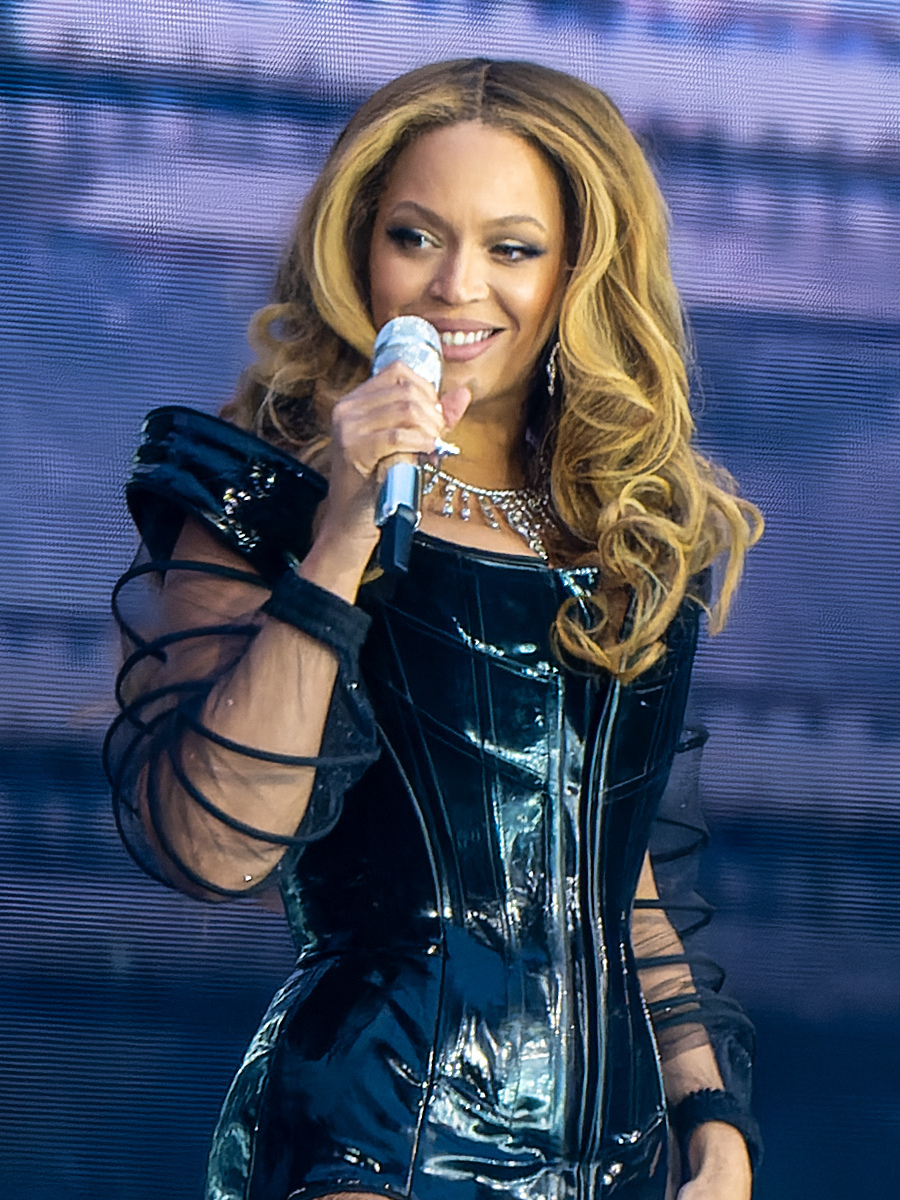
The entertainer who turned the pop album into a visual and conceptual form, reshaping what commercial music can attempt.
Beyoncé emerged from a Houston girl group to become the most decorated recording artist in Grammy history, accumulating a body of work that expanded the ambitions of mainstream pop to encompass political commentary, Black feminist theory, and large-scale visual art. Her approach to the album as a multimedia event redefined how popular music is released and consumed.
Houston and Destiny's Child
Beyoncé Giselle Knowles was raised in Houston, Texas, the daughter of Mathew Knowles, a Xerox sales manager who became her manager, and Tina Knowles, a fashion designer. She began performing in talent shows as a child and by the mid-1990s was a member of the Houston-based group that would become Destiny's Child, alongside Kelly Rowland and Michelle Williams. The group's albums — particularly The Writing's on the Wall (1999) and Survivor (2001) — produced a sequence of international hits and established Beyoncé as the group's principal creative and commercial force.
Solo Career and the Visual Album
Her 2003 solo debut, Dangerously in Love, debuted at number one and introduced a template of carefully produced, hook-dense R&B pop. The follow-up albums — B'Day (2006), I Am... Sasha Fierce (2008), 4 (2011) — maintained commercial dominance while each moved in a slightly different stylistic direction. The decisive rupture came in December 2013 when she released Beyoncé without prior announcement or promotional campaign, a surprise drop of fourteen songs and seventeen music videos that treated the album as a unified visual work.1 Lemonade (2016) extended this approach: a sixty-five-minute HBO film accompanying a full album, it addressed marital infidelity, Black womanhood, and the legacies of slavery through a sequence of visual chapters drawing on fine art, poetry by Warsan Shire, and the music of Jack White, James Blake, and New Orleans brass bands.
Craft and Performance
Beyoncé's vocal range spans approximately four octaves, though she is characterised less by range than by control — a capacity for precision across dynamics, from intimate falsetto to full belt, deployed in service of rhythmic and emotional clarity. As a live performer she is known for choreographic complexity and physical endurance: her 2013 Super Bowl halftime show, her 2016 Formation stadium tour, and her 2023 Renaissance world tour are each regarded as benchmarks of the form.
| Album | Year | Grammy Awards |
|---|---|---|
| Dangerously in Love | 2003 | 5 |
| I Am... Sasha Fierce | 2008 | 6 |
| Lemonade | 2016 | 4 |
| Renaissance | 2022 | 4 |
Influence and Cultural Standing
Beyoncé's cultural reach extends well beyond music. Her 2016 Super Bowl performance of "Formation" — incorporating imagery of the Black Panthers and Hurricane Katrina — generated sustained public debate about the function of the halftime show and the obligations of mass-audience celebrity. Cowboy Carter (2024), her country-inflected album, forced a conversation about the whitening of country music history and the erasure of Black contributions to the genre.
Power is not given to you. You have to take it.
Footnotes
- The surprise release of Beyoncé in December 2013 sold 828,773 copies in its first three days on iTunes, at that point a record for the platform. ↩