Björk
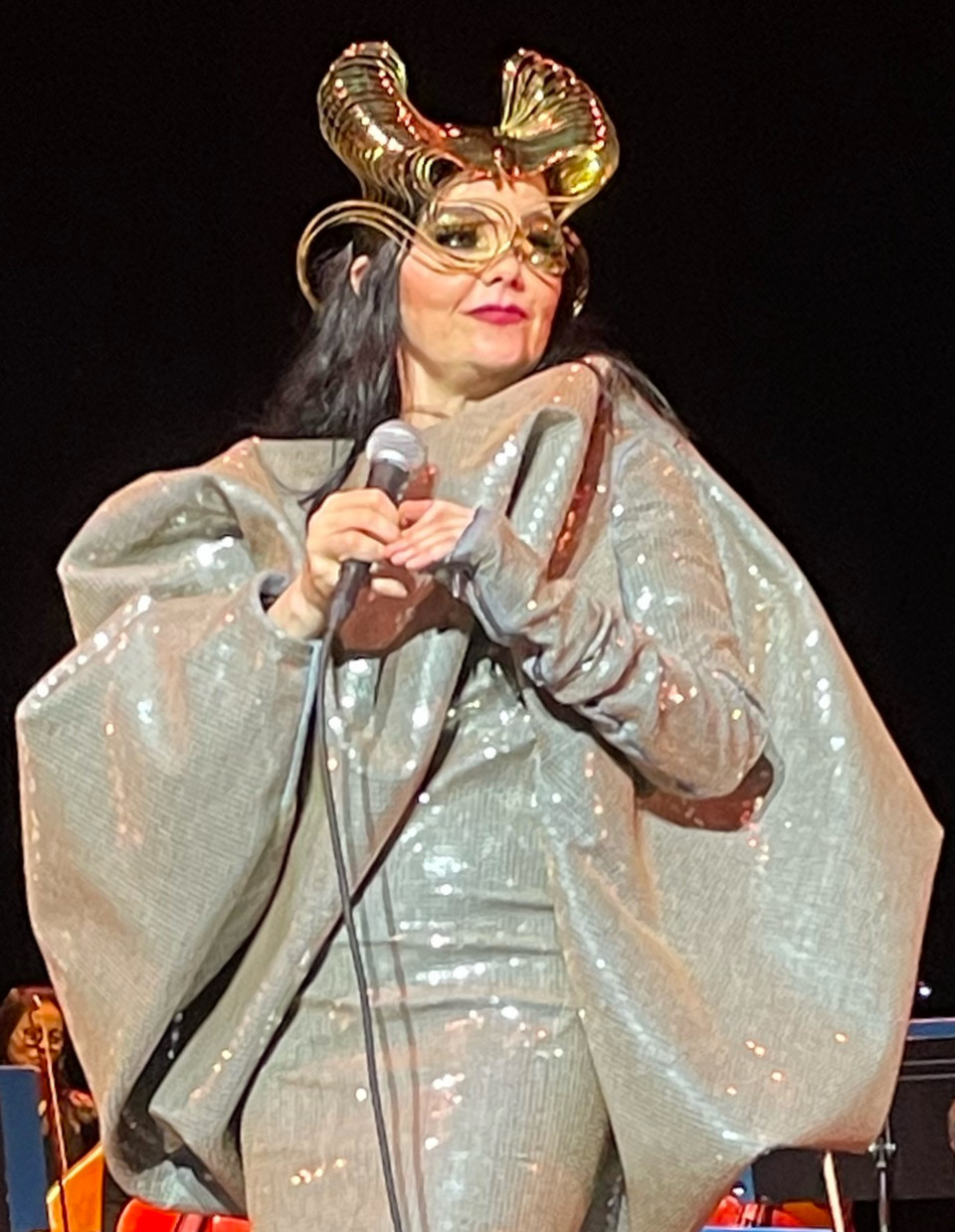
The Icelandic singer who collapsed the boundary between popular music and avant-garde composition, making each album a distinct acoustic world.
Björk began recording as a child in Iceland and spent thirty years dismantling and rebuilding the conventions of pop music, drawing on electronica, orchestral composition, jazz, and Icelandic folk to produce a catalogue that defies genre. Her voice — three-octave, technically precise, emotionally unguarded — is one of the most recognisable instruments in contemporary music.
Reykjavík and the Sugarcubes
Björk Guðmundsdóttir was born in Reykjavík, raised partly by her mother in a commune, and began classical piano training at six. She released a self-titled album of Icelandic children's songs and folk covers at eleven, funded by a local radio station. Through her teens she moved through a series of Icelandic bands — punk, jazz, experimental — before joining the Sugarcubes in 1986. The Sugarcubes' single "Birthday" (1987) attracted international attention, and the group's three albums built a devoted following outside Iceland. When they dissolved in 1992, Björk moved to London and began working on what would become her first internationally released solo record.
Solo Career and Sonic Architecture
Debut (1993), produced with Nellee Hooper and drawing heavily on house and jungle music then circulating through London club culture, was a commercial breakthrough while remaining deeply strange — its subject matter ranged from domestic joy to existential restlessness, its arrangements combining drum machines with jazz trumpet and string textures. Each subsequent album functioned as a deliberate system: Post (1995) was eclectic and restless, collecting influences from trip hop to orchestral pop; Homogenic (1997), made in Spain with the producer Mark Bell and the string arranger Eumir Deodato, unified electronic beats with string octets into something that had no obvious precedent; Vespertine (2001) turned inward, building its sonic world from harps, music boxes, and micro-beats generated from the sound of ice and snow.1
Collaboration and Film
Björk has worked with a consistent circle of producers — Mark Bell, Matthew Herbert, Arca — while expanding into visual art and installation. Her collaboration with Lars von Trier on the film Dancer in the Dark (2000) won her the Best Actress prize at Cannes, though she subsequently said she would not act in a film again. The partnership with director Michel Gondry on a sequence of music videos in the 1990s produced some of the most visually inventive short films of that decade. A 2015 retrospective at the Museum of Modern Art in New York — Björk Digital — combined immersive VR environments with a survey of her albums, reflecting the degree to which her work had been absorbed into the conversation around visual and installation art.
| Album | Year | Principal collaborator |
|---|---|---|
| Debut | 1993 | Nellee Hooper |
| Homogenic | 1997 | Mark Bell |
| Vespertine | 2001 | Mark Bell, Matmos |
| Vulnicura | 2015 | Arca |
Voice and Influence
Björk's three-octave range allows movement between registers that would require a different singer — whispery intimacy in the low register, bright head tones above, a belt that can carry across orchestral textures. More than range, what distinguishes her is a quality of exposure: the voice sounds unmediated, as if technique has been entirely absorbed into directness. Her influence is audible in artists as varied as FKA Twigs, Portishead, and Radiohead, who have cited her work as a model of how popular music can pursue ambition without abandoning emotional legibility.
I've always been like that — I can't separate emotion from music. To me they're the same thing.
Footnotes
- The micro-beats on Vespertine were constructed partly from the sound of cutlery, shuffling cards, and walking on snow, processed and pitched into rhythmic patterns. ↩