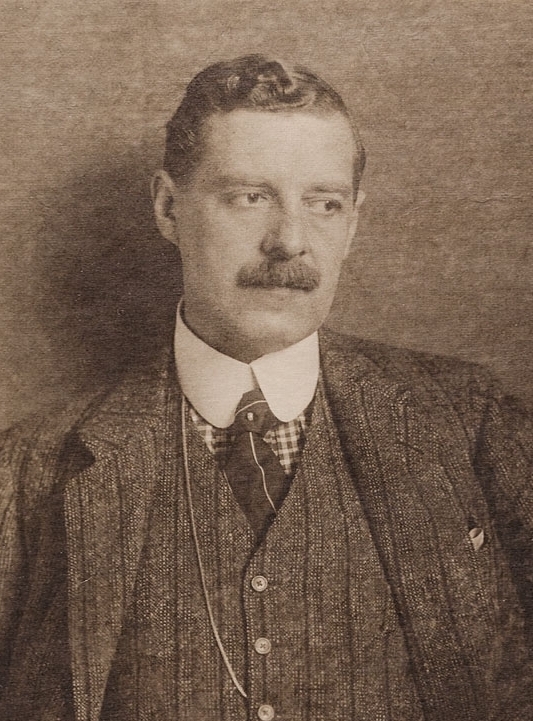
Carlo Scarpa
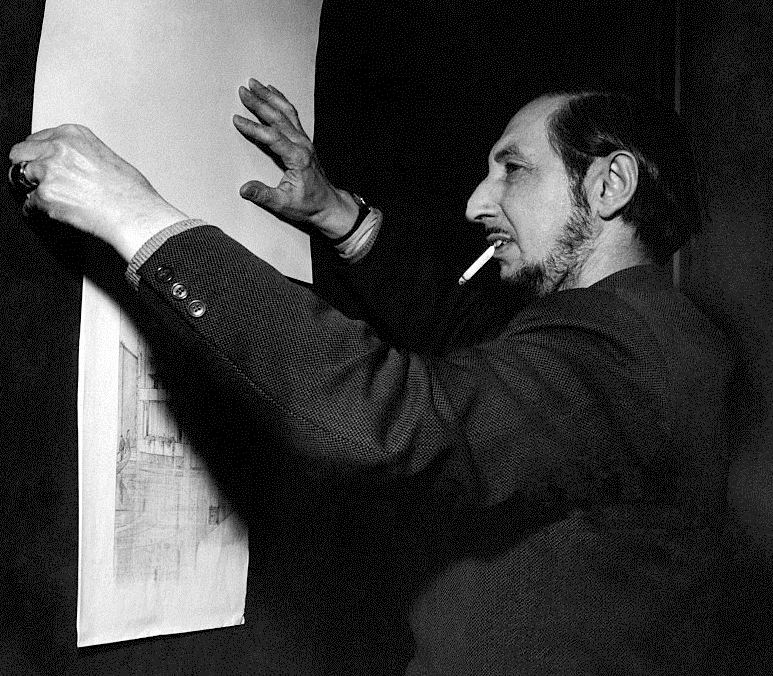
Italian architect and designer who translated Venetian materiality, Japanese restraint, and obsessive craft into one of the twentieth century's most tactile bodies of work.
Carlo Scarpa worked at the edge of architecture and craft. Born in Venice in 1906, he spent his career learning from the city's layered stone, reflective water, and Byzantine ornament — and from the equally restrained tradition of Japanese design. He never practised architecture in the conventional sense of large commissions and fast output. Instead he returned, obsessively, to the problem of how two materials meet, how light enters a narrow slot, how water stills in a channel beside a tomb.
Venetian Formation
Scarpa grew up in Venice and trained at the Accademia di Belle Arti di Venezia, where he later taught for decades. The city was his primary education: its palimpsest of Roman, Byzantine, and Gothic layers, its reflective lagoon light, and its tradition of mosaic and glasswork all entered his design vocabulary. He joined the Venini glassworks in Murano in the early 1930s and served as its artistic director from 1934 to 1947, designing vessels that pushed Murano technique toward an almost architectural precision. The discipline of glass — exact temperature, exact gesture, no revision — sharpened his sensitivity to process and material truth.
He never completed a formal architecture degree and was therefore technically unlicensed for much of his career. This did not slow him. He taught at the IUAV (Istituto Universitario di Architettura di Venezia) for many years and eventually received an honorary degree, but the credential mattered less to him than the work itself.
Renovation as Archaeology
Scarpa's most enduring contribution was his approach to existing buildings. Rather than effacing the old to install the new, he treated renovation as a form of slow archaeology — exposing strata, marking the join between periods, and allowing new insertions to read as clearly modern without competing with what surrounded them.
At the Castelvecchio Museum in Verona, begun in 1957 and completed over sixteen years, he stripped the medieval fortress back to its contradictions: Roman foundations, Napoleonic additions, Fascist-era restorations. His display cases, ramps, and slots of concrete and steel read as a new layer deposited honestly on top of the others. The equestrian statue of Cangrande della Scala was placed on a cantilevered concrete plinth at an intersection of paths, so visitors could walk around and beneath it — an act of curation that was also an act of architecture.
The Querini Stampalia Foundation in Venice (1961–1963) applied the same logic at a smaller scale: a garden and ground floor reorganised around the acqua alta that periodically floods the building, water treated not as a problem but as a material to be channelled and stilled.
The Primacy of the Joint
Scarpa famously said that things come together at the joints — a conviction visible in every building he made. He detailed every threshold, sill, step, and frame as though the joint were the building's most truthful moment. Concrete was cast against timber formwork left deliberately rough; steel was welded and ground rather than hidden behind cladding; marble was set with gaps wide enough to show the mortar as a deliberate line rather than an embarrassing necessity.
The Olivetti showroom in Venice (1957–1958) compressed this sensibility into a small commercial space: mosaic floor, a shallow pool of water at the entrance, a floating stair of Aurisina stone, and display platforms designed to make typewriters look like sculpture. It remains one of the most precise small interiors of the century.
The Museo Canova in Possagno (1957), a skylight addition to a neoclassical plaster-cast gallery, introduced oblique light through corner windows — a move that flooded the white casts with shifting natural light and became one of his most imitated gestures.
The Brion Cemetery
The Brion family tomb in San Vito d'Altivole, begun in 1969 and completed the year of Scarpa's death, is his most fully realised work. Set at a corner of the local municipal cemetery, the complex comprises an arched bridge, a meditation pavilion, a small chapel, two sarcophagi beneath an arcosolio of interlocking concrete circles, and a long grass lawn enclosed by a tilted concrete wall. Water runs throughout: a channel beside the path, a shallow pool under the pavilion roof.
The Brion Cemetery took nine years and absorbed an unusual share of Scarpa's attention. He is buried there himself, at his request, in a corner of the grounds.
The things that are near things are more beautiful — proximity is the beginning of beauty. — Carlo Scarpa (attr.)