Charlie Parker
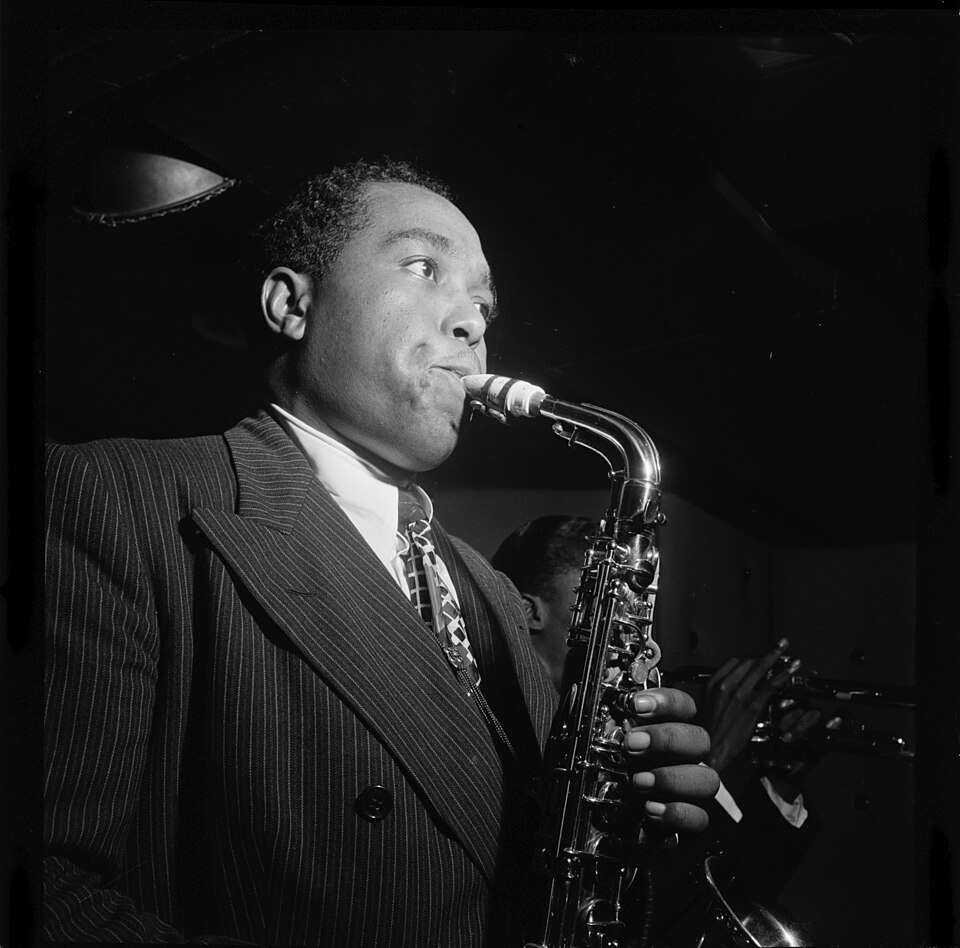
The alto saxophonist who rewired jazz harmony and tempo, founding bebop as a discipline demanding total command of the instrument.
Charlie Parker compressed a decade of harmonic invention into fewer than fifteen years of recording, transforming the jazz soloist from an entertainer into a technician of extraordinary precision. His alto saxophone lines moved at speeds that defeated conventional ear-training, yet every note was architecturally purposeful.
Kansas City formation
Parker was born in Kansas City in 1920, growing up in a city with a thriving after-hours jazz culture. He left school at fifteen to play full-time, enduring early humiliations — most famously being chased off the bandstand by drummer Jo Jones — that drove him into obsessive practice. He studied Coleman Hawkins and Lester Young recordings, memorising phrases in every key. By his early twenties he had moved to New York, working alongside Dizzy Gillespie in the after-hours sessions at Minton's Playhouse that became the incubator of bebop.
Inventing bebop
The music Parker and Gillespie developed in those sessions rejected the steady four-four swing of big-band jazz. Tempos accelerated; chord substitutions multiplied; melody lines were built on upper chord extensions — ninths, elevenths, thirteenths — that gave the music a harmonic density swing had avoided. Parker's alto lines moved in long, arcing phrases that crossed bar lines, treating the rhythm section as a launching pad rather than a leash. The 1945 small-group recordings for Savoy and Dial document the idiom at its most concentrated.
Don't play the saxophone. Let it play you.
Method and language
Parker's method was essentially contrapuntal: he heard chords as scales and improvised melodies against them that implied the harmony without merely outlining it. His passing chords — interpolated between standard changes — became a vocabulary that younger players memorised phrase by phrase. He also reshaped jazz rhythm, treating the beat with a loose-limbed flexibility that anticipated the phrasing of later decades. The nickname "Bird" attached early; his technique became known simply as "Bird language" among musicians.
Legacy
Parker died in 1955, aged thirty-four, his body exhausted by heroin addiction and the cumulative toll of a performance schedule that rarely paused. The graffiti "Bird Lives" appeared on New York walls within days. His recorded legacy is compact but decisive: the Savoy and Dial sides, the Verve sessions with strings, the live recordings at Massey Hall with Gillespie. Every jazz saxophonist who followed him — from Sonny Rollins to John Coltrane to Ornette Coleman — began by mastering or consciously rejecting his vocabulary.