Clara Schumann
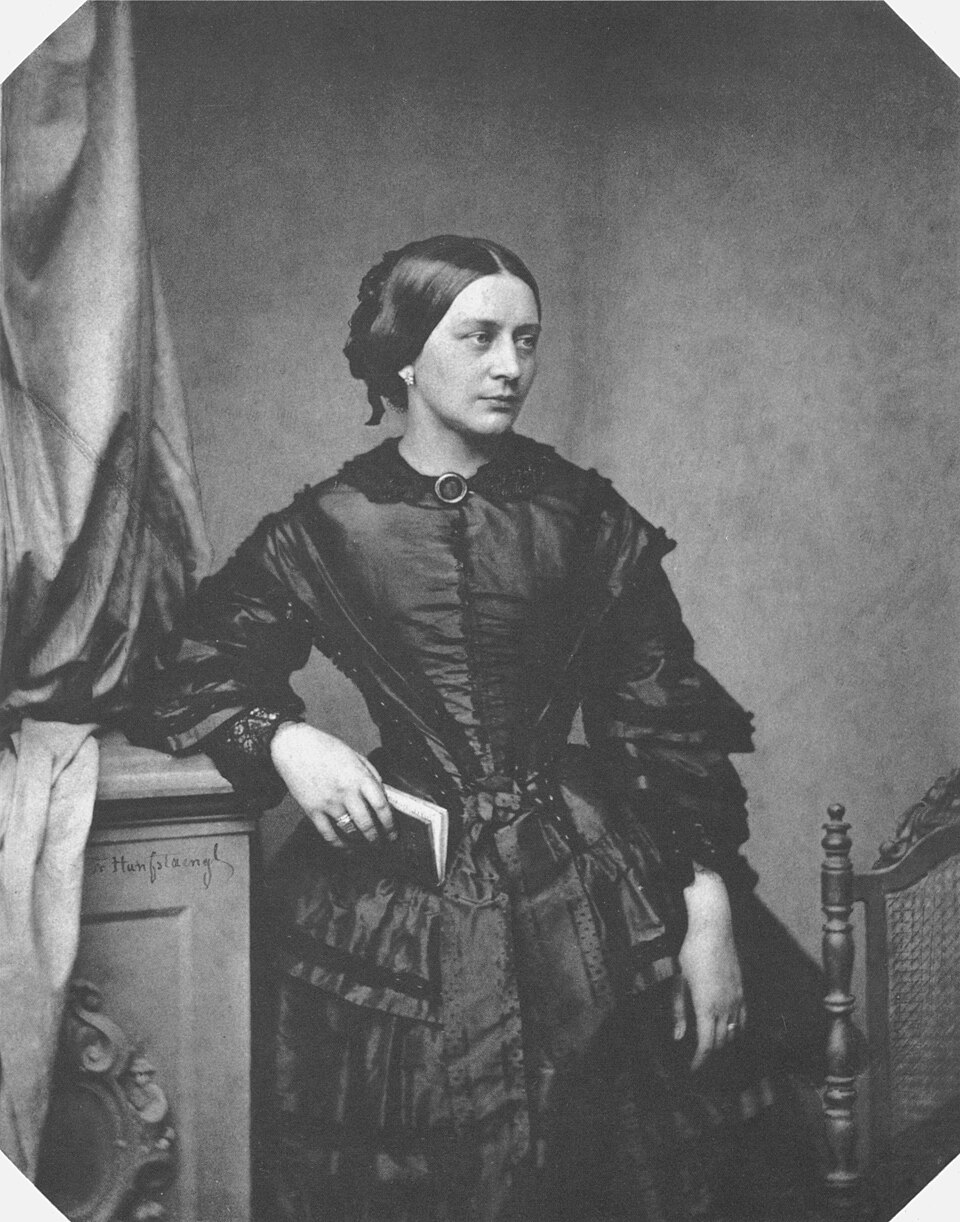
The virtuoso pianist who reshaped the concert recital, elevated the repertoire, and composed music of considerable depth while navigating the constraints placed on women in nineteenth-century musical life.
Clara Schumann maintained one of the longest and most influential concert careers of the nineteenth century — sixty-one years — while raising eight children, editing her husband's complete works after his death, and advocating a seriousness of repertoire that transformed what audiences expected from a piano recital. She gave the debut of Brahms's first piano concerto in Vienna, championed Bach and Beethoven when lighter fare was the norm, and composed music that deserves more attention than it has received.
Early life and formation
Clara Josephine Wieck was born in Leipzig in 1819, the daughter of Friedrich Wieck, one of Germany's most systematic piano pedagogues. Her parents separated when she was five; her father retained custody and made her education as a pianist his primary project. She performed publicly from the age of nine and gave her first major solo recital in Leipzig at eleven. By her mid-teens she was touring Europe and had attracted serious critical attention, including from Goethe, who heard her play in Weimar.
Her father's opposition to her marriage to Robert Schumann — his student, thirteen years her senior — was fierce and prolonged: he argued in court that the match would ruin her career. The court found against him; they married in 1840.
The concert career
Schumann performed for six decades without interruption beyond the years immediately following Robert's hospitalisation and death. She was among the first pianists to perform from memory — at the time, playing without the score was considered eccentric — and systematically replaced the virtuosic display pieces that dominated concert programmes with the core repertoire: Bach, Beethoven, Schubert, and increasingly Robert Schumann's own works. This shift in programming norms, which she enacted tour by tour across Europe, was one of the most consequential changes in the history of the piano recital.
Her tone, her clarity of phrasing, and her interpretive restraint were consistently noted by critics as setting a new standard. Brahms, who became a close friend after Robert's breakdown in 1854 and remained so for the rest of her life, considered her the definitive interpreter of his piano works.
I am not one of those who put themselves forward. Execution is everything to me.
As composer
Clara Schumann composed throughout her life, though she set her own work aside with greater readiness than her peers would have done. Her output includes the Piano Concerto in A minor, composed when she was fourteen and premiered when she was sixteen, piano pieces, a Piano Trio, and songs. The Piano Trio in G minor (1846) is the most substantial of the chamber works. Her songs, settings of Rückert and Heine among others, are formally confident and emotionally precise.
After Robert's death in 1856 she composed very little, devoting herself instead to concert giving, teaching, and editing: her complete edition of Robert Schumann's works was the standard scholarly edition for generations.
Legacy
Clara Schumann's transformation of the piano recital — from entertainment to the serious presentation of major repertoire — is her most lasting structural contribution to musical culture. Her advocacy for Bach, Beethoven, and her husband's works set a programming model that subsequent generations inherited. As a teacher at the Hoch Conservatory in Frankfurt, where she taught from 1878, she shaped the next generation of European pianists. Her own compositions, long underperformed, have attracted growing scholarly and concert attention since the late twentieth century.