Daniel Libeskind
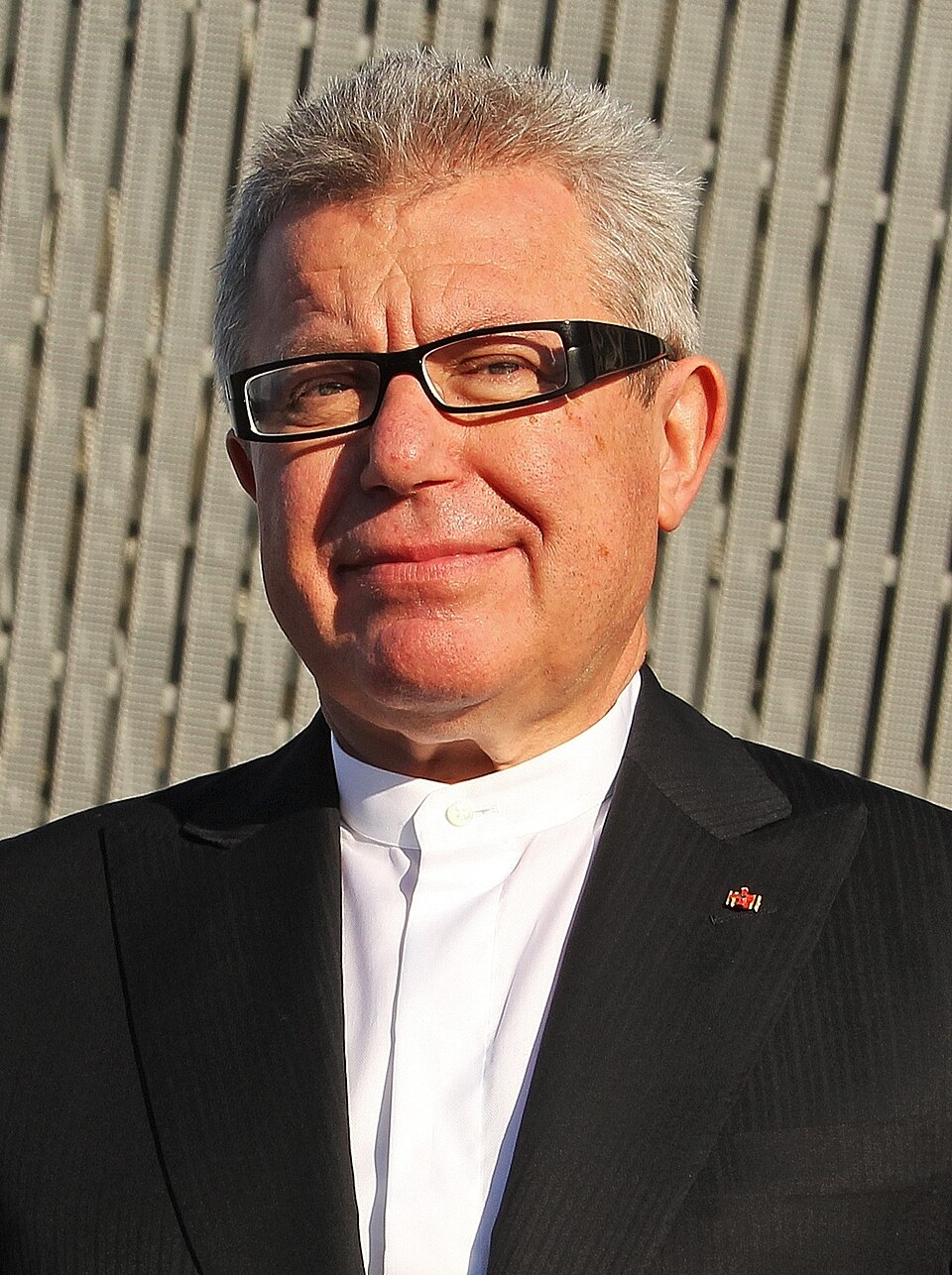
The architect whose buildings carry the weight of history in their geometry — jagged, fractured forms that refuse to let absence be overlooked.
Daniel Libeskind spent his first decades as a theorist and music student before completing a single building. When the Jewish Museum in Berlin opened in 2001, it demonstrated that a building could embody historical rupture as directly as any monument — and that architecture did not have to be legible to be humane.
From Łódź to the world stage
Libeskind was born in Łódź, Poland, to a family of Jewish survivors of the Holocaust. His parents emigrated to Israel and then to New York, where he grew up. A gifted musician, he studied accordion at Juilliard before turning to architecture, completing his degree at Cooper Union and a postgraduate fellowship at the University of Essex. He taught and lectured widely — in Germany, the United States, Italy — and ran the Architecture Intermundium in Milan before founding Studio Daniel Libeskind in Berlin in 1989, initially without a built project to his name. His drawings and theoretical work had already made him a significant figure in architectural discourse.
The Jewish Museum Berlin
The Jewish Museum Berlin, completed in 1999 and opened to the public in 2001, is the work that established Libeskind's international reputation. Its plan is a fragmented Star of David, slashed by a straight "line of fire" that cuts through every floor. Visitors navigate the building through a series of voids — enclosed spaces that cannot be entered, lit only from above, accessible only to the gaze. The voids are named: the Holocaust Tower, the Memory Void. The building was visited by hundreds of thousands of people before a single exhibit was installed, its empty spaces alone making a sufficient statement.
Architecture is not simply about space and form. It is about event, movement, and the vector that connects the present to the past.
The building's metallic zinc exterior — crisscrossed with irregular window slashes — became an immediately recognised image of a new kind of cultural architecture, one that refuses to be merely functional or merely beautiful.
World Trade Center and beyond
In 2003, Libeskind won the competition for the master plan of the World Trade Center site in Lower Manhattan — the most politically charged architectural commission of the early twenty-first century. His proposal centred a 1,776-foot tower (referencing the year of American independence) over a preserved footprint of the original towers. The final built outcome — One World Trade Center — was substantially modified by others, though the overall site plan retains elements of his scheme. Studio Daniel Libeskind has since completed museums, cultural centres, and residential towers across Europe, North America, and Asia.