Denise Scott Brown
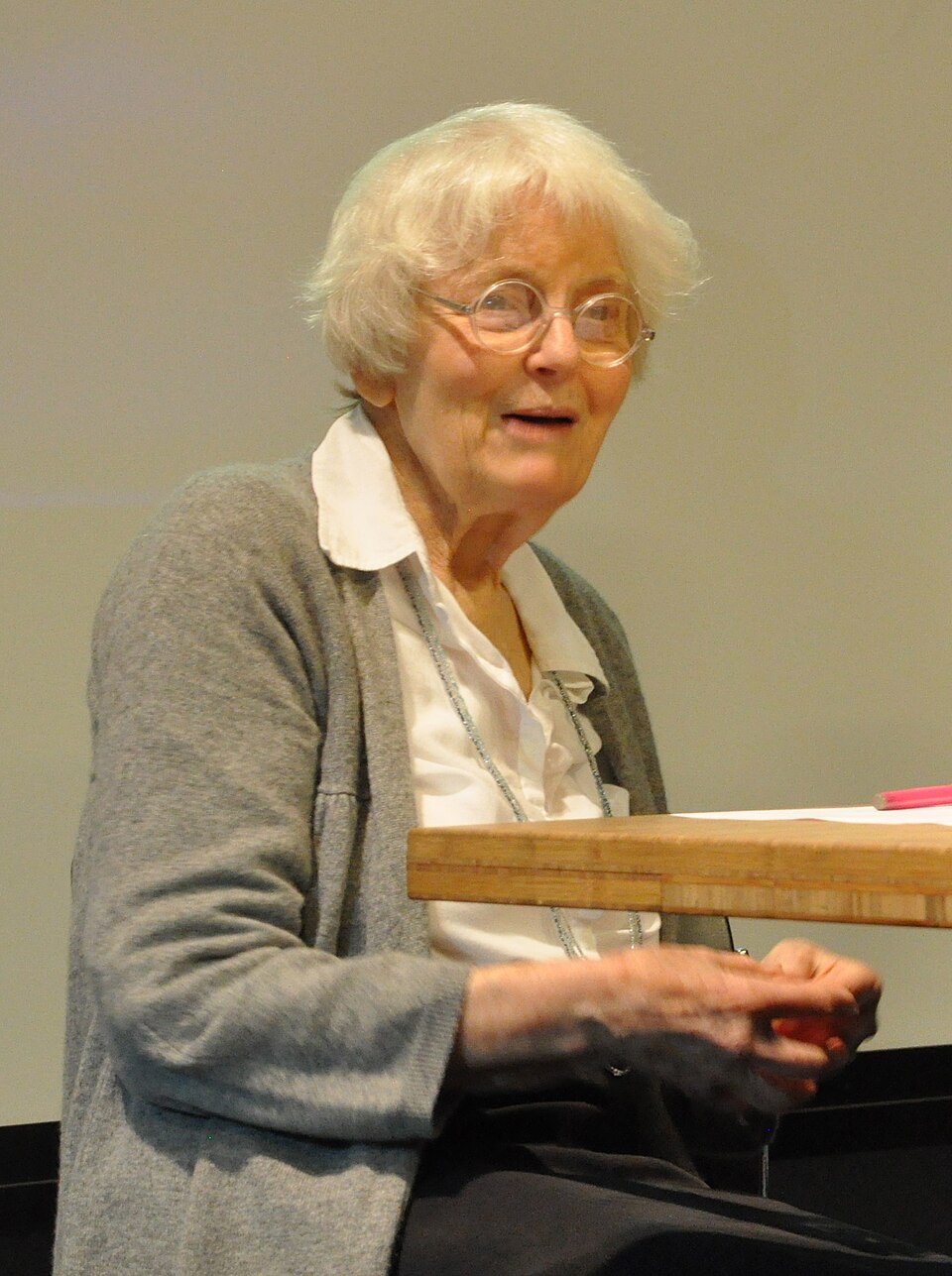
The architect, planner, and theorist who taught a profession to read the ordinary landscape as a source of meaning — not a problem to be solved.
Denise Scott Brown looked at Las Vegas — its neon signs, parking lots, and decorated sheds — and saw not vulgarity but information. The theoretical framework she developed with Robert Venturi overturned postwar modernism's contempt for popular culture and gave architects a method for engaging with the world as it actually existed, not as architects wished it would.
Formation in three cities
Scott Brown was born in Nkana, Northern Rhodesia (now Zambia), and grew up in Johannesburg, where she trained at the University of the Witwatersrand. She continued her education in London at the Architectural Association, encountering the New Brutalism and the ideas of Alison and Peter Smithson. She then moved to the United States, studying urban planning at the University of Pennsylvania under Louis Kahn and Herbert Gans, and later at the University of California, Berkeley. These overlapping formations — South African, British, and American; architectural, sociological, and urbanistic — gave her a distinctly cross-disciplinary intelligence.
Learning from Las Vegas
She joined the faculty at Penn, where she met Robert Venturi. In 1972 they published Learning from Las Vegas, co-authored with Steven Izenour — the book that made their joint reputation and permanently altered the terms of architectural debate. The argument was simple and at the time scandalous: the American commercial landscape, its billboards, parking lots, and vernacular signage, communicated more effectively with its users than the heroic blank facades of modernist buildings. Architects should study, not deplore, the ordinary environment.
The existing American city is not chaos but rather order we have not yet understood.
The book distinguished two building types: the "duck" (a building whose form is its message) and the "decorated shed" (a conventional structure with applied symbols). This taxonomy proved durable as an analytical tool far beyond its original application.
Practice and recognition
Scott Brown and Venturi ran Venturi, Scott Brown and Associates (originally Venturi and Rauch) from Philadelphia, producing buildings — the Sainsbury Wing of the National Gallery in London, the Gordon Wu Hall at Princeton — that applied their theoretical principles at full scale. Scott Brown's specific contributions included the urban design and planning work of the practice, and her sustained writing on cities, feminism, and architectural education.
The 1991 Pritzker Prize was awarded to Robert Venturi alone — a decision that provoked widespread protest, including a 2013 petition signed by hundreds of architects calling for her retroactive inclusion. The Pritzker jury has not altered its decision.