Duke Ellington
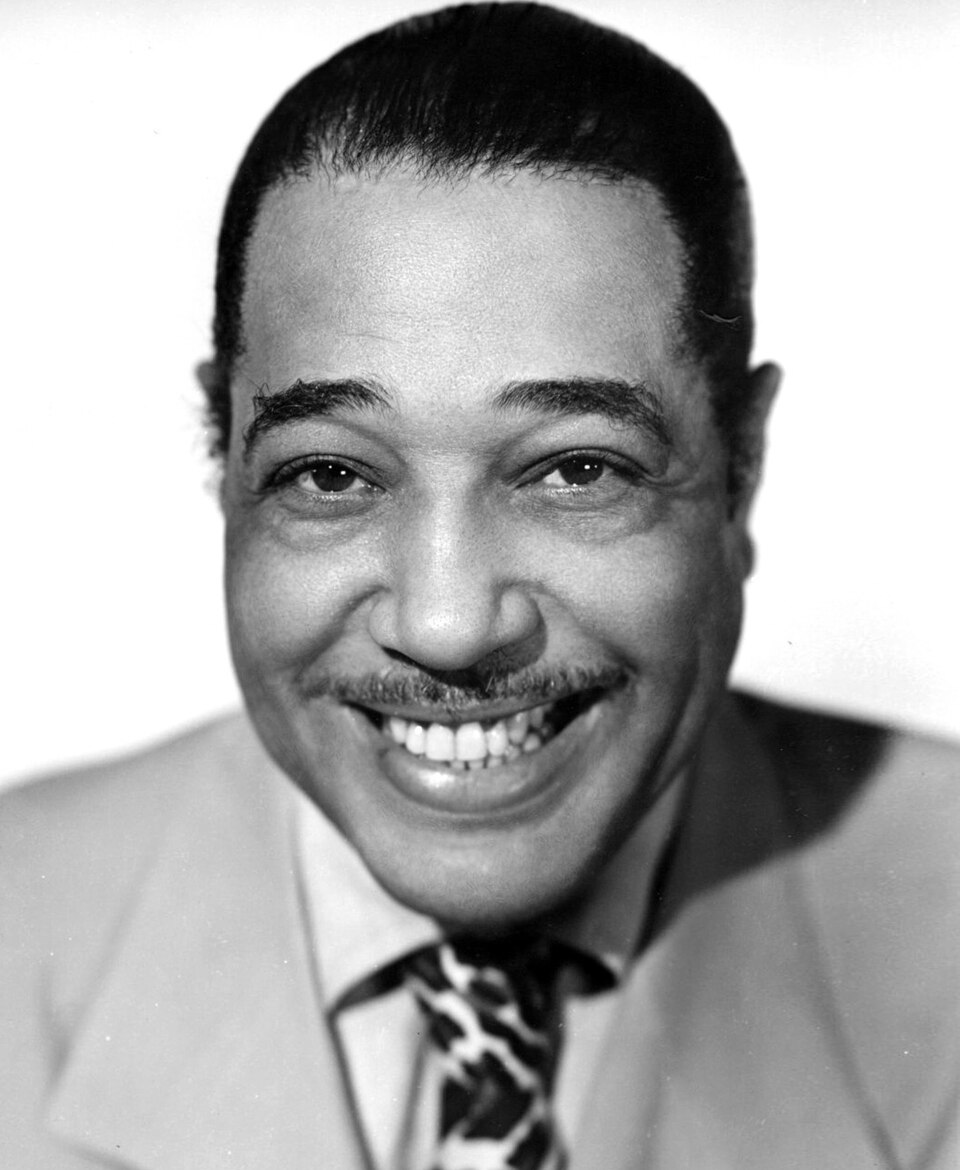
The bandleader and composer who elevated jazz into a serious orchestral art, leading his orchestra for five decades without interruption and writing thousands of works that defy any single genre.
Duke Ellington led his orchestra for fifty years without ever dissolving it, writing and arranging an estimated three thousand compositions along the way. He was, as critic Ralph J. Gleason put it, "America's most important composer" — a title he earned not by abandoning jazz for the concert hall but by insisting that what his band did was concert music.
Washington roots and the road north
Edward Kennedy Ellington was born in Washington, D.C., in 1899, into a middle-class Black family; his father worked at the White House. The city's social strivers gave him a sense of elegance — the nickname "Duke" was assigned by a school friend impressed by his deportment. He took piano lessons young, absorbed ragtime and popular music on the streets, and by his late teens was playing professionally in the D.C. area.
He moved to New York in 1923, leading small groups and building a reputation in Harlem. The engagement at the Cotton Club from 1927 to 1931 made him nationally famous: the club's radio broadcasts carried the band's sound across the country nightly.
The Cotton Club sound and orchestral ambition
At the Cotton Club, Ellington developed what critics called the jungle style — muted brass growls and plunger-mute effects that suited the venue's theatrical aesthetic. But he was simultaneously doing something more demanding: writing extended works tailored to the specific timbres of individual players. His orchestra was not interchangeable personnel but a collection of distinct voices — Johnny Hodges's alto saxophone, Cootie Williams's trumpet, Barney Bigard's clarinet — and Ellington composed for those voices the way a string quartet composer writes for particular players.
My music is my mistress, and I love her.
Works from this period — "Mood Indigo" (1930), "Sophisticated Lady" (1933), "In a Mellow Tone" (1940) — have never left the repertoire.
"Take the A Train" and the extended form
Billy Strayhorn joined the orchestra in 1939 as arranger and collaborator, writing "Take the A Train" (1941), which became the band's signature theme. The Ellington–Strayhorn partnership lasted until Strayhorn's death in 1967 and produced some of the most distinctive orchestral jazz ever recorded.
Ellington also pursued longer forms: "Black, Brown and Beige" (1943), premiered at Carnegie Hall, was a forty-five-minute suite tracing African-American history. The critics were uncertain; Ellington revised his approach to extended composition but never abandoned it.
Legacy
Ellington received the Presidential Medal of Freedom in 1969 and was awarded a posthumous Pulitzer Prize special citation in 1999 — the centenary of his birth. He recorded prolifically until near the end of his life, with his final studio sessions coming in 1973. The orchestra continued under his son Mercer after his death.
His influence on jazz composition is foundational. The idea that a jazz band could be a composer's instrument — not a vehicle for improvisation alone — is substantially his.