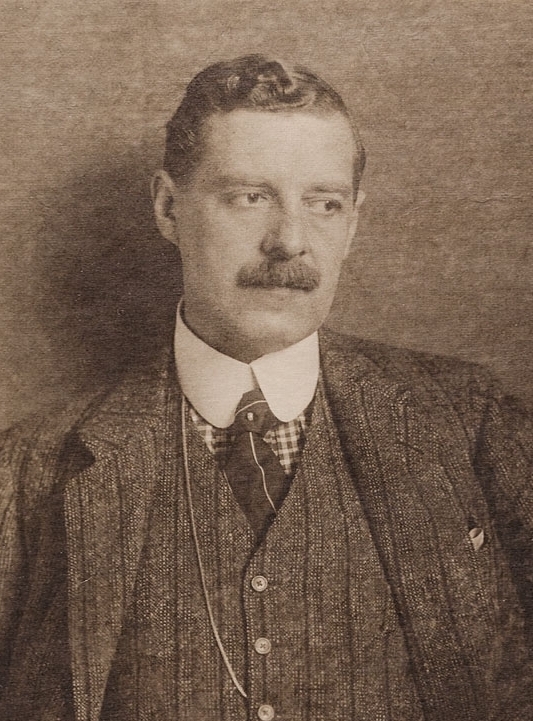
Eliel Saarinen
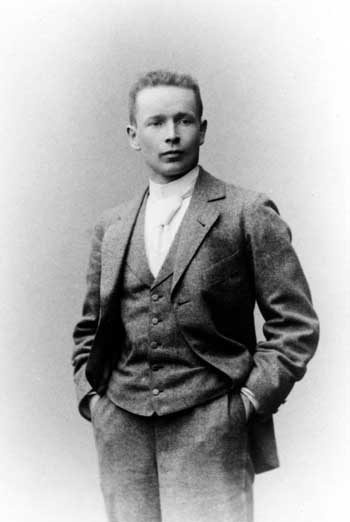
The Finnish architect who emigrated to America after narrowly losing the Chicago Tribune competition — and found there a second, equally distinguished career.
Eliel Saarinen built the Helsinki Railway Station and then, through a single unbuilt competition entry, redirected the course of American commercial architecture — a rare case of a losing design exerting more influence than the winning one.
Finland: National Romanticism to Railway Stations
Gottlieb Eliel Saarinen was born in Rantasalmi in 1873 and studied architecture at the Polytechnic Institute in Helsinki. His early career unfolded within the Finnish National Romantic movement, which sought a distinctly Finnish architectural language drawing on medieval masonry, vernacular forms, and the imagery of the Kalevala. With partners Herman Gesellius and Armas Lindgren, he completed major civic and residential commissions that placed Finland on the map of European architecture.
The Helsinki Railway Station, completed in 1914 after a protracted design process, consolidated his reputation. The building — a substantial mass of granite with a clock tower, arched entrance, and four sculptural lamp-bearers flanking the doors — synthesised monumental scale with a controlled ornamental vocabulary that had moved decisively toward simplified forms. It remains one of the most recognised buildings in Scandinavia.
The Chicago Tribune Competition
In 1922, the Chicago Tribune held an international competition for its new tower headquarters. Saarinen's entry — a setback tower, vertically articulated, tapering through successive recessions toward a crowned summit — did not win. The jury awarded first prize to the neo-Gothic entry by Raymond Hood and John Mead Howells. Saarinen's design took second place.
The critical reception inverted that verdict. Architects including Louis Sullivan publicly argued that Saarinen's entry was the superior solution, and its setback profile and vertical emphasis became a model for American skyscraper design through the 1920s and 1930s. The Art Deco tower type that defined the American skyline in that period owes a measurable debt to a Finnish architect's losing drawing.
The second-prize design was, in the judgment of many architects, the finest entry in the competition.
America: Cranbrook and a Second Practice
Saarinen emigrated to the United States in 1923. He settled in Michigan and became the founding president of the Cranbrook Academy of Art in Bloomfield Hills, an institution he shaped into one of the most influential design schools in America. Cranbrook operated on the model of a working creative community: studios, workshops, and residential facilities designed largely by Saarinen himself formed the campus. The institution trained a generation of designers and architects who shaped post-war American design, among them Charles Eames, Florence Knoll, and Harry Bertoia.
His own American architectural practice produced civic buildings, churches, and institutional commissions in a style that evolved from his earlier European work toward a calmer, more horizontal modernism. He collaborated regularly with his son Eero Saarinen, who would go on to define post-war American architecture through the TWA Terminal and the Gateway Arch.
Legacy
Eliel Saarinen's career spans two distinct national contexts and two distinct phases of modernist development — the transition from National Romanticism to early modernism in Finland, and the development of Art Deco and institutionalised design education in America. His daughter Pipsan Saarinen Swanson was a designer; his son Eero became one of the defining architects of the mid-twentieth century. The family represented three generations of Finnish-American design culture.
He died in Bloomfield Hills, Michigan, on 1 July 1950.