Ennio Morricone
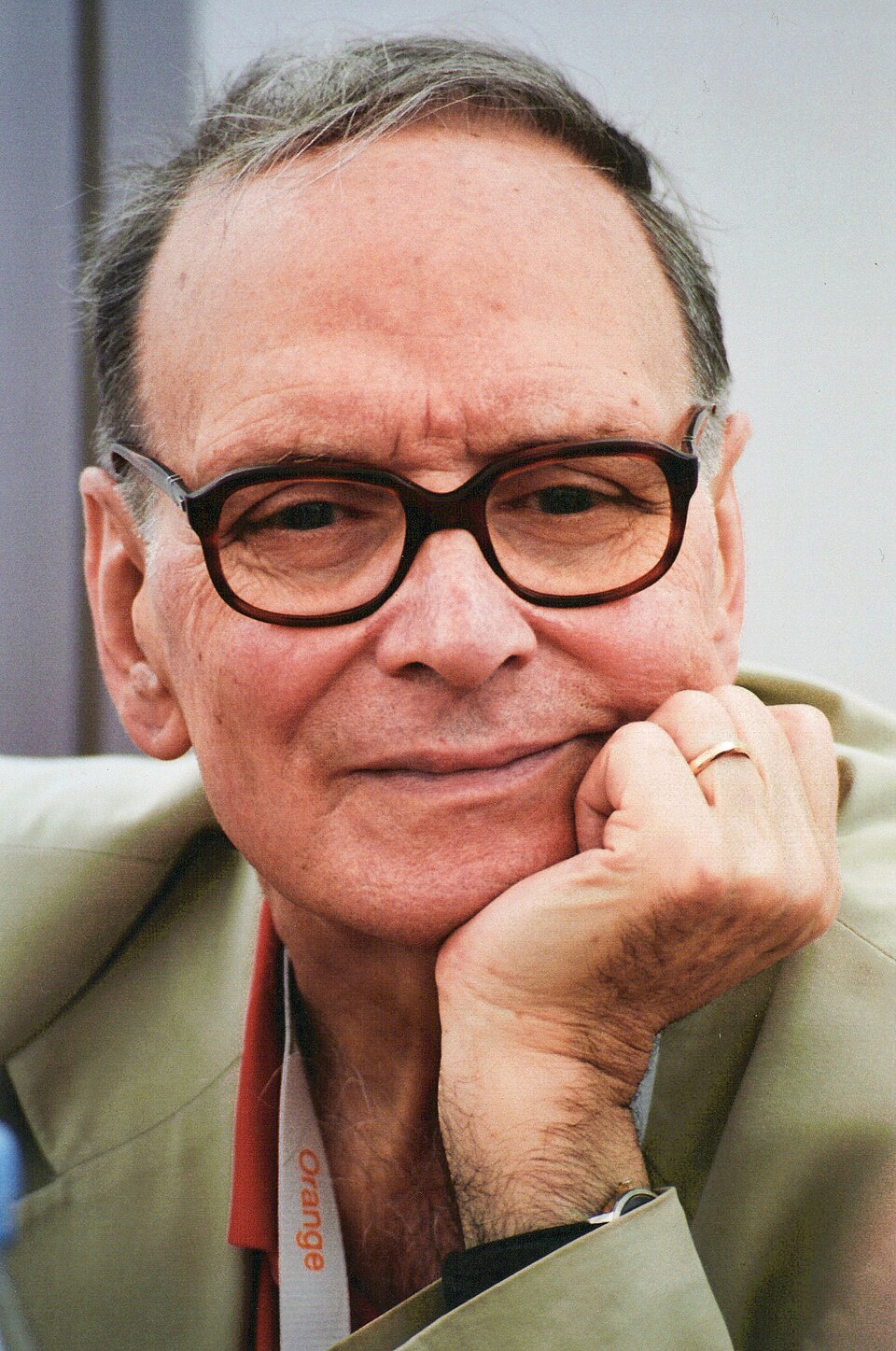
The Roman composer who turned the cinema score into an art form in its own right, writing more than 400 films' worth of music without repeating himself.
Ennio Morricone spent sixty years demonstrating that a film score need not be wallpaper — it could be the film's nervous system. From the electric-guitar twang and wordless soprano of the Spaghetti Western to austere concert works for chamber ensembles, he composed with a restless formal intelligence that kept critics permanently off-balance.
Formation in Rome
Morricone was born in Rome in 1928 and began studying trumpet as a child, following his father into the instrument. He entered the Accademia Nazionale di Santa Cecilia, studying harmony and composition under Goffredo Petrassi, whose rigorous modernism left a lasting imprint. By the early 1950s he was writing arrangements for Italian radio and pop records — commercial work he later described as craft school. The discipline of quick, purposeful writing never left him.
The Leone collaborations
The defining partnership of Morricone's career was with director Sergio Leone, whom he had known since primary school. For Leone's "Dollars Trilogy" — beginning with A Fistful of Dollars in 1964 — Morricone invented a sound that had no precedent: electric guitar played against whistling, whip cracks, and the soprano voice of Edda Dell'Orso used as pure instrument. The scores were composed before filming, giving Leone's visual rhythm something to cut against rather than merely illustrate. The approach produced some of the most recognisable music of the twentieth century, though Morricone had to wait until 2016 for an Academy Award recognising competitive work, winning for The Hateful Eight.
The music must never be an accessory. It must be necessary.
Method and range
What prevented Morricone from becoming a genre specialist was his refusal to stay in genre. The same decade that produced the Western scores also saw him scoring political thrillers (Investigation of a Citizen Above Suspicion, 1970), historical epics (The Battle of Algiers — though Gillo Pontecorvo ultimately used the score he wrote with the director), and intimate chamber films. He maintained a parallel career writing concert music under pseudonyms and under his own name, separating the two streams without treating either as secondary. His orchestrations were characteristically unconventional: instruments borrowed from pop, folk, and early music combined with full orchestra, often structured around a single ostinato that accrued meaning through the film.
Legacy
Morricone's influence on subsequent composers is vast enough to be almost invisible — the template he established for "cinematic" music, built on drone, ostinato, and solo voice, is so absorbed into the idiom that it reads as natural. Directors from Pedro Almodóvar to Quentin Tarantino (who used archival Morricone cues in Django Unchained and commissioned new work for The Hateful Eight) explicitly cited his authority. He also influenced the development of ambient and post-rock through his minimalist cues, a transfer he never sought and mostly ignored.