Fela Kuti
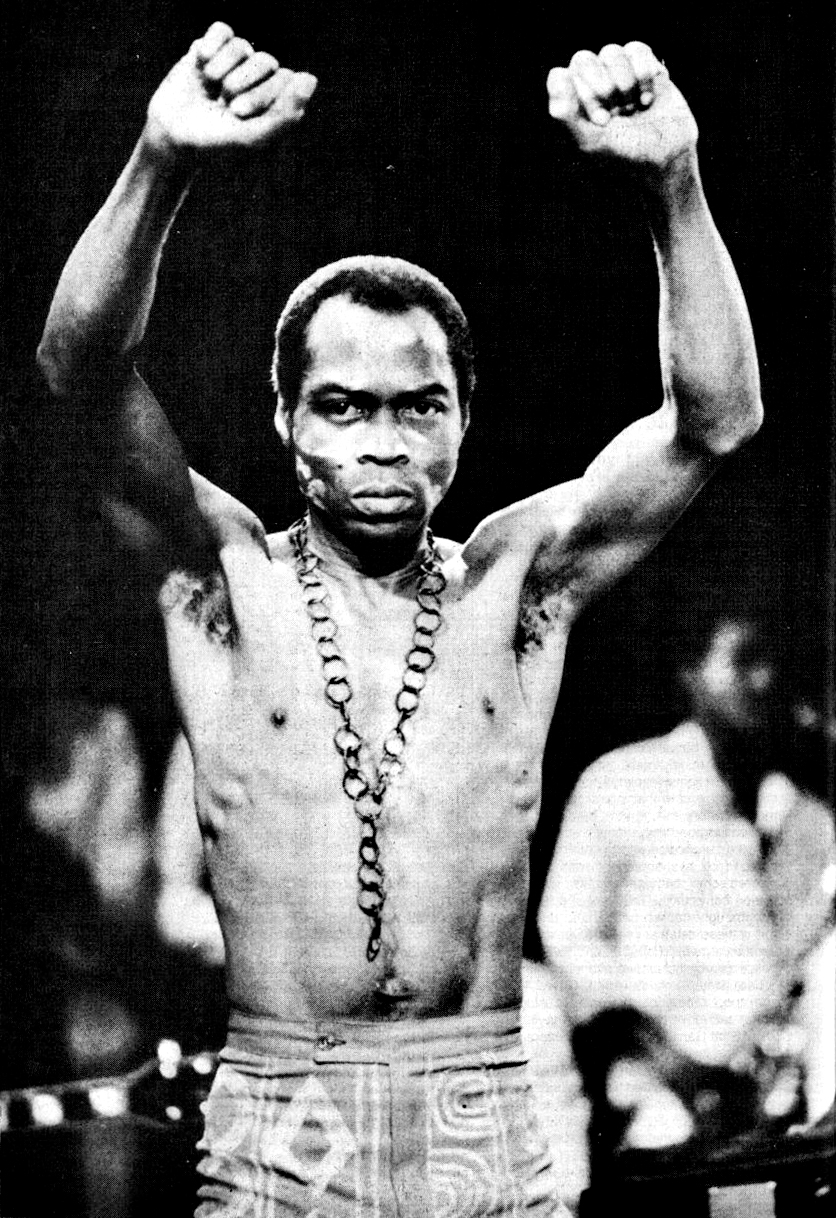
The Nigerian musician who invented Afrobeat by fusing West African rhythms with American funk and jazz — and turned every performance into a forty-minute act of political defiance against successive military governments.
Fela Aníkúlápò Kútì used music as a weapon so effectively that the Nigerian military repeatedly raided his compound, imprisoned him, and eventually destroyed his home — and his records sold around the world regardless. He was simultaneously the creator of a new genre, the leader of a commune, a political candidate, and one of Africa's most commanding live performers.
Formation
Fela Anikulapo Kuti was born in Abeokuta, Nigeria, in 1938 into a prominent family: his father was a Protestant minister and accomplished musician, his mother Funmilayo Ransome-Kuti a leading feminist activist and nationalist. He was sent to London in 1958 ostensibly to study medicine but enrolled at the Trinity College of Music instead, where he studied music theory and played in jazz and highlife groups.
In London he encountered American and Caribbean Black consciousness movements. A 1969 trip to the United States proved decisive: he met Sandra Isidore, an associate of the Black Panthers, whose politics radicalised his approach to both composition and performance. On returning to Nigeria he renamed himself Fela Anikulapo Kuti — dropping his colonial surname "Ransome" — and founded the band Africa 70.
Afrobeat
Afrobeat as Fela developed it was built on an extended rhythmic cycle — typically a four-chord or two-chord progression repeated across a track of thirty to forty-five minutes — over which West African percussion patterns (particularly Yoruba rhythmic traditions), American funk bass lines, jazz horn arrangements, and call-and-response vocal structures were layered. The form was inseparable from live performance: a Fela concert was a political rally as much as a musical event, with the music's repetitive structure creating a collective trance that the lyrics — in Yoruba-inflected pidgin English — interrupted with commentary on corruption, colonialism, and military rule.
His home, studio, and commune in Lagos became the Kalakuta Republic, which he declared independent from Nigeria. Military authorities raided it repeatedly; the most devastating raid in 1977 destroyed the compound, killed his mother (who was thrown from an upper window and died from her injuries), and resulted in his arrest.
Music is the weapon of the future.
Political persecution and late career
Between 1977 and his death in 1997 Fela was arrested, imprisoned, and harassed by successive Nigerian governments. He founded the Movement of the People party and ran for president in 1979, polling negligibly. He married twenty-seven women on a single day in 1978, an act he described as both a cultural affirmation and a response to state harassment of the women in his entourage.
He continued recording and performing at high productivity through the 1980s, with albums whose titles — Zombie (1977), Unknown Soldier (1979), Coffin for Head of State (1980) — constituted a running indictment of military rule. He died from AIDS-related illness in 1997. His son Femi Kuti and grandson Made Kuti have continued the musical tradition.