Franz Schubert
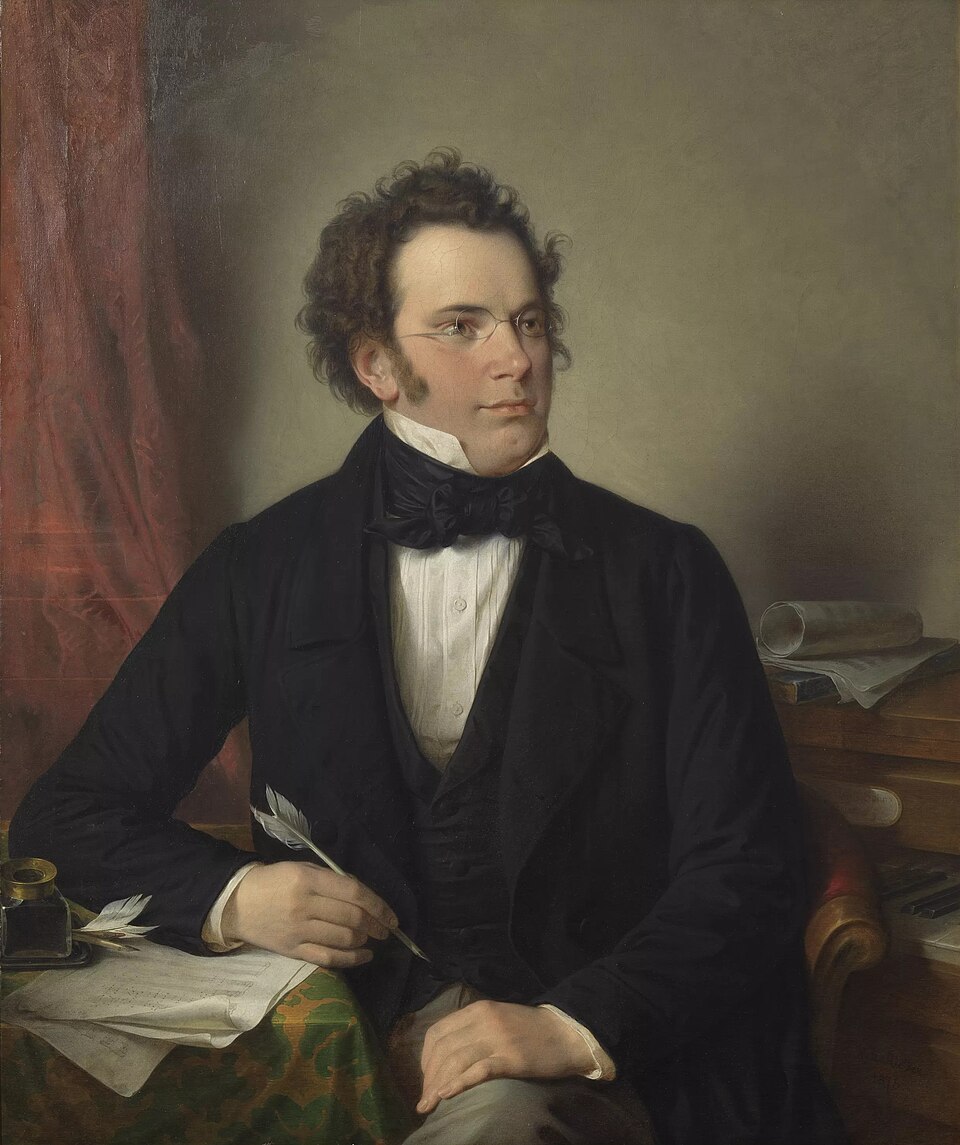
A composer who produced more than a thousand works in thirty-one years — most of them unknown to the public until after his death.
Franz Schubert compressed a life's work into barely a decade of mature composition. Working without a court position, sustained largely by friends and private gatherings, he produced over a thousand pieces — symphonies, chamber music, piano works, sacred music, and more than six hundred songs — before dying at thirty-one.
Origins and formation
Schubert was born on 31 January 1797 in Himmelpfortgrund, a suburb that is now part of Vienna's ninth district. His father, Franz Theodor Schubert, was a schoolteacher who gave him his first musical instruction. He showed exceptional ability early: at eleven he was accepted as a chorister at the Imperial Court Chapel, gaining a free education at the Imperial and Royal City College. There he came to the attention of Antonio Salieri, who gave him composition lessons — the only formal instruction from a major figure he would receive.
When his voice broke in 1813, Schubert trained briefly as a schoolteacher to assist his father. He taught for three years but composed continuously. By the time he left teaching in 1818, he had already written hundreds of works, including his first six symphonies and a vast body of Lieder.
The Lied as form
Schubert's decisive contribution was the German art song. He did not invent the Lied, but he remade it: the piano became a full dramatic partner, not accompaniment, and the harmonic language grew supple enough to carry psychological weight. Gretchen am Spinnrade (1814) — written at seventeen, setting Goethe — is the founding document. Erlkönig (1815), also from Goethe, followed a year later; it circulated in manuscript for years before becoming his first published work (Op. 1, 1821). The song cycles Die schöne Müllerin (1823) and Winterreise (1827) extend the form to near-operatic scale, tracing emotional arcs across sequences of songs with unified narrative logic.
Instrumental works and later ambition
Schubert worked in every instrumental medium, often producing works of structural originality that had no immediate audience. The Symphony No. 8 in B minor (1822) — later known as the "Unfinished" — breaks off after two movements and was not performed until 1865. The Symphony No. 9 in C major ("The Great"), composed between 1825 and 1828, was completed but not premiered until 1839, when Schumann discovered the manuscript and Mendelssohn conducted the first performance. The String Quintet in C major (1828), written in the final months of his life, is among the most sustained achievements in the chamber repertoire.
The Trout Quintet (1819), the Wanderer Fantasy (1822), the late piano sonatas (1828), and the Impromptus circulated in manuscript or appeared belatedly in print. The Schwanengesang collection was assembled and published posthumously in 1829 from songs found at his death.
The Schubertiade and late recognition
Without a court appointment or an opera career to sustain a public profile, Schubert's work reached listeners primarily through the "Schubertiade" — private gatherings hosted by patrons and friends, centred on his music. These were his primary performance venue. Commercial recognition came slowly: only a handful of his works were published in his lifetime, and many of the major instrumental pieces were unknown until decades after his death.
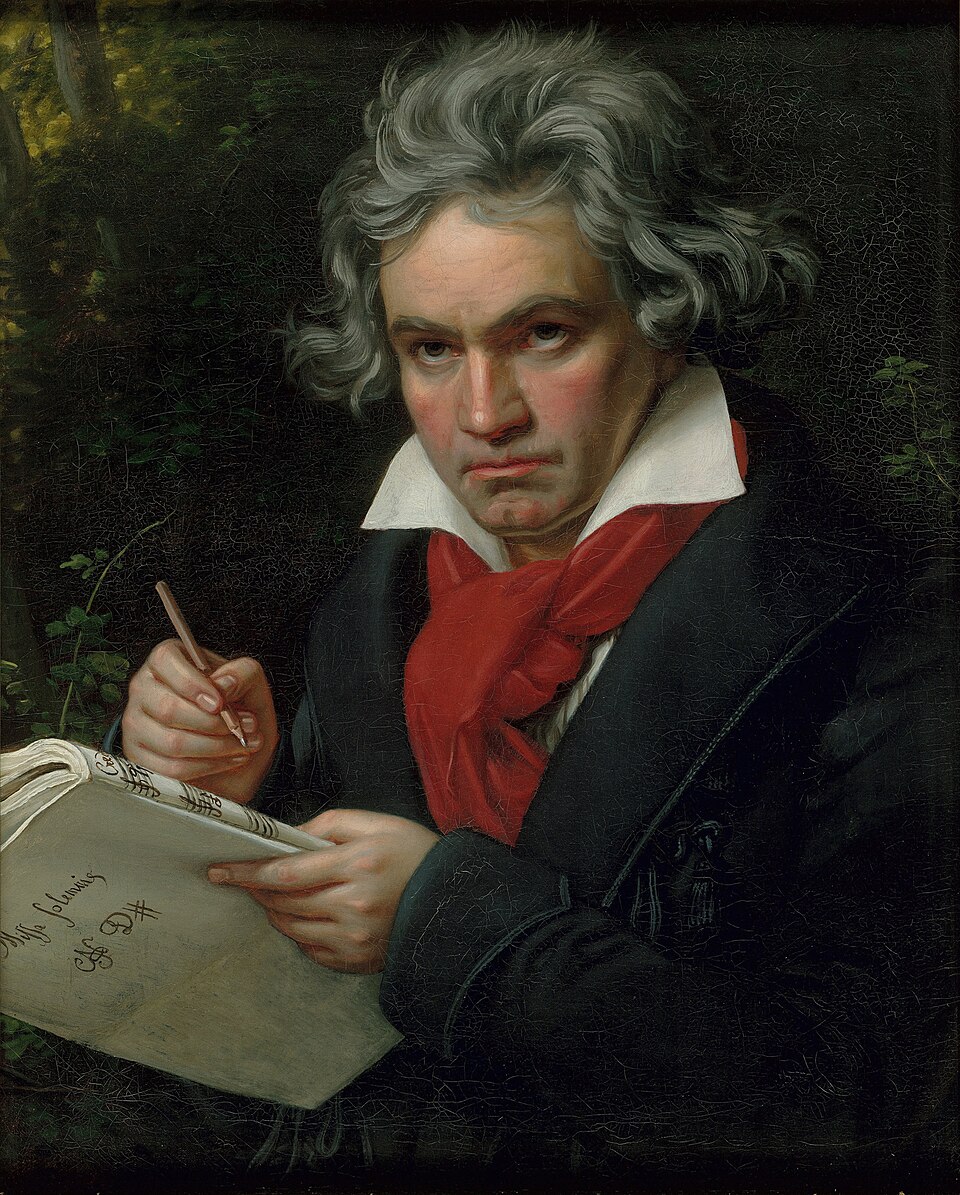
Schubert died on 19 November 1828 of typhoid fever, thirty-one years old. He was buried close to Beethoven, whom he had outlived by little more than a year and had deeply admired. A monument in the Vienna Stadtpark, and a collected edition of his works spanning forty volumes, followed in the late nineteenth century.
In Schubert's hands the piano part ceased to be support and became argument — as indispensable to meaning as the voice above it.