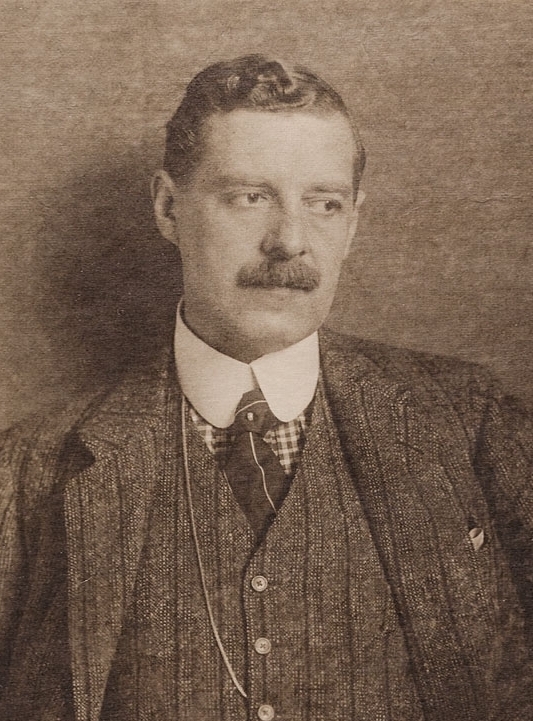
Fumihiko Maki
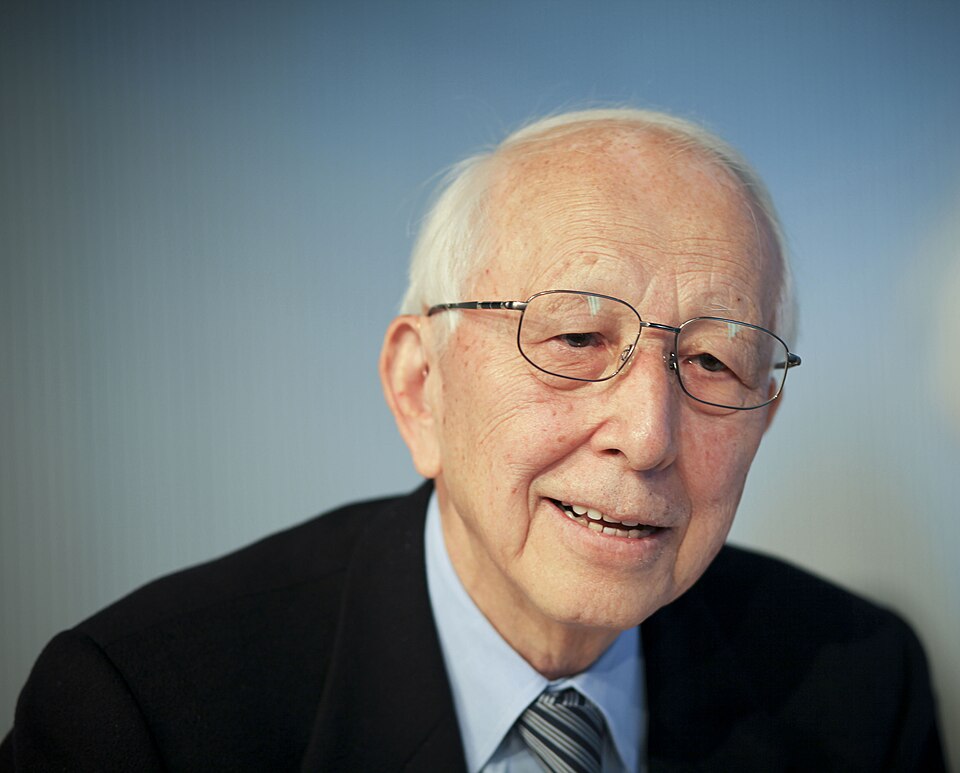
The Japanese architect who spent six decades finding precision at the point where Eastern spatial thought meets Western modernist structure.
Fumihiko Maki built a body of work that resisted spectacle. Over six decades he pursued what he called "group form" — architecture that creates coherent environment rather than singular monuments — and earned the Pritzker Prize in 1993 for a practice rooted equally in Tokyo and Cambridge.
Origins and education
Maki was born in Tokyo in 1928 and completed his undergraduate studies at Tokyo University. He then moved abroad, studying at Cranbrook Academy of Art in Michigan and earning a graduate degree at Harvard Graduate School of Design — a trajectory that placed him in contact with both American and European modernism at its postwar height. He returned to Japan and joined the faculty at Tokyo University, where he taught architecture for many years.
Metabolism and early theory
In 1960 Maki was a co-founder of the Metabolism movement in Japan, alongside Kisho Kurokawa and others. The Metabolists proposed that cities and buildings should be understood as biological organisms — capable of growth, change, and renewal through interchangeable capsule-like units. Maki contributed theoretical rigour to the group: his concept of "group form" distinguished between individual landmark buildings and the connective tissue of urban fabric, arguing that the latter was architecture's true social responsibility.
Group form is the accumulated, often anonymous, formal result of living.
The Spiral and material refinement
His most celebrated Japanese work is the Spiral building in Minami-Aoyama, Tokyo, completed in 1985. The building — a mixed-use cultural centre housing galleries, a café, and a performance space — assembles its facade from geometric fragments: a cone, a curved wall, a grid of windows, a spiral ramp visible through glass. The composition is complex without being chaotic, each element precisely scaled. Critics identified it as a summation of Maki's method: the eclectic surface conceals a rigorous interior logic.
Maki was consistently drawn to new materials and their expressive potential. Aluminium panels, perforated screens, and structural glass appear across his work as tools for creating buildings that are light in mass and careful in their relationship to light.
Late career and New York
The completion of 4 World Trade Center in New York in 2013 brought Maki's work to its largest public audience. One of four towers planned for the rebuilt site, it is clad in glass whose faceting varies across the day. Maki approached the commission with characteristic restraint — the building's profile steps back at its upper stories and its base is detailed to engage the street and memorial plaza.
Legacy
Maki died on 6 June 2024, at the age of 95. His career spanned the full arc of Japanese modernism's international emergence. He bridged Metabolism's postwar utopianism and the quieter, material-focused practice of his mature years, and his writing on urban form remained a reference in architectural education throughout.