Giacomo Puccini
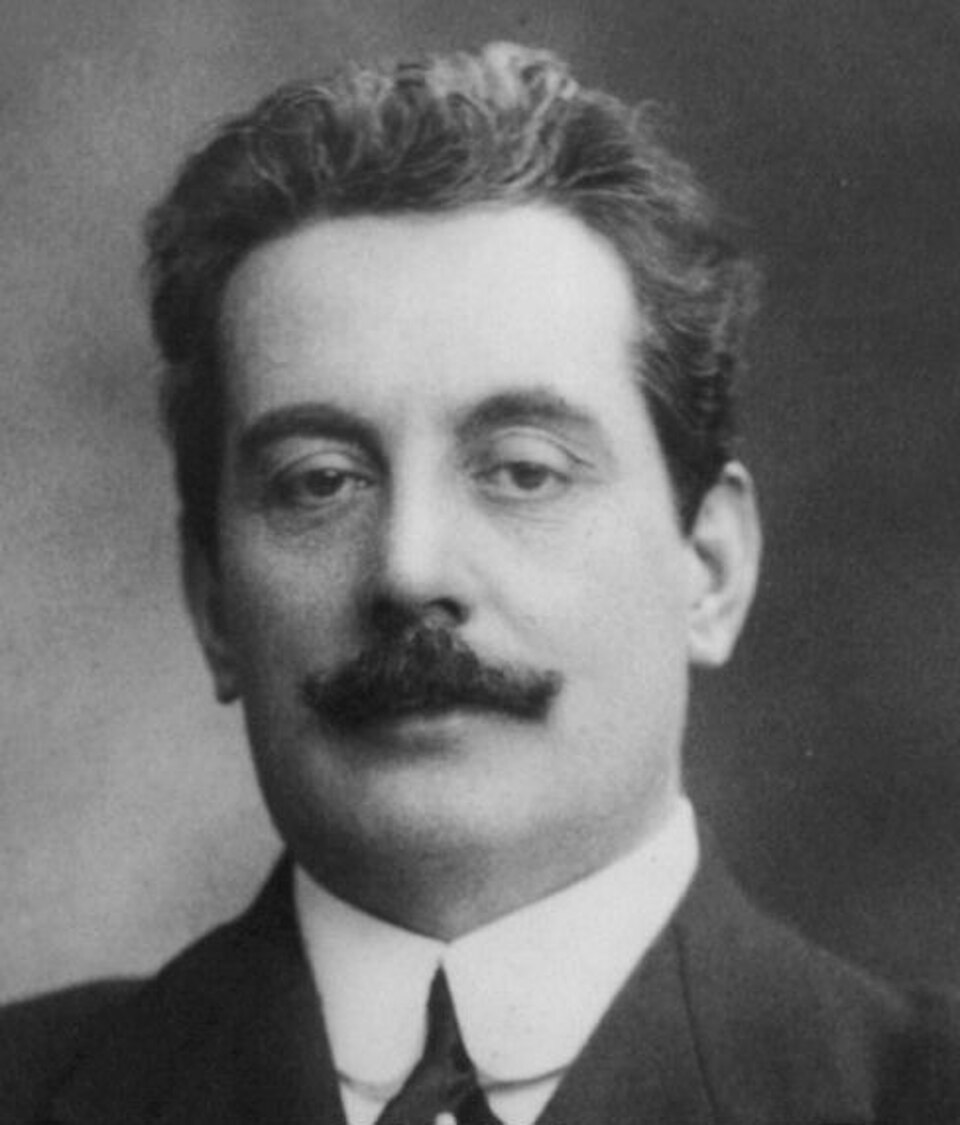
The composer who brought verismo emotion and orchestral precision together in a series of operas that hold the stage more tenaciously than any since Verdi.
Giacomo Puccini descended from four generations of composers, studied under Amilcare Ponchielli, and learned from Verdi — and then surpassed all of them in popular reach. His operas work through an economy of means that is easy to underestimate: melodies that arrive at exactly the moment the dramatic situation demands them, orchestration that tracks emotional states with clinical precision, and a theatrical instinct that never loses sight of an audience's breath.
Origins
Puccini was born in Lucca in 1858 into a musical dynasty that had supplied the city's main church with organists and choirmasters for generations. He was expected to continue the line. But after seeing a production of Verdi's Aida — walking some miles to reach the nearest theatre — he decided opera was his medium. He studied at the Milan Conservatory under Ponchielli, and his graduation work, Le villi (1884), attracted enough attention to secure him a publisher: Giulio Ricordi, who would back him for the rest of his life.
His early development was not smooth: his second opera, Edgar (1889), was a commercial failure. But Manon Lescaut (1893) was a breakthrough.
The central operas
The three works that established his reputation permanently were composed within a decade. La bohème (1896), set among Parisian students and artists, turns on the death of a young woman from consumption — the same subject Verdi had used in La traviata, but handled with greater naturalism and a looser, episodic dramatic structure. Tosca (1900) is a tighter political thriller, set in Rome during the Napoleonic wars. Madama Butterfly (1904) — revised from its disastrous premiere into the form now performed — is his most concentrated study in the destruction of a character by forces indifferent to her.
All three share an orchestral richness that owes something to Wagner without being Wagnerian: the leitmotif is present but never systematic, used for local colour and emotional signposting rather than philosophical architecture.
Almighty God touched me with His little finger and said, "Write for the theatre — mind you, only for the theatre."
Method and late work
Puccini worked slowly, in close consultation with his librettists — Illica and Giacosa for the central trilogy, Adami and Simoni for his last opera. He revised obsessively. Madama Butterfly underwent significant revision between its 1904 premiere at La Scala and the Brescia version three months later that became the standard text. His last opera, Turandot — set in a mythologised China — was left unfinished at his death. The final duet was completed by Franco Alfano from sketches; Arturo Toscanini, conducting the premiere, set down his baton at the point where Puccini's manuscript ended.
Legacy
Puccini's operas account for a substantial share of the global opera house schedule in any given season. La bohème, Tosca, and Madama Butterfly are consistently among the five most performed operas worldwide. His melodic writing — long-breathed, emotionally specific, arriving with structural inevitability — set the standard for the Italian operatic voice that persisted through the twentieth century.