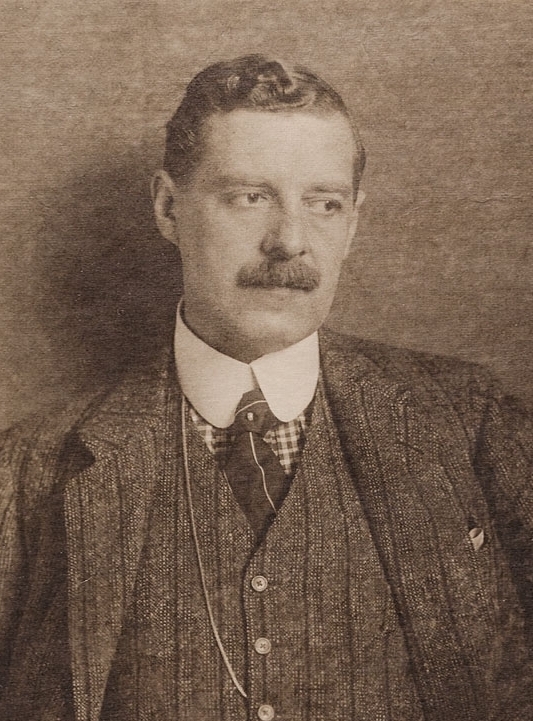
Glenn Murcutt
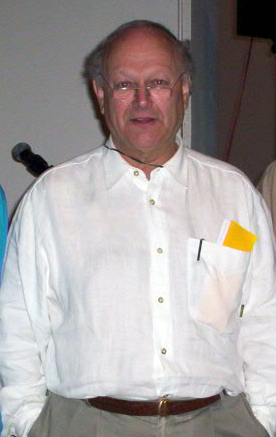
The Australian architect who works alone and builds only in Australia, making steel pavilions that read the land as precisely as a surveyor's instrument.
Glenn Murcutt is Australia's most distinguished architect and one of architecture's most principled practitioners: he works without staff, takes no commissions outside Australia, and has spent fifty years building steel pavilions that respond to climate, landscape, and Aboriginal knowledge of the land.
Origins and formation
Murcutt was born in London in 1936 but grew up in Papua New Guinea and then Australia, developing an early and direct relationship with landscape as a condition of life rather than backdrop. His architectural education in Australia was followed by a formative encounter with the work of Ludwig Mies van der Rohe and Alvar Aalto — the former's structural clarity and the latter's sensitivity to natural light and human scale both left visible traces on his subsequent work.
His practice is entirely solo. He has employed no staff and taken no partners across his career, accepting only those commissions he can design and oversee alone. He builds only in Australia.
A material language
Murcutt's buildings are predominantly of corrugated steel and timber — the materials of the Australian vernacular — refined into a precision instrument. His houses sit lightly above the ground on piers or blades, with roofs shaped to catch prevailing breezes and shed water, and louvres, screens, and overhangs calibrated to the specific solar angles of each site. The phrase "touch the earth lightly" is associated with his work and practice philosophy, drawn partly from his engagement with Aboriginal Australian concepts of land stewardship.
Touch the earth lightly.
Key works
The Marie Short House (1975) in New South Wales established Murcutt's approach: a single-storey corrugated steel pavilion raised above the ground, oriented to catch the breeze, with a gently curved roof profile. The house was later extended by Murcutt himself and is among his most studied works.
The Simpson-Lee House (1994) in Mount Wilson, New South Wales, extended the same logic into a more testing landscape. Set on a rocky ridge, the house is a long pavilion that tracks the ridge line, its glass walls and louvred screens making the interior responsive to every shift in light and weather.
Recognition
Murcutt received the Alvar Aalto Medal in 1992, the Pritzker Architecture Prize in 2002 — making him the only Australian winner of the prize — and the American Institute of Architects Gold Medal in 2009. The Pritzker jury cited his ability to "create buildings that are uniquely Australian and yet universal in their meaning."
Legacy
Murcutt's influence is disproportionate to the scale of his output. He has built relatively few buildings, all domestic or small civic in scale, all in Australia. Yet his model of the architect as sole practitioner, deeply embedded in a specific place and climate, has been widely discussed as a counter-model to the globalised large practice. His workshops and teaching — he has led the Glenn Murcutt International Architecture Masterclass — have shaped a generation of architects in Australia and internationally.