Henry Purcell
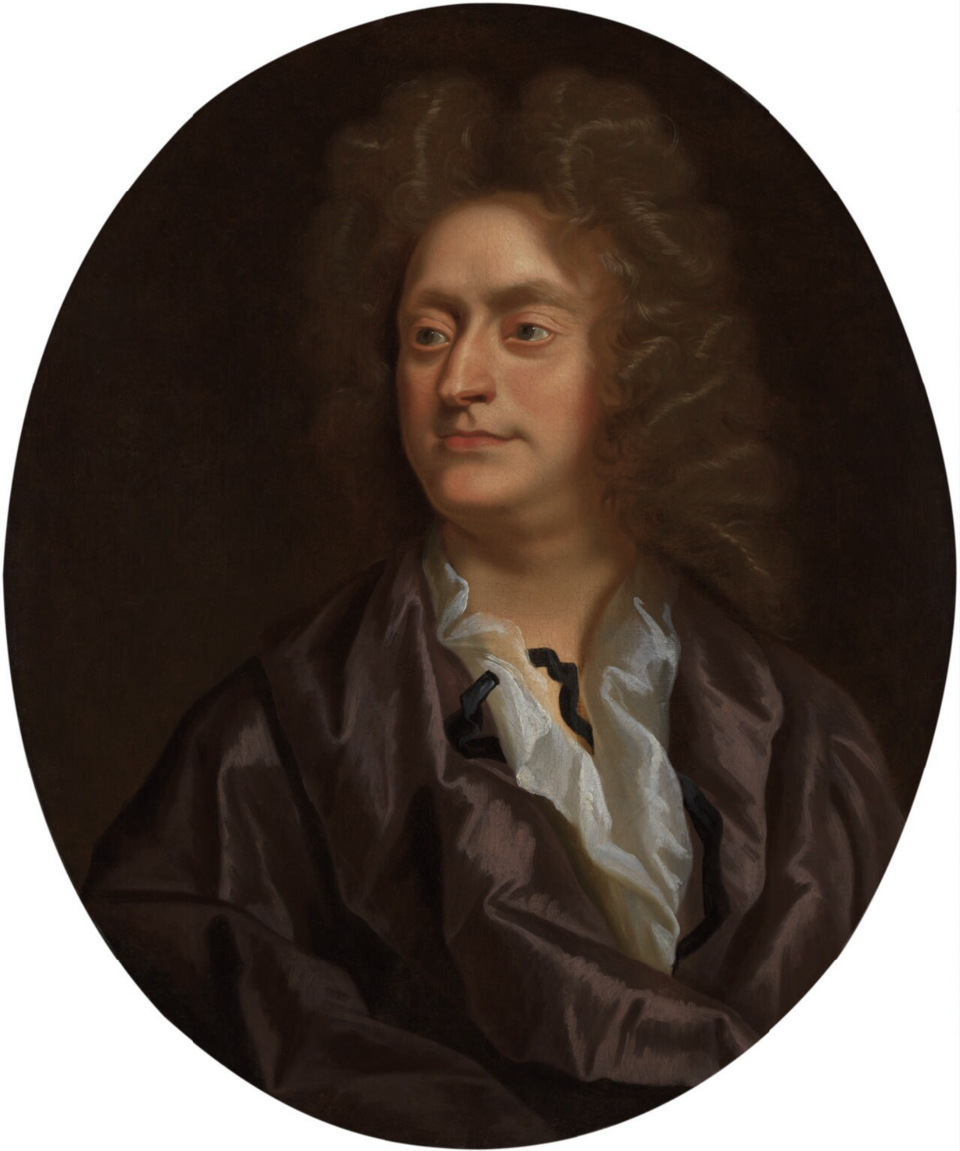
The supreme voice of the English Baroque, who wove native melodic invention with continental rigour and left an opera whose lament has never been surpassed.
Henry Purcell compressed a lifetime of invention into thirty-six years, producing more than a hundred songs, extensive theatre music, and a tragic opera whose aria "When I am laid in earth" remains the most affecting farewell in the English repertoire. Working at the intersection of English, French, and Italian styles, he made something that belonged to none of them — a voice so distinctive it defined English music for a century.
Origins and early formation
Purcell was born in Westminster in 1659, the son of a gentleman of the Chapel Royal. He became a chorister there as a boy, learning composition from John Blow, who would later stand aside his own position at Westminster Abbey to allow Purcell to take it. That gesture of deference — unprecedented between a master and his pupil — speaks to how quickly Purcell's gifts declared themselves.
By 1677 he had been appointed composer-in-ordinary for the violins to Charles II, and in 1679 he succeeded Blow as organist of Westminster Abbey. In 1682 he added the post of organist of the Chapel Royal, making him the most centrally placed musician in England.
The theatre and the stage
Purcell's most consequential work was for the stage. His incidental music and semi-operas — The Fairy Queen (1692), The Indian Queen (1695), King Arthur (1691) — combined spoken drama with spectacular musical interludes, a form particular to the Restoration theatre. But his single through-composed opera, Dido and Aeneas (c. 1689), is the concentrated achievement: a forty-minute tragedy in three acts written, almost certainly, for a Chelsea school for girls. Its final lament, built over a descending chromatic ground bass, is one of the most precisely calibrated expressions of grief in all of Western music.
Music is the exaltation of poetry.
Method and style
What distinguishes Purcell from his contemporaries is the handling of English prosody. He set his language with an ear for natural speech rhythm — consonants landing where they should, long vowels held where the word demands. Italian opera at the time largely imposed Italian shapes on whatever text it received; Purcell shaped the music around the English phrase. He also absorbed the French overture form, the Italian ground bass, and the Lullian dance suite, integrating each without subordinating his own melodic idiom.
His harmonic language is adventurous by any standard of the era: sudden chromatic turns, bold dissonances prepared and left suspended, a readiness to modulate where the text requires it.
Legacy
Purcell's death at thirty-six cut off a career that had only just reached its full powers. He was buried beneath the organ at Westminster Abbey, where he had served for sixteen years. The English musical tradition he created proved difficult to sustain: no English composer of comparable stature emerged until the twentieth century. Yet his music never disappeared from the choir repertoire, and his influence on Britten — who edited and arranged his works and whose opera vocabulary owes much to Purcellian ground-bass technique — gave him a second life in the modern era.