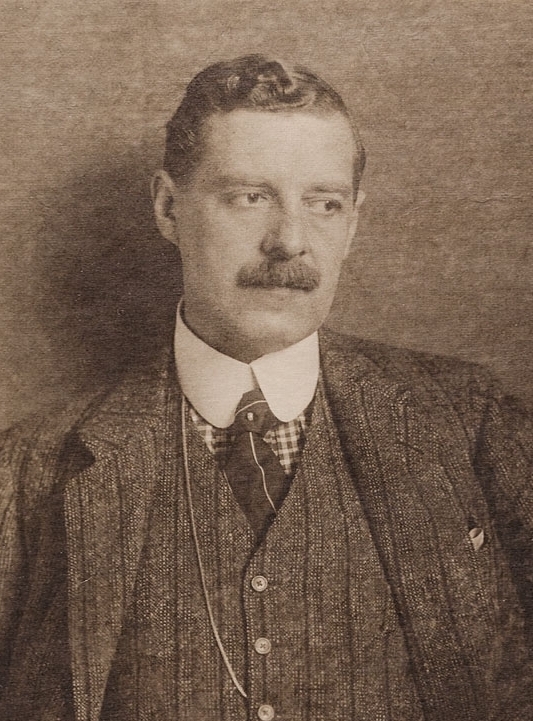
Jean Nouvel
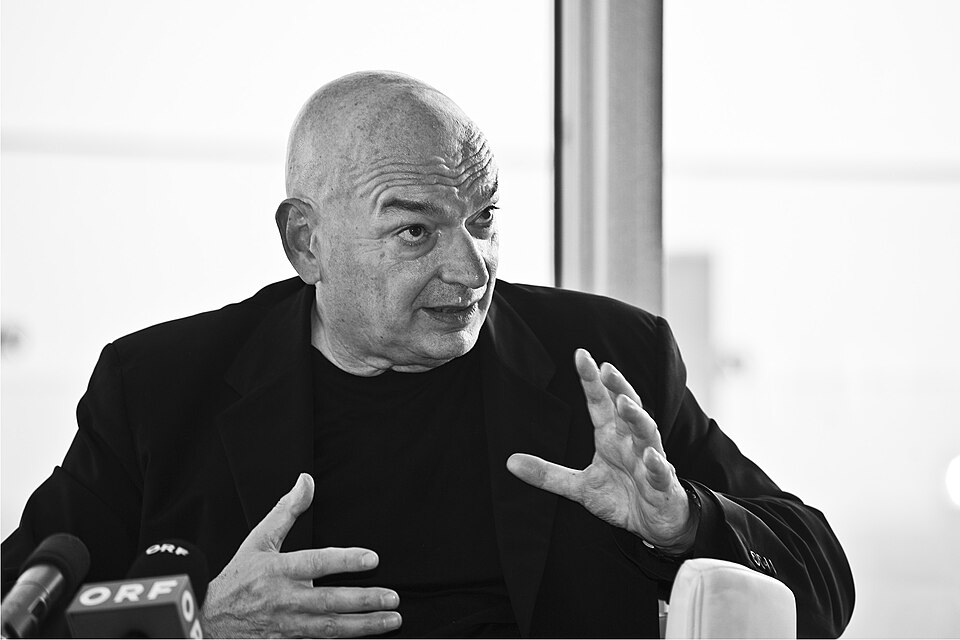
The French architect for whom context is never a constraint but always a provocation — buildings that dissolve, reflect, or punctuate their surroundings rather than simply occupy them.
Jean Nouvel is the most consistently surprising of his generation of French architects — a designer who has never settled into a recognisable style because he insists that each building must respond to the specific character of its site, programme, and culture. The result is a body of work that ranges from the dematerialising glass curtain of the Institut du Monde Arabe to the fierce red tower of the Torre Agbar in Barcelona, held together not by formal repetition but by intellectual consistency.
Education and early career
Nouvel was born in 1945 in Fumel, a small town in the Lot-et-Garonne. He studied at the École des Beaux-Arts in Paris, graduating in 1972. Before he had finished his degree he had already co-founded the architecture union Mars 1976 and was active in the student movements of 1968, experiences that gave his practice a political and cultural edge rarely found among his contemporaries. He later co-founded the Syndicat de l'Architecture, France's first professional labour union for architects.
His early work attracted attention in France but it was the Institut du Monde Arabe in Paris (1987), designed with Architecture Studio, that announced him to an international audience.
The Institut du Monde Arabe and the logic of the screen
The south facade of the Institut du Monde Arabe is covered by 240 photo-sensitive diaphragm panels — mechanical irises modelled on the geometric motifs of Arabic latticework that open and close in response to light, regulating the interior illumination. The concept unites technology, cultural reference, and environmental function in a single element.1 It was immediately recognised as one of the most inventive building skins of the late 20th century, and it established Nouvel's recurring preoccupation with the facade as a dynamic, responsive membrane rather than a passive enclosure.
That preoccupation recurs across his career: the Fondation Cartier pour l'Art Contemporain (1994) in Paris dissolves its boundaries with layers of glass set at distances from the building's structural frame; the Louvre Abu Dhabi (2017) is sheltered by a vast perforated dome that dapples the spaces below with shifting patterns of light — a rain of light, as Nouvel described it — drawn from the geometry of traditional Islamic architecture.
Contextual provocation
Nouvel reads context not as an instruction to blend in but as an argument to engage with. The Torre Agbar (now Torre Glòries) in Barcelona (2005) is a slender, bullet-shaped tower clad in aluminium louvres and glass that shifts colour across its surface — a building that responds to the light of Catalonia while referring, obliquely, to Gaudí's organic forms. In Paris, the Musée du quai Branly (2006) situates its collection of indigenous arts within a building half-obscured by a living wall of vegetation, the architecture refusing to assert the Western institutional frame over the objects it houses.
| Building | Location | Completed |
|---|---|---|
| Institut du Monde Arabe | Paris | 1987 |
| Fondation Cartier | Paris | 1994 |
| Torre Agbar (Torre Glòries) | Barcelona | 2005 |
| Musée du quai Branly | Paris | 2006 |
| Louvre Abu Dhabi | Abu Dhabi | 2017 |
The Philharmonie de Paris (2015) at La Villette is among his most complex buildings — an auditoria wrapped in a rippling aluminium skin, its exterior form suggesting movement, its interior configured to maximise acoustic and visual proximity between audience and performers.
Recognition
The Aga Khan Award for Architecture was awarded to the Institut du Monde Arabe in 1989. The Wolf Prize in Arts followed in 2005, and the Pritzker Architecture Prize — the field's highest honour — was awarded in 2008, with the jury citing his capacity to reinvent himself with each project. Nouvel has been the subject of retrospectives at the Centre Pompidou and at major museums internationally, and his influence on French architecture in particular has been decisive in breaking the dominance of the rational Beaux-Arts tradition.
There is no such thing as neutral architecture. A building is always a statement about the world.
Footnotes
- The diaphragm panels were an ambitious technical achievement; in practice many were reported to malfunction in subsequent years, though the conceptual logic of the facade remained highly influential. ↩