John Cage
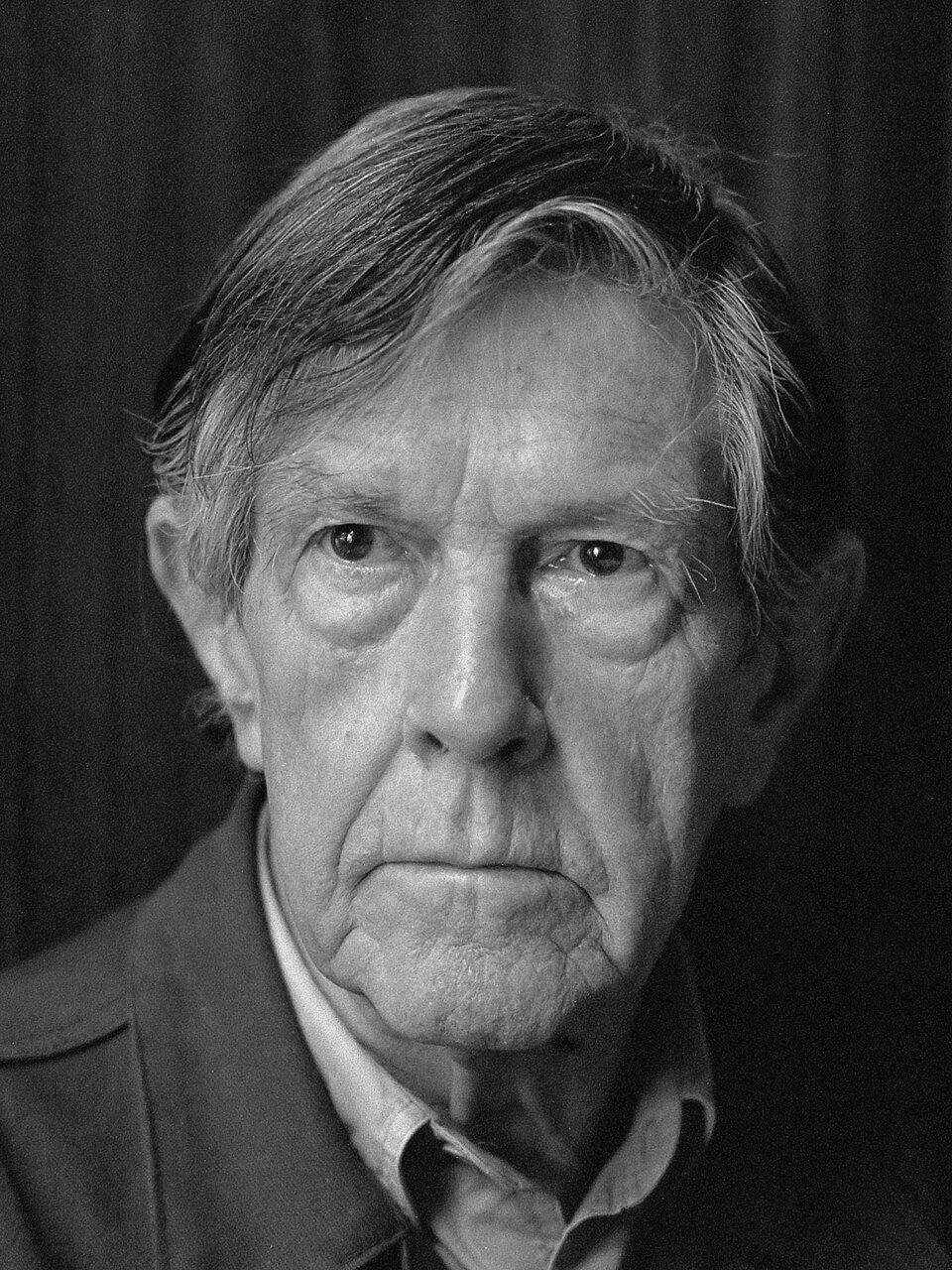
The American composer who decided that silence is music, chance is method, and the boundary between art and life is not worth defending.
John Cage did not merely expand the definition of music — he dissolved it. By subjecting composition to chance operations, redefining silence as a populated phenomenon, and insisting that any sound could be musical, he produced work that remains genuinely unsettling: not because it is difficult, but because it is correct.
Los Angeles, Schoenberg, and the search for a method
Cage was born in Los Angeles on 5 September 1912. He studied briefly with composer Henry Cowell and in the early 1930s with Arnold Schoenberg, who later said he had no harmony and would always "encounter a wall." Cage took the observation differently: he would go around the wall.
His early work explored percussion music and the prepared piano — a grand piano with bolts, screws, rubber, and felt inserted between strings to transform it into a one-person percussion ensemble. The Sonatas and Interludes (1946–48) represent the peak of this period: forty-three pieces, quiet and ceremonial, drawing on Indian aesthetic theory that Cage had absorbed through discussions with the musicologist Gita Sarabhai.
Indeterminacy and 4′33″
The decisive turn came after Cage's encounter with Zen Buddhism through the writings of D. T. Suzuki and with the Chinese divination text the I Ching. From the early 1950s he began using coin tosses mapped to the I Ching's hexagram tables to determine pitch, duration, and dynamics — removing his own taste from the compositional act. The Music of Changes (1951) was the first large-scale work generated this way.
In 1952 Cage composed 4′33″: three movements, none of which the performer plays. The score instructs the performer to refrain from playing for four minutes and thirty-three seconds. What the audience hears is the room — air-conditioning, coughing, traffic, the ambient envelope of any given moment. Cage's point was that this was always there; music had simply been too loud to let anyone notice.
I have nothing to say and I am saying it.
Collaborations and later work
Cage's forty-year partnership with choreographer Merce Cunningham — personal and professional — produced a body of work that treated music, dance, and visual design as independent elements sharing the same time and space without subordination. The principle influenced generations of performance artists.
His later compositions extended indeterminacy into graphic scores and text-based pieces that gave performers maximum interpretive latitude. He also developed Musicircus events: overlapping simultaneous performances by multiple groups. His theoretical writings, collected in Silence (1961) and subsequent volumes, became core texts of the avant-garde.