Joseph Haydn
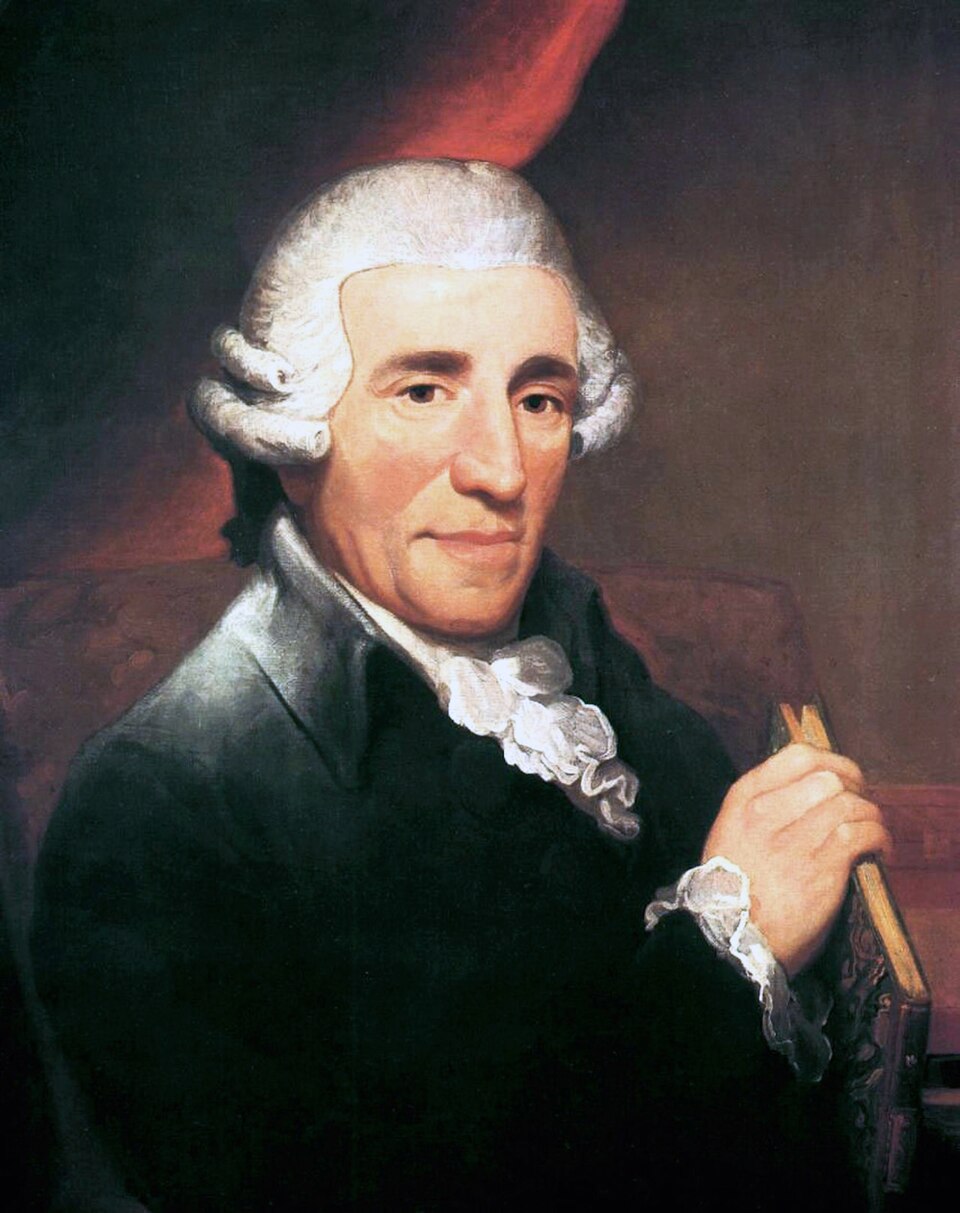
The composer who gave the Classical era its defining forms — the symphony, the string quartet — and filled them with wit, surprise, and structural intelligence.
Franz Joseph Haydn spent nearly three decades as a court musician at Esterháza, and in that enforced isolation — far from the capitals where music circulated — he became the century's most original architect of musical form. The symphony and the string quartet emerged from his workshop not as inherited conventions but as living structures, flexible enough for every emotion and rigorous enough to bear development across an entire movement.
Origins
Haydn was born in 1732 in Rohrau, a village near the Hungarian border, to a wheelwright father who was also an amateur harpist. His musical ability was noticed early and he was sent to Vienna to be a choirboy at St Stephen's Cathedral, remaining there until his voice broke. He then spent years in poverty in Vienna, teaching, accompanying, and studying counterpoint — largely self-taught from treatises. His connection with the court of Prince Paul II Anton Esterházy began in 1761 and continued under Prince Nikolaus, for whom he worked for nearly thirty years.
The Esterházy years
The court at Esterháza, an ornate palace in the Hungarian marshes, was musically ambitious: a resident opera company, a wind band, and a chamber orchestra all under Haydn's direction. The isolation that might have been constraining proved generative. Without access to the latest fashions from Paris or London, he was forced to be original, and originality became his method. The six string quartets of Op. 33 (1781), which he described as composed in an entirely new manner, demonstrate how far he had pushed the medium — four equal voices in genuine dialogue, no one part subordinate to another.
I was cut off from the world; there was no one near me to torment or disturb me, and so I was forced to become original.
Method and form
Haydn's greatest formal innovation is the technique usually called motivic development: taking a short melodic cell and putting it through harmonic, rhythmic, and contrapuntal transformations across the span of a movement. The result is an architectural coherence that feels both inevitable and surprising. His slow movements are often deeply lyrical; his finales frequently play with the listener's expectations, none more deliberately than the abrupt pauses and false endings of the "Farewell" Symphony or the sudden pianissimo close of the "Surprise."
He composed 106 symphonies, 68 string quartets, 45 piano trios, and a large body of vocal music including the oratorios The Creation and The Seasons, which he wrote in his late sixties with formidable energy after hearing Handel's works in London.
Legacy
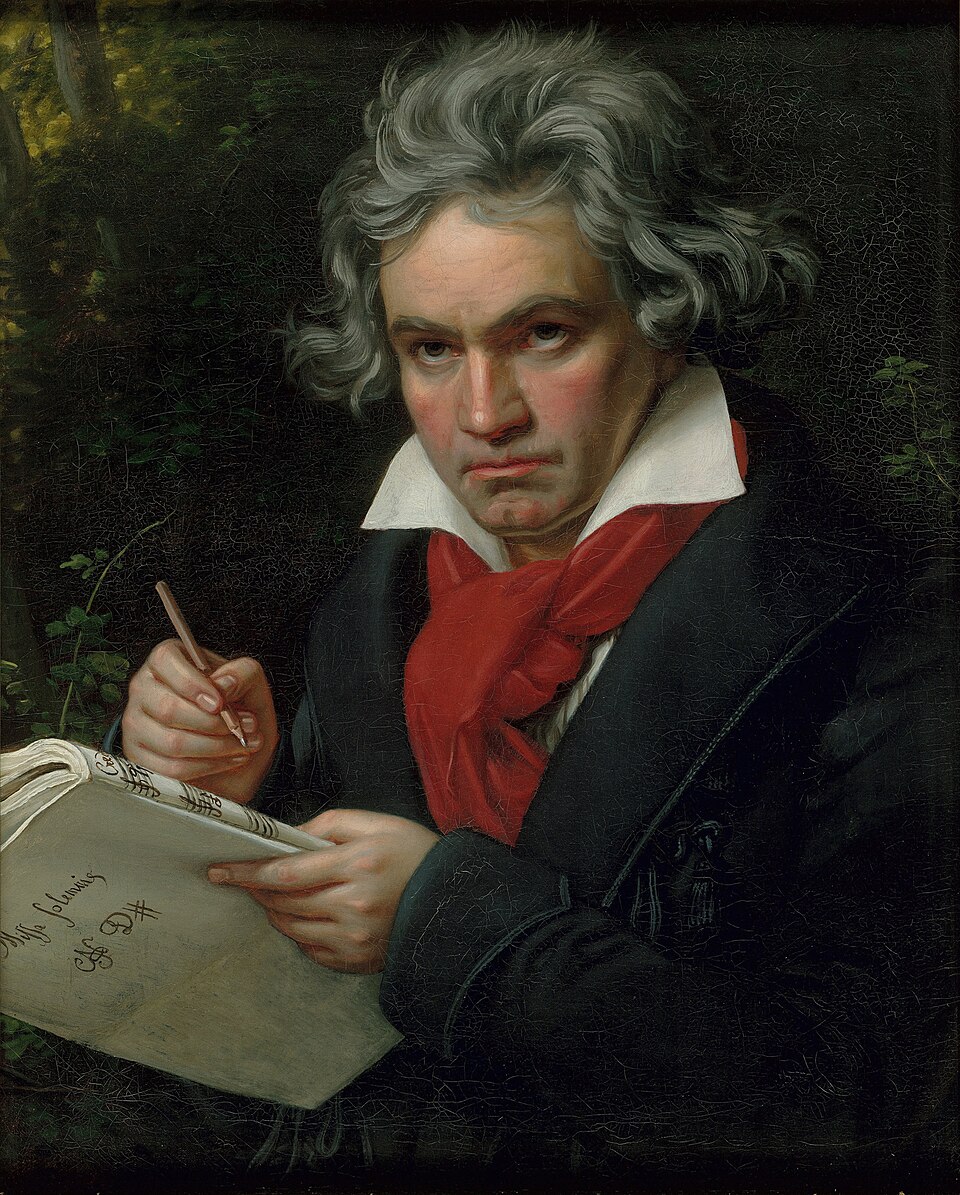
Haydn's two London visits in the 1790s made him an international figure. The twelve symphonies he wrote for the Salomon concerts remain cornerstones of the orchestral repertoire. His influence on Beethoven — who studied briefly with him and absorbed his technique of motivic development — shaped the entire subsequent course of Western music. Mozart, who was both his junior and his friend, said that from Haydn he first learned how to write string quartets.