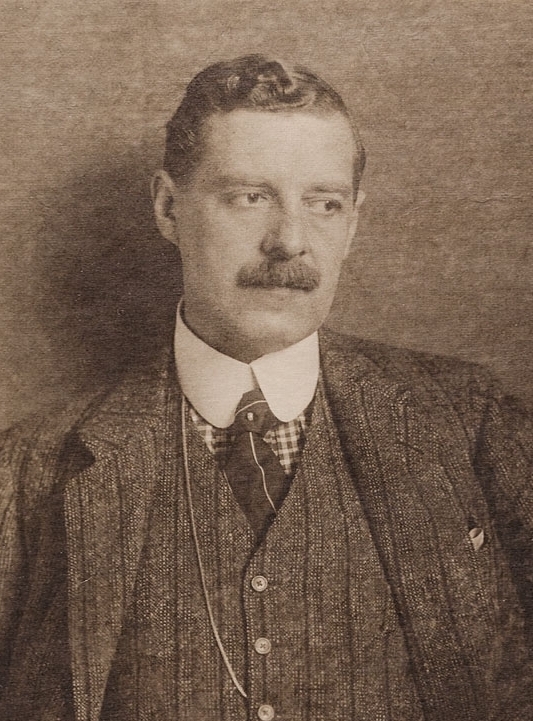
Kisho Kurokawa
The Japanese architect who envisioned buildings as living organisms — replaceable capsules stacked into towers that cities could update like cells.
Kisho Kurokawa made the capsule the unit of a new urbanism. His Nakagin Capsule Tower stood for fifty years as the clearest built statement of Metabolism's ambition — a building designed not to last intact but to renew itself, module by module, in perpetuity.
Origins and the Metabolism manifesto
Kurokawa was born in 1934 in Kanie, Aichi Prefecture, and studied architecture at Tokyo University under Kenzo Tange, the dominant figure in Japanese postwar modernism. In 1960 he co-founded the Metabolism movement with Fumihiko Maki and others, presenting their ideas at the World Design Conference in Tokyo. The Metabolists drew on biology: buildings and cities should grow and shed components the way organisms replace cells. They proposed capsules, megastructures, and interchangeable modules as the instruments of this urban biology.
The Nakagin Capsule Tower
The Nakagin Capsule Tower in Shimbashi, Tokyo, completed in 1972, is Kurokawa's most consequential work. Two concrete shafts carry 140 self-contained capsule units, each bolted to the core with only four high-tension bolts — the design specification stated that each capsule could be detached and replaced by crane without disturbing its neighbours. The capsules measured approximately 2.3 by 3.8 by 2.1 metres; each contained a bed, bathroom pod, and porthole window.
Each capsule was designed to be replaceable — the building should never need to grow old.
The tower was built for single workers commuting into central Tokyo, and it functioned as serviced residential accommodation for much of its early life. Over the following decades the capsules deteriorated; the replacement programme envisaged by the design was never carried out. The building became a pilgrimage site for architectural students even as its fabric declined.
Symbiosis and later theory
From the 1980s Kurokawa turned his theoretical attention to what he called the philosophy of symbiosis — the coexistence of technology and nature, East and West, tradition and innovation. He argued that the binary oppositions of Western thought were inadequate to describe a world that was irreducibly multiple. This philosophy informed his later museum projects and urban planning proposals across Japan and internationally.
Demolition
The Nakagin Capsule Tower was demolished in 2022, despite long-running campaigns to preserve it. A number of individual capsules were dismantled and acquired by institutions before demolition, making them among the most widely dispersed components of any single demolished building. The debate around the tower raised persistent questions about the relationship between architectural theory, maintenance, and preservation — questions Kurokawa's own design had embedded from the start.