Leoš Janáček
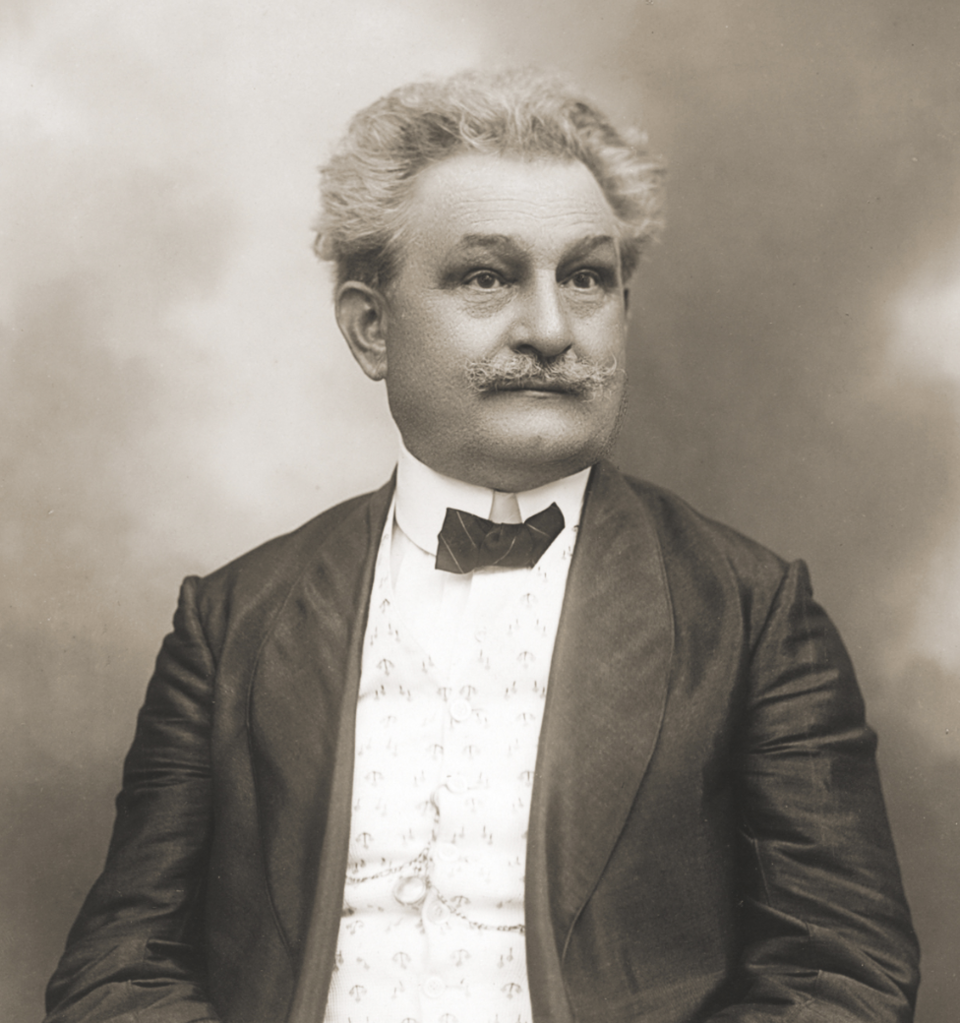
A Czech composer who built an entirely original musical language from speech rhythms and Moravian folk music, producing his greatest operas after the age of sixty.
Leoš Janáček is one of the great late developers in music history: he spent decades teaching, composing locally, and collecting Moravian folk music before producing, in the last two decades of his life and largely after sixty, a sequence of operas, chamber works, and orchestral pieces that are entirely unlike anything else in the repertoire — raw, concentrated, and shot through with the rhythms of spoken Czech.
Moravian formation
Janáček was born in 1854 in Hukvaldy, a village in Moravia, the son of a schoolteacher who was also a musician. He was educated at the Augustinian monastery in Brno under Pavel Křížkovský, a composer and choirmaster who introduced him to both church music and Moravian folk tradition. He studied later in Prague, Leipzig, and Vienna, but returned to Brno, which remained his base for life. He founded the Brno Organ School in 1881, which he directed for decades, and taught generation after generation of Moravian musicians while composing steadily.
His first major opera, Šárka, dates from 1887, but the work by which he first reached beyond Brno was Jenůfa (1904), a tragedy of village life built on a libretto he wrote himself from Gabriela Preissová's play. The Brno premiere attracted modest attention; a Prague production in 1916, twelve years later, made him nationally and then internationally known.
Speech-melody and folk materials
Janáček developed an idiosyncratic method of notating what he called nápěvky mluvy — speech melodies: short melodic fragments transcribed from overheard conversations, dialect, and natural sounds. He filled notebooks with these notations over decades. The resulting musical language is characterised by asymmetric phrase lengths, modal harmony, and an irregular, speech-like rhythmic surface that sounds spontaneous while being meticulously calculated.
His fieldwork in Moravian folk music — collecting, transcribing, and publishing dances and songs — fed directly into his compositional practice without resulting in simple quotation. The folk idiom was a source of structural thinking, not decoration.
In every human speech, in every form of address, an entire man lies revealed.
The late operas
The dozen years between 1916 and his death in 1928 produced an extraordinary sequence of mature works. Katya Kabanova (1921), based on Ostrovsky's The Storm, is an opera of psychological compression and emotional intensity. The Cunning Little Vixen (1924) moves between the animal and human worlds with a freedom unique in opera. The Makropulos Case (1926), after Čapek, addresses immortality with cold clarity. From the House of the Dead (1930, staged posthumously), based on Dostoevsky's prison memoir, was the last and bleakest.
The Sinfonietta (1926), with its famous fanfare opening written for a Sokol gymnastics festival, became his most widely performed orchestral work. The two string quartets — especially the Second, Kreutzer Sonata (1928) — and the Glagolitic Mass (1927) complete the picture of an extraordinary late flowering.