Nina Simone
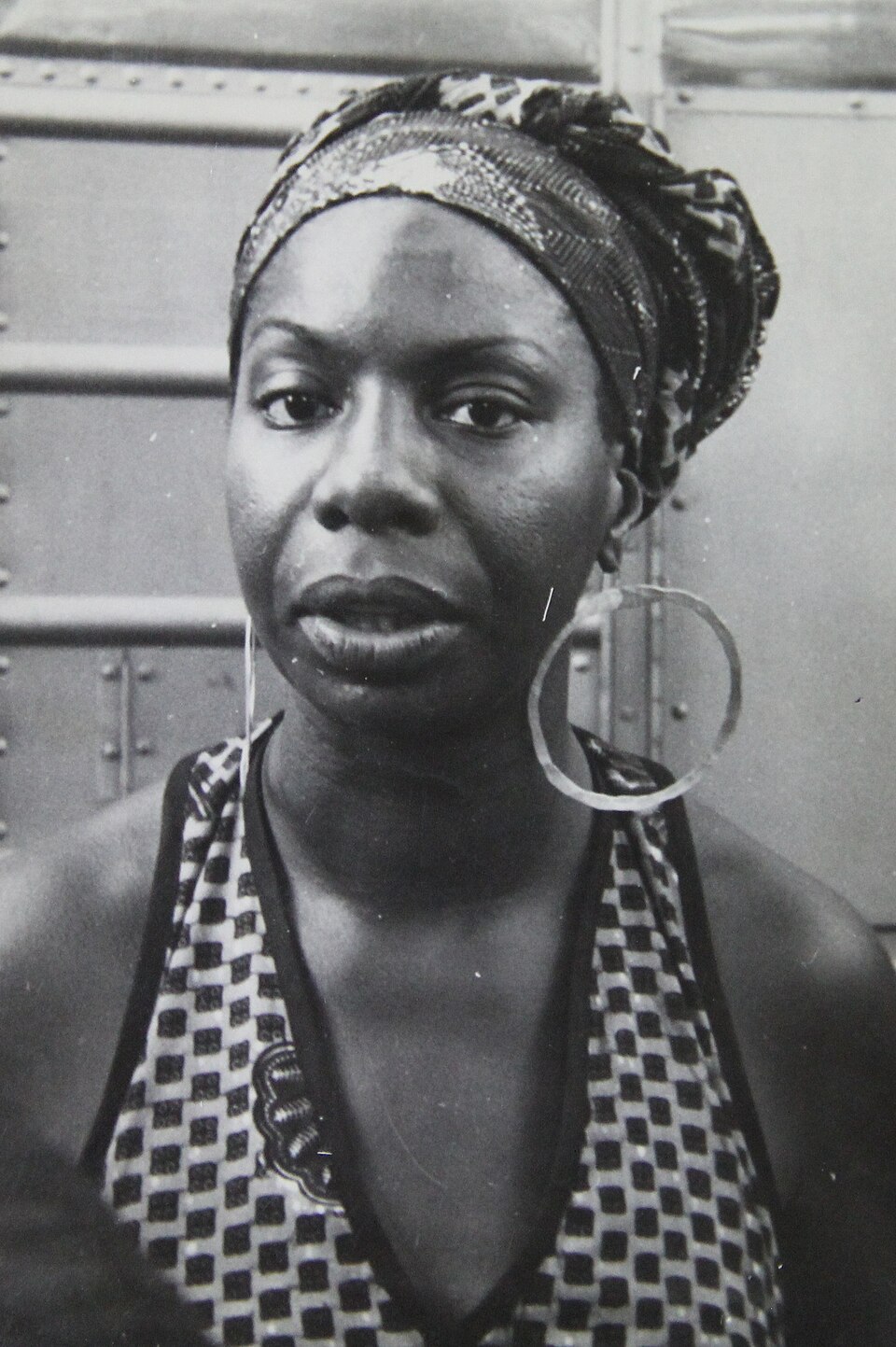
A classically trained pianist who turned the concert stage into a pulpit for civil rights and an instrument for grief.
Nina Simone occupied a position in American music that no category contained comfortably: a Bach-trained pianist playing jazz and gospel, a protest singer with a conservatory ear, a performer whose concerts could feel like confessionals. She called herself a classical artist but the world heard something it needed more broadly, and eventually she accepted the title the High Priestess of Soul.
Training and early refusals
Born Eunice Kathleen Waymon in 1933 in Tryon, North Carolina, Simone showed exceptional musical aptitude as a child. A local teacher, Muriel Mazzanovich, gave her classical lessons; community fundraising later allowed her to study in New York. She applied to the Curtis Institute of Music in Philadelphia and was rejected — a wound she carried for decades and attributed, at least in part, to racial discrimination. Needing income, she began playing piano in an Atlantic City club under the name Nina Simone, singing to keep her job. The stage name protected her classical ambitions from her religious mother; the voice that emerged was entirely her own.
Sound and style
Simone's piano playing bore the fingerprints of J.S. Bach: counterpoint, left-hand independence, clarity of line. Her singing, in a deep contralto, bent time in ways that owed as much to gospel and the blues as to any European tradition. She moved between idioms — folk songs, show tunes, spirituals, protest anthems — and made each register as personal rather than as genre. Albums such as Little Girl Blue (1958), Nina Simone at Town Hall (1959), and Wild Is the Wind (1966) show the range. Her rendition of "I Put a Spell on You" and her original composition "Four Women" became standards.
Civil rights and confrontation
By the early 1960s Simone was embedded in the civil rights movement, friends with Lorraine Hansberry and Langston Hughes. The 1963 bombing of the 16th Street Baptist Church in Birmingham and the murder of Medgar Evers prompted her to write "Mississippi Goddam" in an hour — a song of barely contained fury delivered as a Broadway show tune. She performed at the 1963 March on Washington and at Selma. The directness of her politics cost her commercial airplay but sharpened her live presence to something close to ceremony.
| Album | Year | Note |
|---|---|---|
| Little Girl Blue | 1958 | Debut; includes "I Loves You Porgy" |
| Nina Simone at Newport | 1960 | Landmark live recording |
| Wild Is the Wind | 1966 | Career-defining studio album |
| Baltimore | 1978 | Late career resurgence |
Later years and legacy
Simone left the United States in 1970, living at various times in Liberia, Switzerland, France, and the Netherlands. A diagnosis of bipolar disorder, made public later in her life, contextualised years of erratic public behaviour and estrangement. She died in Carry-le-Rouet, France, in 2003. Her influence on subsequent musicians — from Lauryn Hill to Jeff Buckley — has only grown, and her songs remain protest anthems as well as jazz standards.
I'll tell you what freedom is to me — no fear.