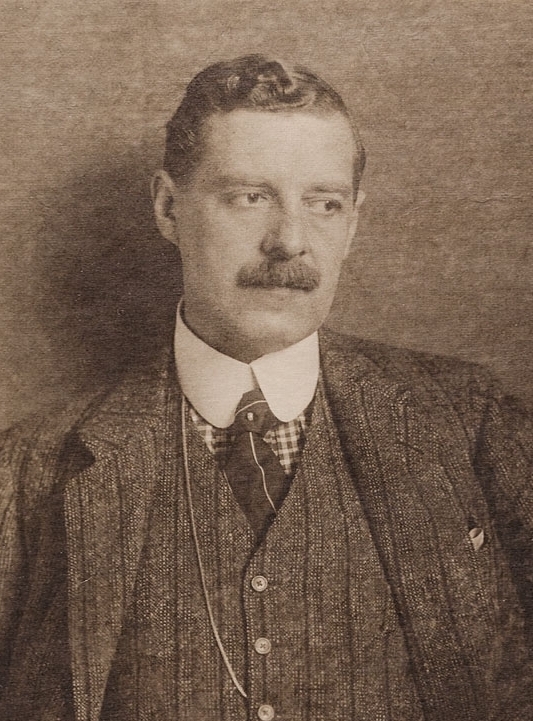
Norman Foster
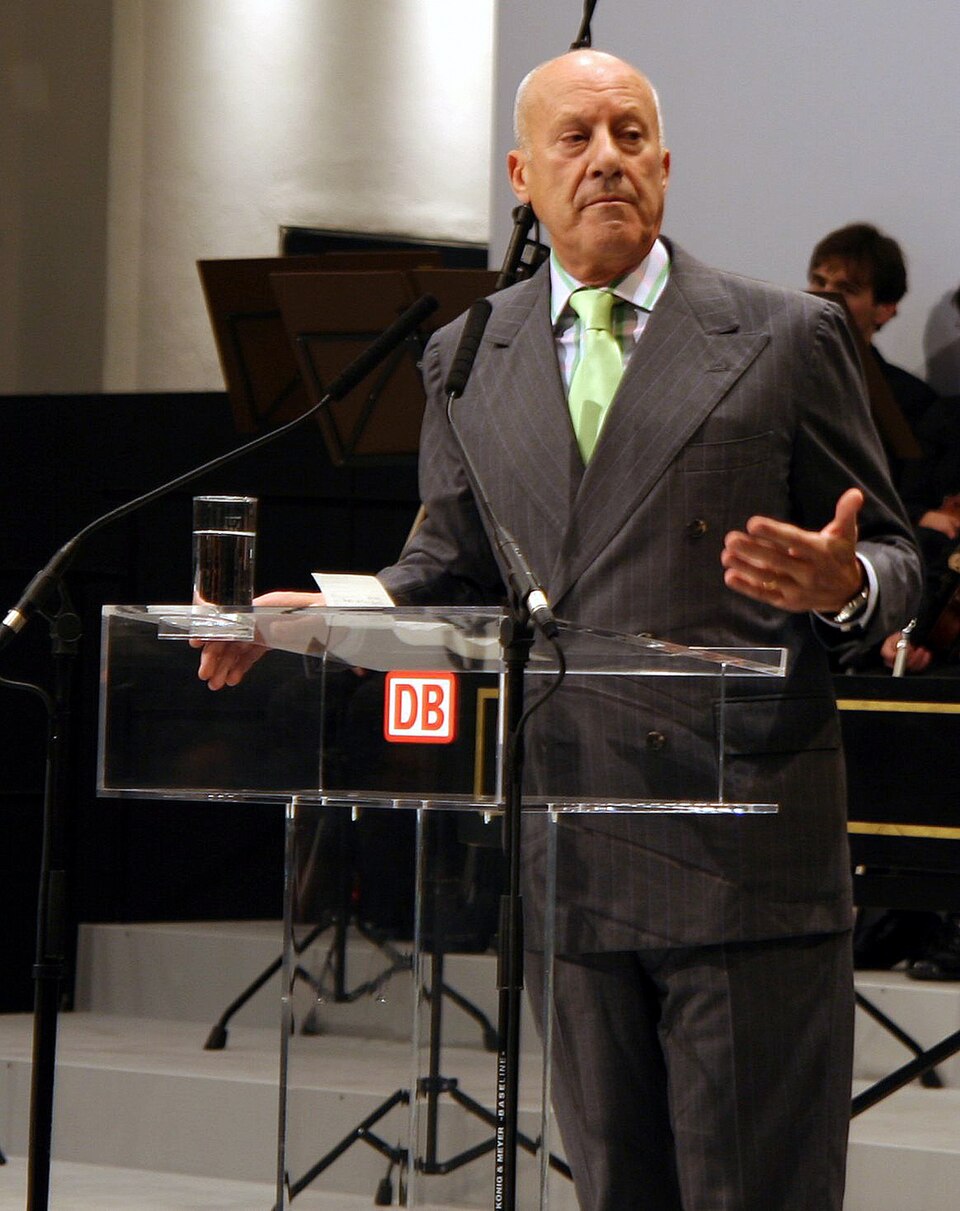
The architect who turned steel and glass into civic theatre, making transparency a moral as much as a material ambition.
Norman Foster grew up in Stockport and left school at sixteen to work as a clerk in Manchester's town hall. From that resolutely unarchitectural start he built one of the most influential practices of the late twentieth century, redefining the office building, the airport, the museum, and the stadium as expressions of democratic civic life. His architecture is warm to touch — glass that admits light generously, curves that resolve structural forces into pleasure.
Origins and the Yale connection
After National Service and a stint in the Manchester city treasurer's office, Foster won a place at the Manchester School of Architecture, then earned a Henry Fellowship to Yale's School of Architecture in 1961, where he met Richard Rogers. Back in London the two founded Team 4 with Wendy Cheesman and Georgie Wolton in 1963; the practice dissolved four years later and Foster set up Foster Associates in 1967, renamed Foster + Partners in 1999.
The early work — the Reliance Controls factory in Swindon (1967), a shed of elegant understatement — already showed the practice's signature: structural clarity, meticulous detailing, the dissolution of barriers between inside and out.
The defining buildings
Willis Faber and Dumas in Ipswich (1975) wrapped a full-city-block office in dark glass curtain-walling that reflected the medieval town centre back at itself: modernism that respected its context without mimicking it. The building's swimming pool and rooftop garden were unprecedented amenities for an office.
Hong Kong and Shanghai Bank Headquarters (1986) remains a landmark of structural exposition: the building hangs from eight masts, leaving the ground floor open as a public plaza. Its completion cost was vast but so was its influence — it established the high-tech idiom as viable at skyscraper scale.
Reichstag, Berlin (1999) may be his most resonant civic gesture. Invited to wrap the German parliament in glass after reunification, Foster designed a public spiral ramp inside a new dome above the debating chamber — citizens walking above their elected representatives, looking down through the glass floor. Transparency as a literal constitutional value.1
| Building | Completed | Location |
|---|---|---|
| Willis Faber and Dumas | 1975 | Ipswich, UK |
| Sainsbury Centre for Visual Arts | 1978 | Norwich, UK |
| Hong Kong and Shanghai Bank HQ | 1986 | Hong Kong |
| Stansted Airport | 1991 | Essex, UK |
| Reichstag dome | 1999 | Berlin, Germany |
| 30 St Mary Axe (Gherkin) | 2003 | London, UK |
Method and scale
Foster + Partners operates at extraordinary scale — offices in London, Hong Kong, New York, and elsewhere; hundreds of architects at any one time. Yet projects consistently show the hallmarks of a single sensibility: the suppression of visible structure in favour of felt structure, the commitment to natural light, the integration of landscape and building. Foster himself is a pilot and an avid cyclist; both interests — precision, aerodynamics, endurance — read in the work.
Legacy
The Pritzker Prize (1999) and his elevation to the House of Lords in the same year confirmed a status few architects achieve in a lifetime. His 2003 30 St Mary Axe (the Gherkin) in London became the most photographed building in Britain, proof that formally radical architecture can be loved by a general public. His influence on a generation of practitioners — many who trained in his office — is difficult to overestimate.
Architecture is an expression of values — the way we build is a reflection of the way we live.
Footnotes
- The Reichstag dome receives around three million visitors a year, making it one of the most visited architectural attractions in Germany. ↩