Pyotr Ilyich Tchaikovsky
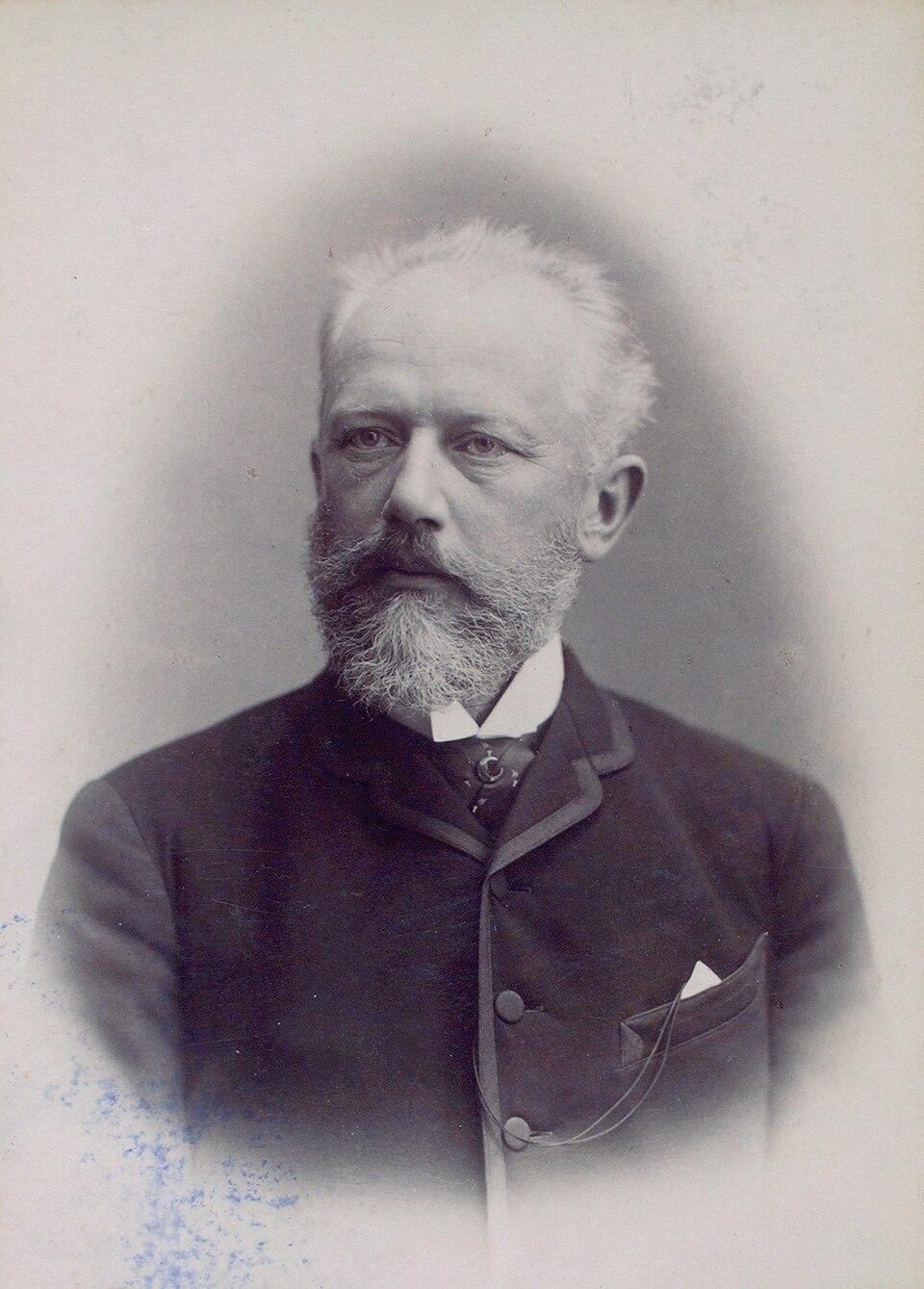
The first Russian composer to win a sustained international audience, whose ballets, concertos, and symphonies carry emotional intensity in forms of classical clarity.
Pyotr Ilyich Tchaikovsky made Russian music internationally legible without surrendering its particularity. Where the nationalist composers of "The Five" prioritised folk idiom and rough-edged originality, Tchaikovsky worked within the forms of the Western European tradition — symphony, concerto, ballet — and filled them with an emotional directness that crossed every language boundary. His three ballets are among the most performed works in the classical repertoire; his First Piano Concerto is probably the most recorded concerto ever written.
Origins and formation
Tchaikovsky was born in 1840 in Votkinsk, a small industrial town in the Ural foothills, the son of a mining engineer. The family moved to St Petersburg, where he was educated conventionally; he worked as a clerk in the Ministry of Justice until his mid-twenties, when the newly founded St Petersburg Conservatory offered him a means of pursuing music professionally. He graduated in 1865 and was immediately appointed to the faculty of the Moscow Conservatory, where he taught until 1878.
His early works were uneven, shaped by the tension between the formalist training he received at the Conservatoire and the nationalistic expectations of the Russian musical intelligentsia. The Romeo and Juliet Fantasy Overture (1869, revised 1880) was the first work in which his mature emotional directness is fully present.
The central works
The three ballets — Swan Lake (1876), The Sleeping Beauty (1889), and The Nutcracker (1892) — were composed across the span of sixteen years and together constitute the foundation of the classical ballet repertoire. Each is a full-evening work; each contains sections that have entered the popular musical consciousness independently of the theatrical context. Swan Lake's second-act music is the most recognisable sequence in the balletic tradition.
His First Piano Concerto in B-flat minor (1875) was famously rejected by Nikolai Rubinstein at a first hearing, premiered by Hans von Bülow in Boston, and became one of the most frequently performed concertos in the repertoire. The Violin Concerto in D major (1878) had a similarly difficult initial reception and is now equally standard.
His symphonic output includes six numbered symphonies; the Sixth, the Pathétique (1893), was premiered nine days before his death and is one of the most affecting valedictions in the repertoire — its final movement is a long Adagio lamentoso rather than the triumphant finale convention demanded.
Inspiration is a guest that does not willingly visit the lazy.
Personal life and patronage
Tchaikovsky's personal life was complicated by his homosexuality, which he kept concealed in a society and legal framework that criminalised it. His marriage in 1877 to Antonina Miliukova was a crisis from which he recovered only after a breakdown. More sustaining was his long correspondence and financial patronage from Nadezhda von Meck, a wealthy widow who supported him unconditionally from 1877 to 1890 and with whom he communicated extensively in letters without ever, by mutual agreement, meeting in person.
The circumstances of his death in 1893 — officially cholera, contracted from unboiled water — have been debated by biographers, some of whom argue the death was a suicide. No definitive conclusion has been established.
Legacy
Tchaikovsky's ballets have never left the stage; his concertos never left the concert hall. The 1812 Overture — composed as occasional music for the consecration of the Cathedral of Christ the Saviour in Moscow — became one of the most performed orchestral works in the world, its cannon-fire finale a fixture of outdoor concerts. His influence on the course of Russian music was decisive: Prokofiev and Shostakovich both composed ballets within the framework he established.