Richard Wagner
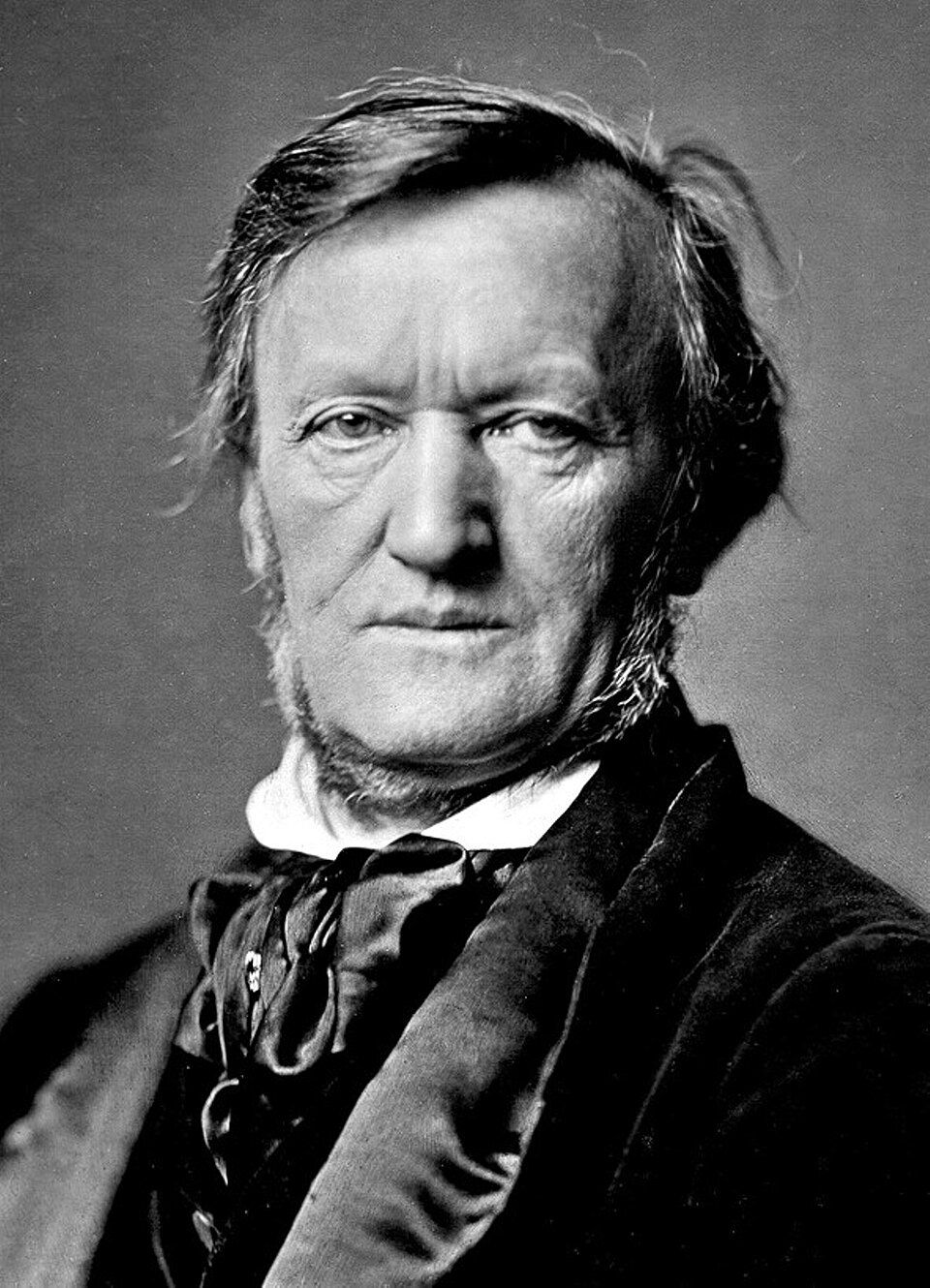
A German composer who wrote both the words and the music for his own operas, reshaping the form into a unified drama while leaving a legacy shadowed by his antisemitism and its later exploitation.
Richard Wagner was a German composer, theatre director, essayist, and conductor whose stage works transformed the art of opera. Unlike most composers of his era, he wrote both the libretti and the music for all his stage works, treating text, music, and staging as parts of a single indivisible whole. His influence on Western music was profound; so too is the controversy that has attached to his name, both in his lifetime and long after his death.
The idea of total drama
Wagner rejected the conventional opera of his day, in which music, poetry, and spectacle were loosely stitched together, in favour of what he called the Gesamtkunstwerk — the "total work of art," in which every element serves a unified dramatic purpose. To bind these works together he refined the leitmotif, a recurring musical theme associated with a character, object, or idea, woven through the orchestral fabric so that the music itself carries the drama forward. His mature scores are largely through-composed, dissolving the older divisions between aria and recitative into continuous musical argument.
Nowhere is this ambition more fully realised than in Der Ring des Nibelungen, a cycle of four operas — Das Rheingold, Die Walküre, Siegfried, and Götterdämmerung — for which Wagner wrote both the words and the music, completing the score in 1874. Drawn from Norse and Germanic myth, the Ring is one of the largest and most demanding works in the operatic repertory.
Tristan, Meistersinger, and Parsifal
While labouring on the Ring, Wagner produced other landmark works. Tristan und Isolde, first staged in 1865, is celebrated for the so-called "Tristan chord," an unresolved harmony that stretched the boundaries of tonality and is often cited as a turning point toward modern music. Die Meistersinger von Nürnberg (1868), by contrast, is a broadly comic and warmly diatonic work set among the craft guilds of a historic German city. His final stage work, Parsifal (1882), a solemn drama of compassion and redemption, was written expressly for his own theatre.
Bayreuth and King Ludwig
Wagner's grandest undertaking was a theatre of his own. Backed by his devoted patron King Ludwig II of Bavaria, whose support rescued the composer from financial ruin, Wagner built the Bayreuth Festspielhaus, a purpose-designed opera house tailored to the acoustic and dramatic needs of his works. It opened in 1876 with the first complete staging of the Ring cycle. The festival Wagner founded there continues to perform his operas to this day.
A contested legacy
Wagner remains a deeply controversial figure. In 1850 he published the essay Das Judenthum in der Musik ("Jewishness in Music"), an antisemitic attack on Jewish composers and their supposed influence. Decades after his death, his music and mythic imagery were embraced and appropriated by the Nazi regime, which made Bayreuth a site of ideological display. These facts sit alongside his artistic achievement and are inseparable from any full account of him. Wagner died in Venice in 1883, leaving a body of work that continues to be performed, studied, and argued over.
He set out to fuse poetry, music, and staging into a single drama — and in doing so changed what opera could be, for admirers and critics alike.