Robert Venturi
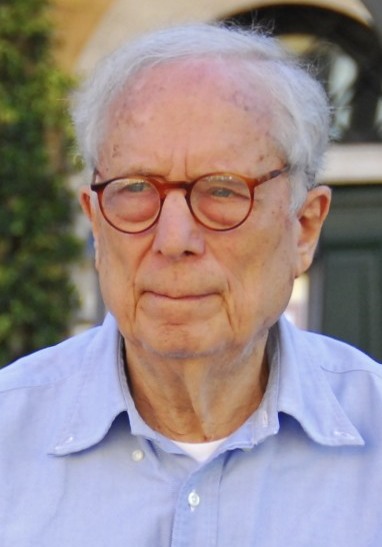
The architect who made a principled case for complexity and contradiction, rescuing ornament and history from the austerity of high modernism.
Robert Venturi did not build spectacularly. He argued persuasively — and the argument changed architecture. His 1966 manifesto Complexity and Contradiction in Architecture dismantled the moral certainties of the International Style and made the case for a richer, messier, historically literate architecture that acknowledged how people actually inhabit and read buildings.
Formation and the Philadelphia tradition
Venturi was born in Philadelphia in 1925, the son of a fruit-and-candy merchant. He studied at Princeton University — undergraduate and graduate — and then won the Rome Prize in 1954, spending two years at the American Academy in Rome. The experience was formative: Italy, with its centuries of overlapping styles and knowing eclecticism, gave him historical permission for complexity.
Back in the United States he worked briefly in the offices of Eero Saarinen and Louis Kahn. Kahn in particular was a decisive influence — not as a stylistic model but as an example of an architect who thought seriously about history and meaning. Venturi joined the faculty at the University of Pennsylvania, where he taught while developing his theoretical position.
Complexity and Contradiction
The 1966 book, published by the Museum of Modern Art, opens with a declaration that has aged into a foundational text: "I like complexity and contradiction in architecture. I do not like the incoherence or arbitrariness of incompetent architecture nor the precious intricacies of picturesqueness or expressionism." Against the Miesian injunction that less is more, Venturi replied: "Less is a bore."
The book surveyed Mannerist, Baroque, and vernacular buildings to show that ambiguity, exception, and accommodation had always been sources of architectural richness. It was not a call for historicist pastiche but for an architecture that could contain contradiction without resolving it.
Learning from Las Vegas
In 1972, with Denise Scott Brown and Steven Izenour, Venturi published Learning from Las Vegas — a studio report from their Yale research trip to the Strip. The argument was that the decorated shed (a neutral box carrying applied signs and symbols) was more honest and communicative than the heroic duck (a building whose entire form is the symbol). Commercial vernacular — diners, parking lots, roadside signage — deserved serious analysis, not condescension.
The book polarised architectural culture and has never stopped being discussed.
Built work
Venturi's own buildings were wry and deliberate. Guild House (Philadelphia, 1964) — a Quaker retirement home — applied a television antenna to the roof as a sculptural crown and used a commercial brick facade without modernist apology. The Vanna Venturi House (Philadelphia, 1964), designed for his mother, is a small building that plays with the conventions of the gabled house — enlarged arch, split pediment, notched chimney — to produce something simultaneously familiar and strange.
The firm Venturi, Scott Brown and Associates produced buildings for Princeton, Harvard, Seattle Art Museum, and the Sainsbury Wing extension to the National Gallery in London (1991), which quoted historical detail from the adjacent Wilkins building without pretending to be from the same period.
Legacy
Venturi received the Pritzker Architecture Prize in 1991. He died in Philadelphia in September 2018. His theoretical contribution outlasts any single building: he gave architects intellectual permission to use history, ornament, and the street, and helped clear the path for postmodernism's engagement with sign and symbol.
Less is a bore.