Ryuichi Sakamoto
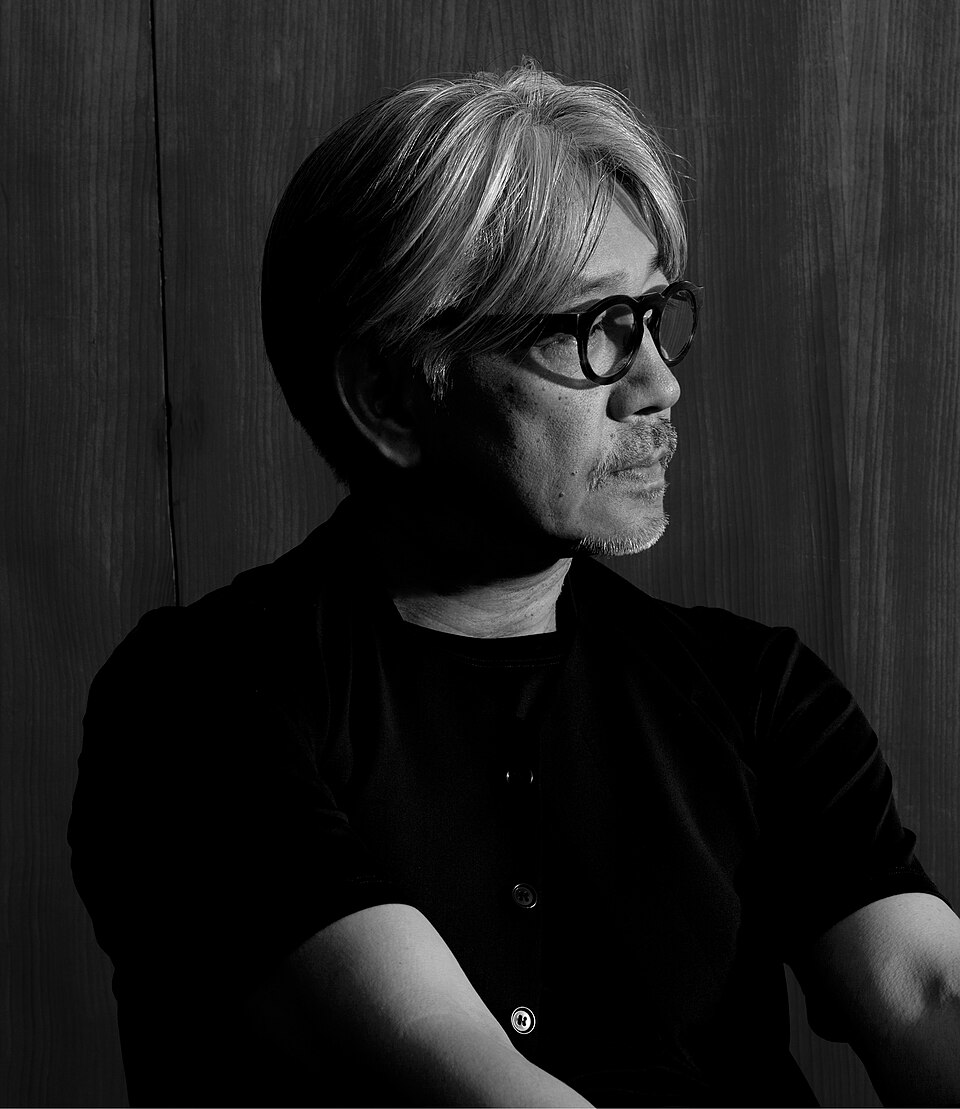
A composer who moved between pop synthesis, film scoring, and environmental sound as if genres were merely moods, winning every major award his discipline offered.
Ryuichi Sakamoto spent half a century moving between the avant-garde and the commercial, between electronic pop and classical composition, never quite belonging to any camp and influencing all of them. His career touched synthesiser music's formative years, the golden age of Japanese electronic pop, and a film scoring practice that earned him the industry's most coveted prizes.
Formation and Yellow Magic Orchestra
Sakamoto was born in Tokyo in 1952 and studied composition and electronic music at the Tokyo University of the Arts, graduating with a master's degree in 1976. His formal training in Western classical music coexisted with a fascination for electronic sound that was then remaking global pop. In 1978 he co-founded Yellow Magic Orchestra (YMO) with Haruomi Hosono and Yukihiro Takahashi. The trio's use of synthesisers, sequencers, and electronic rhythm anticipated techno and house music by nearly a decade, while their albums — including Solid State Survivor (1979) — sold millions in Japan and built an international cult following. YMO's influence on British synth-pop artists and on the subsequent development of electronic dance music has been widely documented.
Solo career and electronic experimentation
Alongside YMO, Sakamoto maintained an ambitious solo practice. B-2 Unit (1980) showed his range as a solo electronic artist. Throughout the 1980s he collaborated with artists including David Sylvian and David Bowie, appeared as an actor in Nagisa Oshima's Merry Christmas, Mr. Lawrence (1983), and composed its score — his first major film credit. His solo discography moved between accessible pop structures and abstract, often spare electronic work. Beauty (1989) and later Discord (1998) demonstrated his interest in world music and minimalism without reducing either to tourism.
Film scoring
Sakamoto's film scores earned him the highest recognition the industry offers. His score for Bernardo Bertolucci's The Last Emperor (1987) — co-composed with David Byrne and Cong Su — won the Academy Award for Best Original Score, the BAFTA, and the Grammy. He later won two Golden Globe Awards for film music. His scores were notable for restraint: he tended toward melodic simplicity and silence rather than the orchestral density common in Hollywood.
| Score | Year | Director |
|---|---|---|
| Merry Christmas, Mr. Lawrence | 1983 | Nagisa Oshima |
| The Last Emperor | 1987 | Bernardo Bertolucci |
| The Sheltering Sky | 1990 | Bernardo Bertolucci |
| Little Buddha | 1993 | Bernardo Bertolucci |
| The Revenant | 2015 | Alejandro G. Iñárritu |
Late work and illness
In his final decade Sakamoto became increasingly interested in environmental and ambient sound, releasing meditative records such as async (2017) — composed after a throat cancer diagnosis. A second cancer diagnosis, of rectal cancer, was made public in 2021; he continued working until shortly before his death in March 2023. His final album, 12, was released weeks before he died and documented his process of composing short pieces during illness. He remained, to the end, more interested in what a note did in silence than what it could do in a crowd.
Music for me is like air and water — both natural and necessary.