Santiago Calatrava
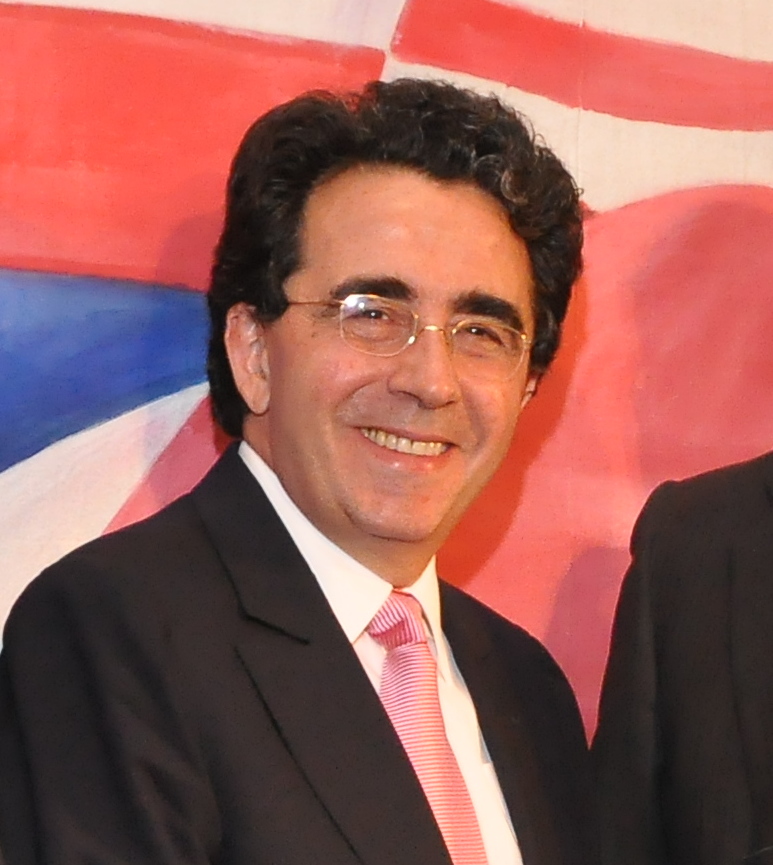
An architect and engineer whose structures borrow from the skeleton — bone, wing, and rib — making gravity visible as elegance.
Santiago Calatrava holds degrees in both architecture and civil engineering, and his buildings sit precisely at that junction: structures that perform structurally and sculptural objects that perform emotionally. His bridges open like eyes, his museums spread like wings, his stations unfurl like animals caught mid-leap. The formal language is singular enough to be immediately recognisable anywhere in the world, from Seville to Milwaukee to Singapore.
Formation in Valencia and Zurich
Calatrava was born near Valencia and enrolled at the city's School of Architecture at fourteen, graduating in 1974. Drawn to the structural questions his architecture training left unanswered, he enrolled at the Swiss Federal Institute of Technology (ETH) in Zurich, completing a doctorate in civil engineering in 1981 with a thesis on the foldability of space frames. The research was not merely academic — it translated directly into a lifelong preoccupation with moveable structures and with forms that appear to have been arrested in the middle of an action.
His early practice in Zurich produced a series of bridges and transit structures that established his reputation: the Bach de Roda Bridge in Barcelona (1987) and the Stadelhofen Railway Station in Zurich (1990), whose platforms are tucked beneath a ribbed concrete canopy that echoes the geology of the hillside above it.
Signature works
The Turning Torso in Malmö (2005) — a residential tower of nine pentagonal segments rotating ninety degrees from base to top — demonstrated that Calatrava's structural imagination could operate at skyscraper scale. At ground level the form reads as a turning figure, human in proportion and implication.
The Oculus (World Trade Center Transportation Hub) in New York City (2016) is perhaps his most debated work: a vast white skeleton of steel ribs — resembling a bird releasing from cupped hands — that opens along a skylight spine each year on the anniversary of 11 September. Its cost overruns were severe and much criticised; its presence in Lower Manhattan is undeniable.1
His largest single project, the City of Arts and Sciences in Valencia (1998–2005), comprises a planetarium, an opera house, an interactive science museum, and an oceanarium laid along a drained riverbed. The ensemble — all white concrete and reflective pools — transformed the city's southern edge and became its primary tourist destination.
| Building | Completed | Location |
|---|---|---|
| Stadelhofen Railway Station | 1990 | Zurich, Switzerland |
| BCE Place Galleria | 1992 | Toronto, Canada |
| City of Arts and Sciences | 1998–2005 | Valencia, Spain |
| Milwaukee Art Museum (Quadracci Pavilion) | 2001 | Milwaukee, USA |
| Turning Torso | 2005 | Malmö, Sweden |
| Oculus (WTC Transportation Hub) | 2016 | New York City, USA |
Method
Calatrava works through sculpture as well as drawing — his studio produces hundreds of bronze and ceramic maquettes for each major project, studying the movement of form under light before committing to structural solutions. He has exhibited his drawings and sculpture widely, including at the Metropolitan Museum of Art in New York, arguing that architecture, engineering, and art are not separate disciplines but degrees of the same inquiry.
Legacy
The AIA Gold Medal in 2005 acknowledged a career that had redefined what an engineer-architect could do. Critics have debated whether his buildings prioritise spectacle over function; supporters note that his stations and bridges are genuinely used and genuinely loved. Few contemporary architects have generated such strong public affection — or such strong reactions in both directions.
Structure is the fundamental law of form.
Footnotes
- The Oculus opened in 2016, fifteen years after the original World Trade Center PATH station was destroyed. It serves tens of thousands of commuters daily and also functions as a shopping centre. ↩