Sergei Rachmaninoff
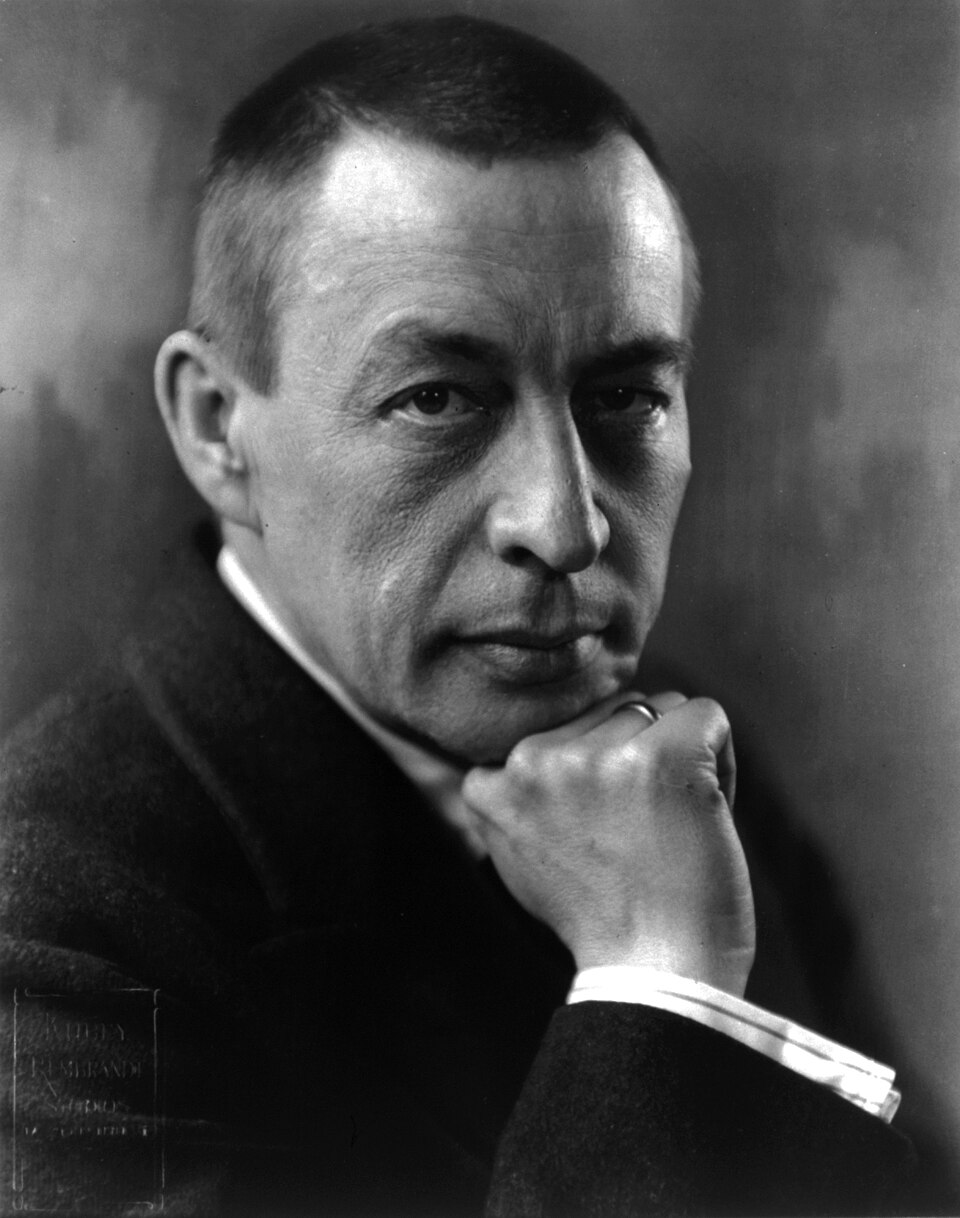
The last great Romantic — a composer and pianist whose melodic gift and brooding pianistic power made him one of the most recorded and performed figures in classical music.
Sergei Rachmaninoff stood at the fault line between two musical worlds: born into the Romantic tradition of Tchaikovsky and trained in the rigorous Moscow Conservatory, he produced a body of work — four piano concertos, three symphonies, the choral Vespers — that insisted on lyricism and emotional directness long after European modernism had turned elsewhere. As a pianist he was considered by many contemporaries to be without equal.
Formation in Moscow
Rachmaninoff was born in 1873 on a country estate in Novgorod province and showed musical aptitude early. After a period of instability following his family's financial ruin, he was enrolled at the Moscow Conservatory under the stern pedagogical discipline of Nikolai Zverev, living in his household as a boarding student. Later he moved to the harmony and counterpoint classes of Alexander Taneyev and finally to composition under Alexander Arensky. His graduation piece, the opera Aleko (1892), written at eighteen, earned him the highest mark the Conservatory awarded.
The early career was troubled by the failure of his First Symphony in 1897 — a performance poorly conducted by Alexander Glazunov that produced hostile reviews and sent Rachmaninoff into a three-year creative silence. Recovery came through sessions with the hypnotherapist Nikolai Dahl, after which he composed the Piano Concerto No. 2, the work that established his international reputation.
The concertos and the pianist
Rachmaninoff's four piano concertos form the core of the modern concerto repertoire. The Second (1901) and Third (1909) are among the most frequently performed concertos ever written. The Third, composed for his American tour, is notorious for its technical demands; it was long regarded as the most difficult piano concerto in the standard repertoire.
His pianistic style was defined by an extraordinary span — he could reach a twelfth with ease — combined with an ability to project a singing melodic line through dense accompanying textures. The recordings he made in the 1920s and 1930s, both of his own works and of Chopin, Liszt, and others, remain benchmark documents of Romantic pianism.
Music is enough for a whole lifetime — but a lifetime is not enough for music.
The vocal and choral works
Less prominent in the concert hall but equally significant are Rachmaninoff's choral works. The Liturgy of St John Chrysostom (1910) and the All-Night Vigil (Vespers, 1915) are central works of the Russian Orthodox choral tradition. The Vespers in particular — scored for unaccompanied chorus drawing on ancient chant melodies — has been called the pinnacle of Russian sacred music.
The two sets of songs for voice and piano, the Vocalise (1915) above all, show the same melodic concentration as the concertos in a more intimate frame.
Exile and the American years
After the 1917 Revolution Rachmaninoff left Russia permanently, spending the rest of his life in Europe and the United States. He curtailed composition to fund himself through concert touring, which made him financially secure but reduced his output severely. Of his late works, the Rhapsody on a Theme of Paganini for piano and orchestra (1934) and the Symphonic Dances (1940) show undiminished invention. He became an American citizen shortly before his death in Beverly Hills in 1943.