Sigmund Freud
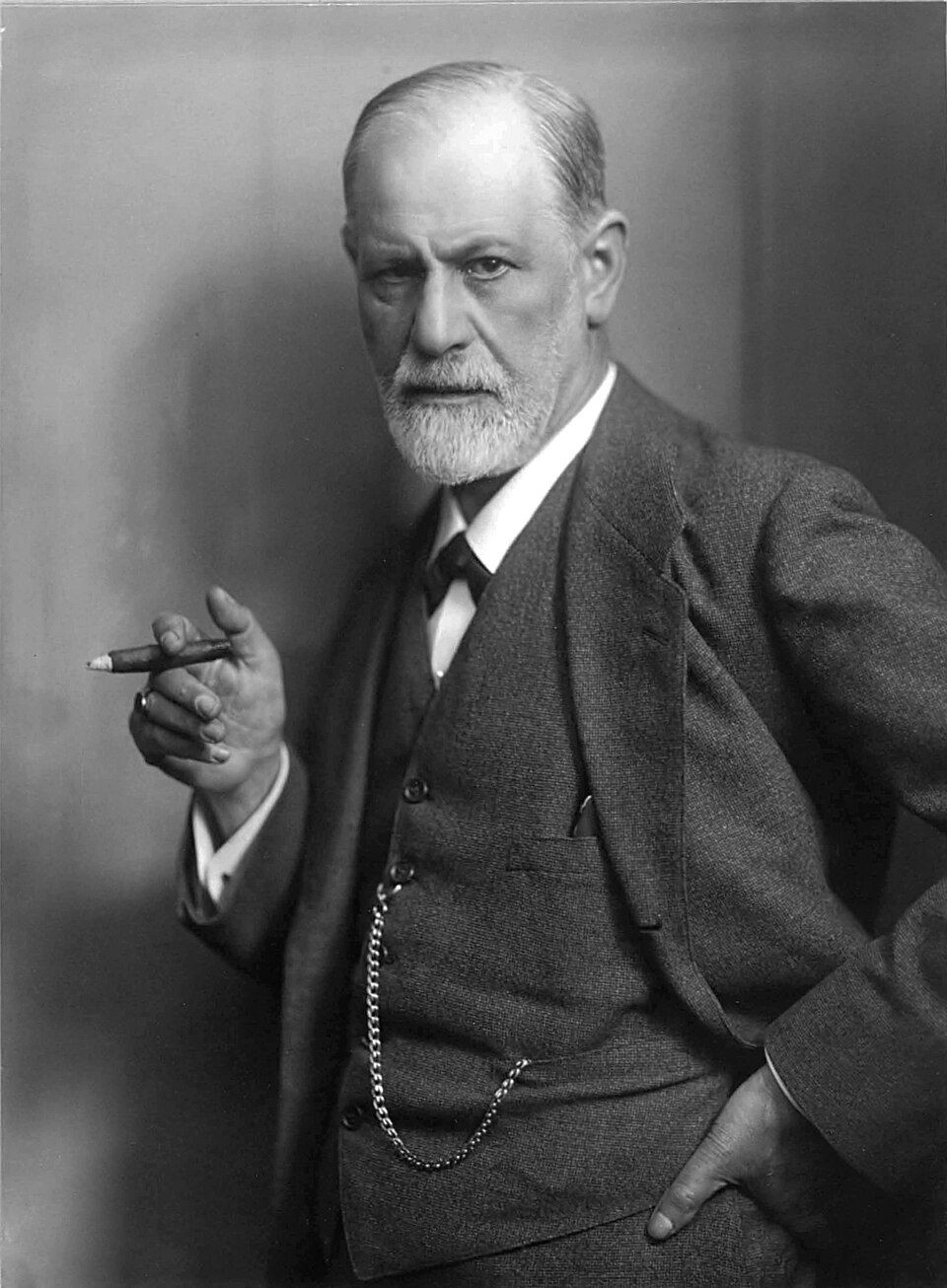
The neurologist who turned the hidden logic of dreams, slips, and symptoms into a clinical method — and in doing so permanently altered how the West thinks about the self.
Sigmund Freud built a complete theory of mind from the clinical flotsam of Viennese consulting rooms: parapraxes, dreams, phobias, hysterical paralyses. Working largely outside the academic mainstream, he proposed that human behaviour is steered by forces inaccessible to conscious reasoning, and that those forces could be reached — and treated — through sustained, rigorous conversation between patient and analyst.
Origins and medical formation
Freud was born on 6 May 1856 in Freiberg in Mähren, a small town in Moravia then part of the Austrian Empire, now Příbor in the Czech Republic. His family moved to Vienna when he was four, and he remained in the city for nearly eighty years. He studied medicine at the University of Vienna, graduating in 1881, and initially pursued a career in neurological research under Ernst Brücke, working on the anatomy of the nervous system with distinction.
Financial pressure ended his laboratory ambitions. He entered clinical practice in 1886, established himself as a specialist in nervous disorders, and travelled to Paris to study under Jean-Martin Charcot, whose use of hypnosis to treat hysteria proved a decisive influence.
The invention of psychoanalysis
Back in Vienna, Freud collaborated with the physician Josef Breuer on cases of hysteria. Their joint publication, Studies on Hysteria (1895), introduced the idea that neurotic symptoms are products of repressed memory and emotion, and that speaking openly about their origin could relieve them. Breuer fell away; Freud extended the method radically.
Through the 1890s he developed free association — the patient says whatever comes to mind, without censorship — as the primary clinical instrument, replacing hypnosis. He theorised that the contents of the unconscious surface in dreams, slips of the tongue, jokes, and symptoms, all of which could be decoded with analytic attention. The Interpretation of Dreams, published in 1899 but dated 1900, laid out this framework in full. Freud considered it his most important book.
The structural model that followed — id, ego, superego — organised the psyche into a dynamic conflict between instinctual drive, rational governance, and internalised moral prohibition. Later works mapped these tensions onto civilisation itself, arguing in Civilization and Its Discontents (1930) that social life is built on permanent instinctual renunciation.
Method and argument
Freud was a committed empiricist in disposition but a theorist in practice. He built generalisations from case material at a scale no single analyst's caseload could support, and he revised his models frequently when clinical evidence demanded. He was also a combative intellectual who enforced orthodoxy within the psychoanalytic movement, leading to bitter ruptures with Alfred Adler and Carl Jung.
His prose in German is precise and often elegant — qualities that persuaded readers far outside medicine. He wrote case histories, metapsychological speculation, cultural essays, and autobiography, maintaining the same analytic tone across all of them.
Exile and legacy
After the Nazi annexation of Austria in March 1938, Freud — Jewish, internationally famous, and the author of books already burned in Germany — was persuaded by friends and colleagues to leave Vienna. He emigrated to London, where he died of oral cancer on 23 September 1939.
His ideas spread through psychology, psychiatry, literary criticism, anthropology, and philosophy over the following decades. The scientific status of specific psychoanalytic claims has been extensively contested, but the conceptual vocabulary he introduced — unconscious, repression, projection, transference — passed irreversibly into the language of ordinary self-understanding.
The interpretation of dreams is the royal road to a knowledge of the unconscious activities of the mind.